


Speed-to-Lead: How Small Shops Can Answer Every Call (Even at 9pm) Without a Receptionist
Dale Resnick
A 30-year veteran of residential HVAC who's crawled through more attics than he can count. Dale writes the 'Duct Tape & Beyond' column and believes every compressor tells a story if you listen close enough.
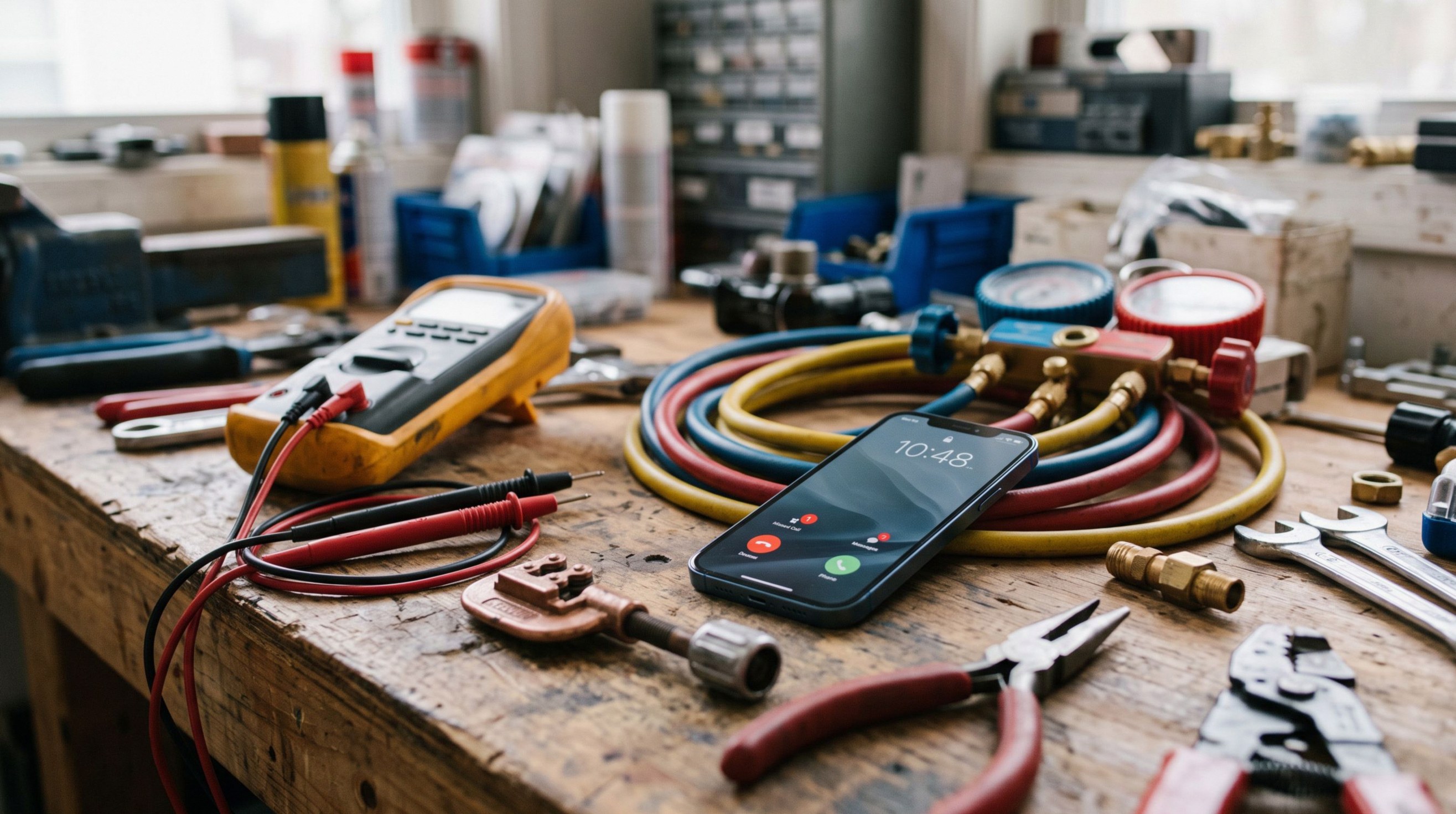
A homeowner's water heater just quit. They pull up their phone, tap the first three repair shops in the search results, and start dialing. Shop one goes to voicemail. Shop two rings out. Shop three picks up, or texts back within a minute. Guess who gets the job. Speed-to-lead, the plain fact of responding fast, decides more repair jobs than price, reviews, or how good your work is, because the customer hires someone before they ever find out how good your work is.
For a solo operator or a two-truck shop, this feels impossible. You're under a sink with your phone across the room. But answering every call, even one that comes in at 9pm, no longer requires a receptionist on payroll. It requires setting up three cheap layers so no lead ever hits a dead end.
Why Being First Beats Being Best
The research on response time is old and consistent. Multiple studies of sales-lead behavior find that the business that responds first captures a large share of the jobs, and that the odds of connecting with a customer drop sharply with every minute that passes.
The most-cited work here is a Harvard Business Review study by James Oldroyd, Kristina McElheran, and David Elkington, which analyzed thousands of inbound leads. Firms that tried to reach a lead within an hour were about seven times likelier to have a meaningful conversation with a decision-maker than firms that waited even one hour longer, and roughly sixty times likelier than those that waited a full day. The study was about B2B sales teams, not appliance repair, but the human behavior underneath is identical: people reaching out want an answer now, and their interest decays fast.
Translate that to your shop. The customer with a broken AC in July isn't leaving a message and waiting patiently. They're working down a list. Your voicemail isn't a message-taking system. It's a lead-donation system, and the recipient is your competitor.
Layer One: Missed-Call Text-Back
The single highest-return change costs almost nothing. When a call goes unanswered, an automatic text fires back to the caller within seconds: something like "Sorry we missed you, this is [shop]. We'll call you right back. What's the appliance and the issue?"
That one text does two jobs. It confirms the customer reached a real business, not a dead number, and it often opens a text thread you can work between jobs even when you can't talk. Plenty of customers would rather text the details anyway.
Missed-call text-back is built into many field-service and CRM tools, and standalone versions run cheap. Some phone carriers and free automation tools can rig a basic version at no cost. If you do nothing else after reading this, do this.
Write the auto-text so it asks one question: the appliance and the problem. A caller who texts back "Whirlpool fridge not cooling" has just self-qualified and handed you everything you need to call back with a real answer. A generic "we'll get back to you" text collects nothing.

Layer Two: An Answering Service That Books, Not Just Takes Messages
The next layer covers the calls you genuinely can't take. Two options, depending on budget and comfort.
A live answering service puts a human on your calls when you can't. They screen, take details, and can book appointments into your calendar. Good for shops that want a person on the line and don't mind a per-minute or per-call rate.
An AI answering service does much of the same for less. The current generation of these tools answers in a natural voice, handles routine questions ("do you service my area, what's your callout fee"), books appointments, and texts you a summary. They run for a monthly fee that's a small fraction of even part-time reception wages, and they don't sleep, so the 9pm call gets answered.
Neither is perfect. AI still fumbles unusual requests, and a live service costs more. But both beat the alternative, which is a lead that dialed you, got nothing, and moved on.
Layer Three: A Voicemail and After-Hours Plan That Actually Converts
Even with the first two layers, some calls land in voicemail. Make that voicemail work instead of leak.
A converting greeting is short and specific: who you are, that you'll call back within a stated window, and an invitation to text. "You've reached [shop]. We're on a job but we return every call within the hour during business hours. Text this number with your appliance and problem for the fastest response." Then honor the window. A promised callback you don't make is worse than no promise.
For after-hours, decide your policy and state it. Some shops route night calls to an emergency line at premium rates. Others let the AI service book the next morning's first slot. Either works. What kills you is silence, the call that rings out with no text, no greeting, and no plan.
What It Costs, and What It Returns
Run this against your own average ticket, because that's what decides whether any of it pays.
The ROI math is simple. Take your average job value. If a tool captures even one or two jobs a month you'd otherwise have missed, it's paid for itself, and most shops miss far more than two calls a month during busy season. The expensive option here isn't the answering service. It's the leads you're already losing to voicemail.
Speed-to-lead also compounds with everything else you do to get found. There's no point ranking well or running ads that make the phone ring if the phone rings into a void. Pair fast response with the reputation work in our Google review strategy for repair businesses, and fund the whole system sensibly using the priorities in our guide to marketing an HVAC business on a budget.
Start With the Free Layer Tonight
You don't need all three layers on day one. Set up the missed-call text-back and a real voicemail greeting today, at little or no cost. Add an answering service when the volume justifies it. The order matters less than the principle: no customer who reaches out should ever hit a dead end.
Being the best tech in town doesn't help if you're the third shop the customer calls and the only one who didn't answer. Be the one who answers. That's the whole edge, and it's cheaper than almost anything else you'll spend money on this year.
Sources
Oldroyd, J. B., McElheran, K., and Elkington, D. (2011). "The Short Life of Online Sales Leads." Harvard Business Review. hbr.org