


Commerce Wants Heat Exchanger Parts on the Section 232 Tariff List
ServiceMag Staff
Reporting and editorial coverage from the ServiceMag newsroom.
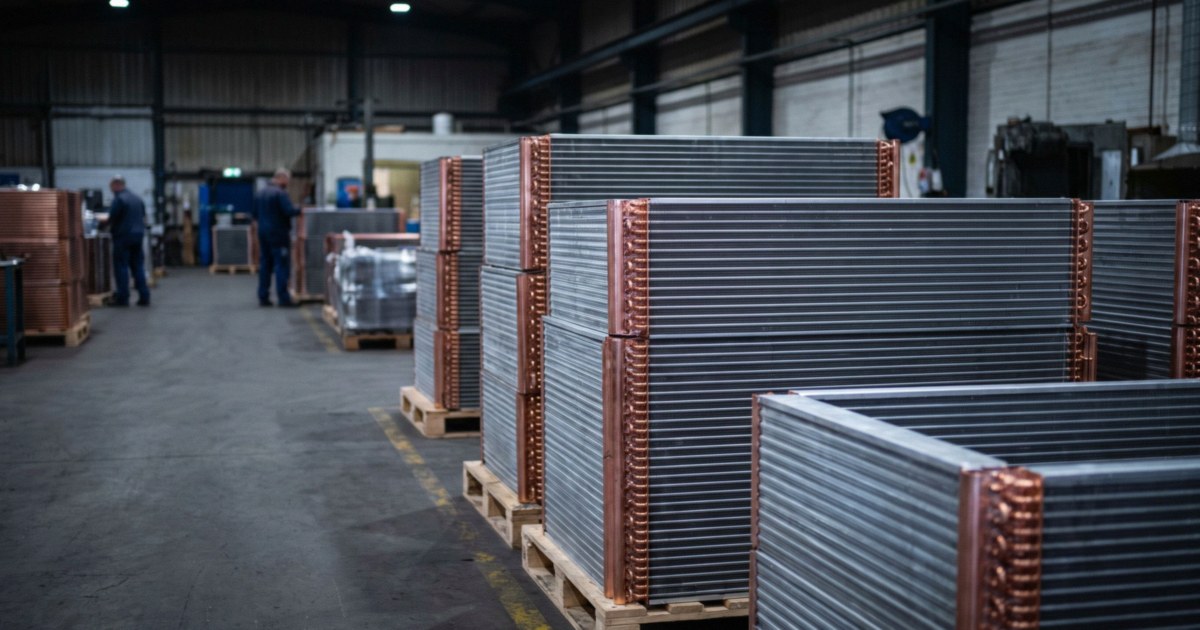
The Bureau of Industry and Security proposed on August 6 to pull parts of heat exchange units into the Section 232 metals tariffs, two months after the White House cut the Section 232 rate on residential HVAC equipment to 15 percent. Heat exchange unit parts, HTSUS 8419.90.3000, appear in a Federal Register notice listing 14 new steel, aluminum and copper derivative articles. Commerce proposed the 25 percent rate for them. Comments closed August 27.
That is the shape of this one.
Relief on the box in June, a proposed tariff on a parts line in August.
What the Notice Actually Says
The document is docket 260803-0182, published at 91 FR 50756 and carried on regulations.gov as BIS-2026-0331. It runs under Proclamation 11021 of April 2, 2026, which let the Secretary of Commerce and the U.S. Trade Representative jointly add derivative articles to the aluminum, steel and copper tariff regimes.
Commerce wrote that the listed products "tend to be composed predominantly of aluminum, steel, and/or copper by weight." It then proposed that "all of these products would generally be subject to the 25 percent tariff outlined in clause (3) of Proclamation 11021," with named exceptions for mobile lifting frames and straddle carriers, self-propelled cranes, agricultural trailers at 15 percent, and filled steel containers at 50 percent. Heat exchange unit parts are not among the exceptions.
Three other lines on the list will show up on a service truck long before a coil does. Electric conductor cables under HTSUS 8544.49.2000, 8544.49.3040, 8544.49.3080 and 8544.60.4000 are proposed at 25 percent. So are parts of welding machines and apparatus, 8515.90.2000, and fire extinguishers, 8424.10.0000. Filled steel cylinders of propane, oxygen and propylene would draw 50 percent, though the notice says the duty "would only apply to the value of the metal container and would not apply to the value of a filled container's contents."
Why This Isn't Just the June Section 232 Cut in Reverse
In June, Proclamation 11032 moved certain HVAC systems and components predominantly for residential use into the temporarily reduced 15 percent derivative rate, effective June 8, 2026. That eased the April revision that ACCA warned would push HVAC equipment costs higher, and we covered it when Section 232 HVAC tariffs dropped from 25 percent to 15 percent. The relief runs to the end of December 2027 and applies to a specific set of tariff lines.
HTSUS 8419.90.3000 is not one of them. It is not currently in Section 232 scope at all, which is the whole reason BIS has to propose adding it. If the addition goes through as written, that line arrives at 25 percent, on top of whatever normal duty already applies.
Which imported parts actually classify there is the question nobody at a distributor counter can answer for you. Heading 8419 covers machinery for treating materials by a change of temperature, and 8419.90.3000 is the parts subheading for heat exchange units within it. Classification is a customs determination tied to the article, not something you read off a catalog page. If a supplier tells you a coil or shell-and-tube component is covered, ask which HTS line they enter it under. That is what decides whether the duty attaches.


The Procedural Part Worth Knowing
BIS took comments here as a courtesy, not an obligation. The notice states that the Administrative Procedure Act's notice-and-comment requirements "are inapplicable because this notice involves a military function of the United States" under 5 U.S.C. 553(a)(1), and that no Regulatory Flexibility Analysis was prepared because none is required.
Read that plainly. There is no second comment round, no proposed-then-final sequence with a built-in delay, and no small-business impact analysis due before a decision. The next thing anyone sees could be the inclusion itself.
What It Means for Quoting
Section 232 duties attach on entry, not on order. A quote written today against a part that lands in a container next quarter carries the rate in effect when that container clears, and nobody in the chain is obligated to tell you the rate moved.
The practical answer is the boring one. Tighten quote expiration windows on long-lead items, and ask your primary suppliers in writing whether they will honor quoted pricing through delivery if a duty change lands mid-order. Shops that already keep a hard floor of fast-moving stock on the shelf, as our guide on managing parts inventory lays out, are less exposed than shops running everything as a same-day special order.
As of publication, Commerce had not announced a decision on the 14 articles. Watch the docket; the Federal Register is where it will land.
Sources
- Bureau of Industry and Security, U.S. Department of Commerce. (2026). "Request for Public Comments on the Proposed Implementation of Duties on Additional Aluminum, Steel, and Copper Derivative Articles Under Section 232." 91 FR 50756, August 6, 2026, Docket No. 260803-0182. federalregister.gov
- The White House. (2026). "Further Adjusting the Tariff Regimes for Imports of Aluminum, Steel, and Copper Into the United States" (Proclamation 11032 of June 1, 2026). 91 FR 34085, June 4, 2026. federalregister.gov
- Regulations.gov. Docket BIS-2026-0331, "0694-XC166 Request for Public Comments on the Proposed Implementation of Duties on Additional Aluminum, Steel, and Copper Derivative Articles Under Section 232." regulations.gov