


Twenty Years of Heat Pump LCAs: The Use Phase Dominates, but Refrigerant Choice Is a Wildcard

Terry Okafor
Master refrigeration tech and NATE-certified instructor.
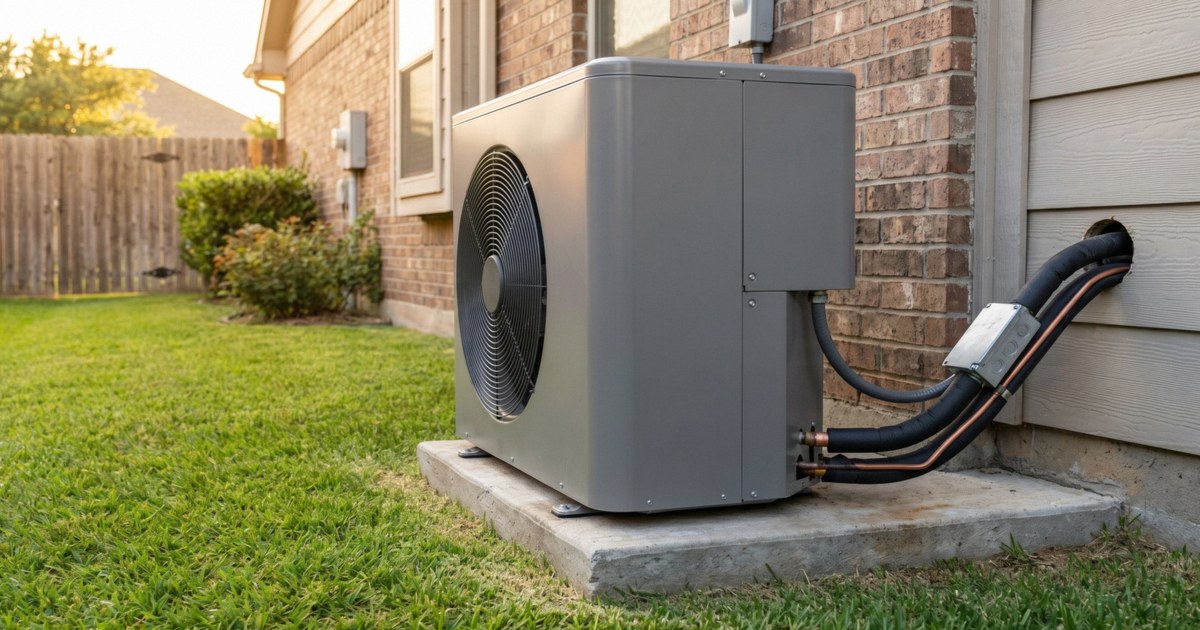
A comprehensive 2025 review in Energy and Buildings collected two decades of peer-reviewed life-cycle assessments on heat pumps and ran a meta-analysis on the results. The finding most useful to contractors is also the simplest: the use phase dominates environmental impact across almost every study reviewed. What the customer pays to run the unit over 15 years outweighs everything that happened in the factory.
But the review flagged one wildcard that changes the math. Refrigerant leakage, especially from air-source systems, contributes a material share of total impact when high-GWP refrigerants like R-410A are involved. And that's the number California contractors are about to watch move in real time as the state's low-GWP rules take effect through 2026.
For shops installing heat pumps today, the research points to two places to focus.
What 20 Years of LCAs Actually Say
The review synthesized findings across a broad range of heat pump types: air-to-air, air-to-water, ground-source, water-source. Some patterns held across the board.
The use phase — the electricity the unit consumes over its 15-to-20-year service life — accounted for 60% to 85% of total environmental impact in the majority of reviewed studies. That share was higher for systems installed in regions with carbon-intensive grids and lower in clean-grid regions like most of California. The implication for pros: a correctly sized, properly commissioned heat pump on the California grid already has a strong environmental profile compared to gas-based alternatives.
Manufacturing impact, by contrast, was consistent but modest. The copper, steel, and aluminum in a typical residential unit carry roughly 1,500-2,500 kg CO2e in embedded emissions, which is dwarfed by 15 years of operation even on a clean grid.
Refrigerant was the variable. For air-source units using R-410A with typical lifetime leakage rates of 2% to 5% per year, refrigerant contribution to total LCA impact could hit 10% to 20%. For ground-source units with sealed loops and lower leakage, the share dropped to under 5%.


What That Means for the Truck
Two takeaways.
Commissioning matters more than the sales pitch. A heat pump undersized by a ton, or one with a 20-foot line set charged to manufacturer spec instead of actual length, runs harder than it should and burns use-phase hours at a premium. The LCA math punishes that. Good Manual J load calcs and careful line-set charging are not just best practice — they're environmental practice, and they keep warranty claims down.
Refrigerant handling is the biggest emission lever a tech controls. Proper recovery during service, tight brazed joints, and minimizing open-to-atmosphere time during repairs all shave meaningful percentages off a heat pump's lifetime impact. California's 2026 low-GWP rules push the industry toward R-454B and R-32 on new installs, which cuts refrigerant-leakage impact by roughly a factor of three compared to R-410A. Techs still handling legacy R-410A systems should be extra careful; the GWP of that refrigerant stays high regardless of the new rules.
The review authors call for standardized LCA guidelines specific to heat pumps, which doesn't exist yet. Until it does, contractors should read any single LCA with caution. Meta-analyses like this one carry more weight.
See our 2026 EPA refrigerant transition update and the DOE 2027 efficiency standards story for regulatory context.
Source
"A Comprehensive Review of Life Cycle Assessments for Domestic Heat Pumps: Environmental Footprint and Future Directions." Energy and Buildings (2025). https://www.sciencedirect.com/science/article/pii/S0378778825003354
Need a repair professional?
Get free quotes from verified technicians in your area.
Find a Pro Near You