


DOE Efficiency Standards Ahead: The 2028 Furnace Rule and 2029 Water Heater Rule
ServiceMag Staff
ServiceMag editorial team
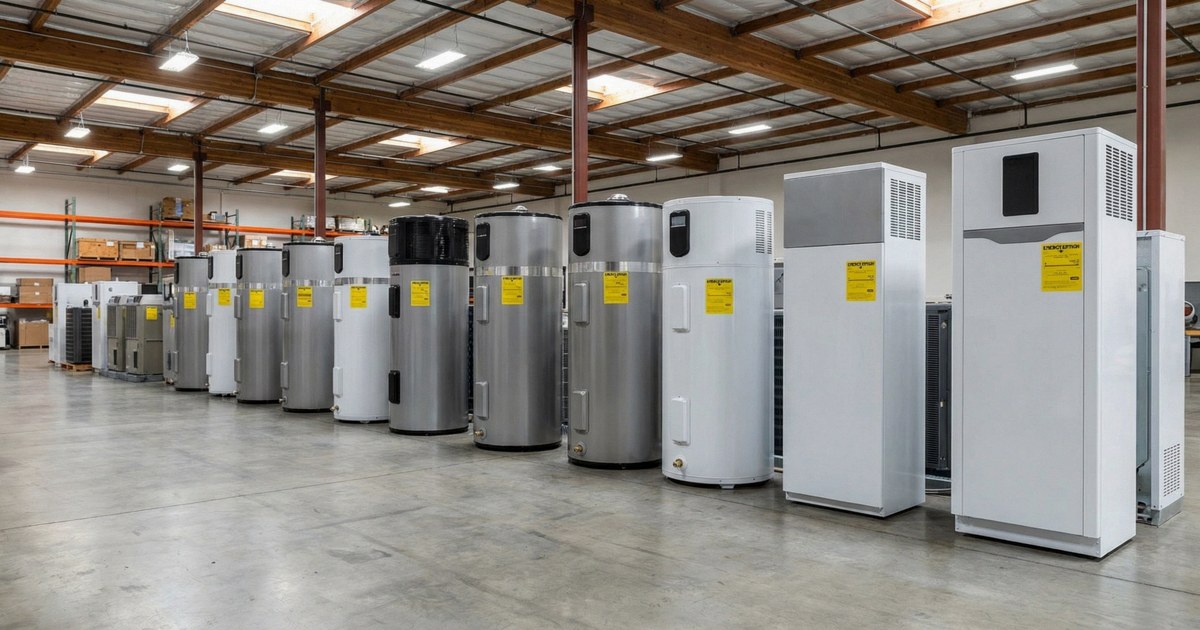
There is no single "DOE 2027" efficiency standards package for residential HVAC and water heating. That framing has circulated widely, but it does not match the actual rulemakings on the books. The real, finalized DOE efficiency standards that will reshape residential equipment are two separate rules with two different compliance dates: a gas furnace standard that takes effect for products manufactured on or after December 18, 2028, and a residential water heater standard that applies to units produced on or after May 6, 2029.
For HVAC contractors and appliance service companies, the practical impact is real but later than the "2027" headlines suggest, and the metrics are different too. Getting the dates and the numbers right matters, because customer conversations about whether to replace equipment now or wait depend on them. Here's what is actually final, and what is not.
What's Actually Changing
Residential Furnaces — AFUE 95% for Products Made On or After December 18, 2028:
DOE published a final rule for consumer furnaces in the Federal Register on December 18, 2023. It sets a national minimum of AFUE 95% for non-weatherized gas furnaces (and mobile home gas furnaces), up from the longstanding AFUE 80% minimum. The compliance date is December 18, 2028 — meaning furnaces manufactured or imported on or after that date must meet the standard. It is not a January 1, 2027 rule, and the threshold is 95%, not 92%.
AFUE 95% effectively requires condensing technology — equipment that recovers heat from combustion gases before they exhaust, using a secondary heat exchanger and a condensate drain. A condensing furnace is not a drop-in replacement for an existing AFUE 80% installation. It requires PVC exhaust venting (replacing the existing metal flue), a condensate drain connection, and often a furnace location assessment.
The installation-complexity premium for condensing furnace replacements is real. Contractors who understand the additional scope will quote accordingly. Contractors who don't will underbid, overrun, or both. Note that the rule has faced legal challenges from gas-industry trade groups. The D.C. Circuit upheld it in November 2025, but in June 2026 the U.S. Supreme Court vacated that decision and sent the case (American Gas Association v. DOE) back to the appeals court for reconsideration after DOE conceded legal error. The AFUE 95% standard remains in force and the December 18, 2028 compliance date still stands as of this writing, though DOE is weighing a delay of implementation to January 1, 2030. Contractors should watch for any change.
Residential Water Heaters — Heat Pump Technology for Larger Electric Tanks, Effective May 6, 2029:
DOE published its residential water heater final rule on May 6, 2024, with compliance required for units produced on or after May 6, 2029. This is the change with the largest operational impact, but again it is a 2029 rule, not a 2027 one.
The rule raises the Uniform Energy Factor (UEF) minimum so that electric storage water heaters above 35 gallons must use heat pump technology to comply. That is the relevant threshold — not a "51-120 gallon range." Smaller electric tanks (roughly 20-35 gallons) see no UEF increase but face limits on first-hour rating and temperature setting; gas-fired storage water heaters see only minor updates. DOE projects that the rule will push over half of newly manufactured electric storage water heaters to heat pump technology, up from about 3% today.
Heat pump water heaters (HPWHs) are far more efficient — typical UEF values in the 3.0-4.0 range vs. roughly 0.9-0.95 for standard electric resistance — but they carry installation requirements that standard swaps don't: adequate surrounding air volume, humidity considerations, ambient-temperature sensitivity (efficiency drops in cold spaces), and higher upfront equipment cost.
The heat pump water heater transition is creating a new service category: HPWH installation assessment. Customers with larger electric tanks in small closets, under-stair spaces, or cold garages will need an honest evaluation of whether their space meets HPWH requirements before they buy. Shops that develop this consulting capability ahead of the 2029 compliance date will capture more installation business and field fewer frustrated callbacks from failed installs in unsuitable locations.
Residential Central Air Conditioners — No New 2027 SEER2 Increase:
There is no DOE rule raising residential central AC minimums in 2027. The current minimums took effect in January 2023 under the SEER2 (version-2 test procedure) framework and remain in place: in the South and Southwest regions (which include California), split systems under 45,000 Btu/h must meet SEER2 14.3, and larger split systems must meet SEER2 13.8. The North minimum is SEER2 13.4. Claims of a "SEER2 15 / SEER2 16 in 2027" standard are not accurate — those numbers do not correspond to any finalized DOE central-AC rule.
What is true is that the broader refrigerant transition is changing equipment availability and pricing on its own timeline. For the parallel A2L refrigerant change, see our 2026 EPA refrigerant transition update, which covers the R-410A phasedown and the move to R-454B in detail.
Pricing Impact: What to Expect
Equipment cost increases from efficiency-standard transitions have historically run meaningfully above the outgoing minimum-efficiency equipment, though premiums tend to moderate as the new efficiency level becomes the production baseline. Specific to these two rules:
- AFUE 95% condensing furnaces carry an equipment-cost premium over AFUE 80% equipment, plus the additional installation scope for PVC venting and condensate management. The all-in cost difference is driven as much by the venting and drain work as by the furnace itself.
- Heat pump water heaters retail well above standard electric tanks. Federal incentives have historically helped offset this, but the picture has changed (see below) — quote based on current, verified incentives, not on assumptions.
A note on the federal 25C tax credit: the Energy Efficient Home Improvement Credit covered 30% of cost, capped at $2,000 per year for qualified heat pumps and heat pump water heaters combined (there was no separate $600 HPWH cap). Under P.L. 119-21, the 25C credit terminates for property placed in service after December 31, 2025. Do not tell customers in 2026 that the 25C credit is available for a new heat pump or HPWH install — verify current incentive programs (including any state or utility rebates) before putting a number in a quote.


Inventory and Distributor Strategy
Shops with significant furnace or water-heater installation business should align their planning to the real dates — the 2028 furnace rule and the 2029 water-heater rule — rather than to a non-existent 2027 deadline.
Key questions to work through with your distributors:
- What is the manufacturer's sell-through policy as the furnace and water-heater compliance dates approach?
- When will compliant equipment be available in volume through your distribution channel?
- What training or certification is being offered for condensing furnaces and HPWH lines?
- How are distributor pricing tiers being adjusted as production shifts to the new minimums?
The R-22 to R-410A transition is the closest analogy, and the lesson holds: shops that built knowledge and inventory position ahead of the deadline captured more installation business, while shops that waited scrambled and lost jobs to better-prepared competitors.
Customer Communication: Talking Points
Customers replacing aging HVAC or water-heating equipment need accurate dates and metrics to make good decisions. Here are the points that matter:
For furnace replacement: The AFUE 95% condensing minimum applies to furnaces manufactured on or after December 18, 2028 — it does not force anyone to replace a working furnace, and AFUE 80% equipment remains available until then. When a condensing furnace is the path (by choice or after the compliance date), assess existing venting and space before quoting. A furnace in a closet with a metal flue into a chimney stack will need a full venting reconfiguration to accept a condensing unit. That's scope that belongs in the quote.
For water heater replacement: For larger electric tanks (above 35 gallons), the heat pump conversation starts with a space assessment. If the location is a garage, utility room, or basement with adequate air volume and acceptable temperatures, the HPWH is the right technology path. If it's a small indoor closet, the tech should have an honest conversation about relocation or alternative options before the 2029 compliance date arrives.
For AC replacement: There is no looming 2027 SEER2 jump to wait out. Current South/Southwest minimums (SEER2 14.3 for split systems under 45,000 Btu/h) are stable. If a customer's system is failing, replace it; if it's working, there's no regulatory reason to rush.
What Service Shops Don't Need to Worry About
To be clear about scope: these DOE standards apply to new equipment as it is manufactured. They do not require existing equipment to be removed or upgraded. A 2010-vintage SEER 13 air conditioner can keep running. A homeowner is not legally required to replace an AFUE 80% furnace or a standard electric water heater. Service and repair work on existing equipment — the core of most appliance and HVAC service business — is completely unaffected by efficiency minimums.
The regulatory change affects new equipment as it comes off the line at the compliance dates, not the installed base. For the vast majority of service calls — diagnostics, repairs, refrigerant service — these rules change nothing operationally. The impact is concentrated in the replacement and installation segment. If that's a significant part of your revenue, prepare for the 2028 and 2029 dates. If you're primarily a service shop, watch the trends but don't overreact.
For companies considering energy efficiency as a customer offering, our upcoming guide to energy-efficient appliance upgrades will cover the customer conversation and upsell opportunities in the efficiency-conscious segment.
Sources
- U.S. Department of Energy. "Energy Conservation Program: Energy Conservation Standards for Consumer Furnaces." Final rule, 88 FR 87502, December 18, 2023 (AFUE 95%; compliance December 18, 2028). Federal Register
- U.S. Department of Energy. "DOE Finalizes Efficiency Standards for Water Heaters, Saving Americans Over $7 Billion on Household Bills." (Heat pump technology for larger electric storage; compliance for units produced on or after May 6, 2029.) energy.gov
- U.S. Department of Energy. "Consumer Central Air Conditioners and Heat Pumps" — current SEER2 standards (January 2023; South/Southwest split-system minimum SEER2 14.3 under 45,000 Btu/h). energy.gov
- Internal Revenue Service. "Energy Efficient Home Improvement Credit (25C)" — 30% of cost up to $2,000/year for heat pumps and heat pump water heaters; credit terminates for property placed in service after December 31, 2025 (P.L. 119-21). irs.gov
- "Supreme Court Vacates Ruling on 95% Furnace Efficiency Standard." Contracting Business, June 2026 (SCOTUS vacates the November 2025 D.C. Circuit decision and remands American Gas Association v. DOE; rule remains in force; DOE weighing delay to January 1, 2030). contractingbusiness.com
Need a repair professional?
Get free quotes from verified technicians in your area.
Find a Pro Near You