


The $300 Job That Cost You $900: Why Repair Techs Lose Money on Add-On Work
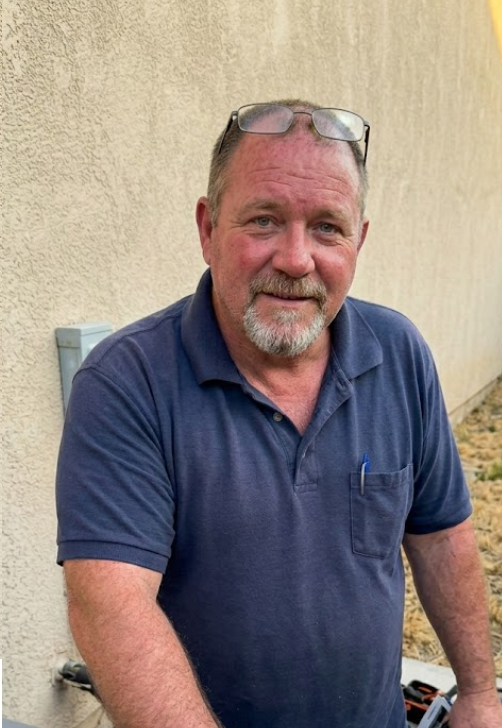
Dale Resnick
A 30-year veteran of residential HVAC who's crawled through more attics than he can count. Dale writes the 'Duct Tape & Beyond' column and believes every compressor tells a story if you listen close enough.

Here's a scene every owner-operator knows. You quote a customer $300 to replace a dryer heating element. You're wrapping up when they say, "While you're here, the dryer's been shaking and the dishwasher won't drain, can you take a look?" You say sure. You spend another forty minutes, order a $40 part, come back a second time, and the check that lands in your mailbox is still for $300. That add-on work didn't just cost you nothing extra. It cost you a second trip, unbilled labor, and a part you paid for out of pocket. The $300 job cost you $900 worth of your day.
This is the quiet margin leak that never shows up in your accounting software, because the money was never billed in the first place. Add-on work and slow-pay customers don't announce themselves. They erode your take one small, friendly favor at a time.
The Verbal Upsell That Never Made It to the Invoice
The construction world has a name for this: undocumented change orders. Someone asks for extra work, someone agrees to it, and the paperwork never catches up to the handshake. The result is predictable. The party doing the work absorbs the cost.
Small repair shops run on kitchen-table agreements even more than general contractors do. A homeowner asks you to also look at the ice maker, you nod, and now there's an expectation of service with no matching line on any document. When the invoice arrives showing the original number, everyone's happy. When it arrives showing a higher number the customer never saw coming, you get a phone call, a chargeback, or a one-star review that says you "added charges."
So techs learn to just eat it. That's the trap. The path of least resistance is to swallow the add-on rather than have an awkward money conversation while standing in someone's laundry room.
The fix isn't to say no to extra work. Add-on work is some of the most profitable work you'll do, because you're already on site with your truck stocked and the customer's trust earned. The fix is to make sure the extra work becomes an extra line before you lift a finger on it.
Scope Creep on a Simple Service Call
Scope creep is the slow version of the same problem. Nobody asks for a whole new job. The job just quietly grows.
You came for a no-heat dryer. You find a heating element, sure, but also a clogged vent, a worn belt, and a thermal fuse that's about to go. You're a good tech, so you fix what you find. But if your quoted price was for the element and you replaced four parts, you either need four line items or you're doing three repairs for free.
Drive time is the other silent line. A part that has to be ordered means a return visit, and that second trip has real cost: fuel, a truck, an hour of a tech's day that could have been another call. Very few shops price a return trip into the original quote, and even fewer bill for it when it happens.
Track callbacks and second trips as their own category for one month. Most owners are shocked to find that 20 to 30 percent of their jobs involve an unbilled return visit. That's not a service problem. It's a pricing and documentation problem wearing a service costume.
The "Pay You Next Week" Customer
Then there's the money that was billed but never collected on time. Slow payment is a documented drag on the whole building trades economy. The construction-finance firm Rabbet estimated that slow and inconsistent payment cost the U.S. construction industry roughly $299 billion in 2025, a figure it pegged at about 14 percent of total project costs. Small residential shops don't move construction-sized dollars, but the mechanism is identical: money you earned, sitting in someone else's account, while you float the cost of parts and payroll.
The "I'll pay you next week" customer is a credit decision you didn't know you were making. When you leave without payment and no written terms, you've extended an interest-free loan to a stranger. Sometimes it comes back. Sometimes it turns into three phone calls and a small-claims filing over $280.
The answer is boring and it works: decide your payment terms in advance and put them on the invoice. Payment due on completion is a perfectly normal term. If you choose to extend terms to a repeat customer or a property manager, do it on purpose, in writing, with a late fee attached. Our guide to pricing appliance repair in Southern California covers how to set base rates that leave room for the occasional slow collection without sinking a week.


What the Leak Actually Costs
Illustrative numbers for a single week, one truck, to show how small leaks stack. Your figures will differ. Build them from your own job history.
Twenty-one thousand dollars a truck is a real number. It's a technician's raise, a second van's down payment, or the profit margin that decides whether the year was worth it.
The Field-to-Invoice Checklist
Here's the discipline that stops the bleed. It fits on a card taped to the dashboard.
-
Quote the original job in writing before you start. A texted or signed number, not a verbal one. This is your baseline, and everything else is measured against it.
-
When the customer asks for more, stop and write it up. New task, new line, new price. Show them the updated total. This is your change order, and it takes less time than the work itself.
-
Get a yes on the new total before you do the added work. A signature, an initial, or a text that says "yes go ahead." Now the add-on is billable and defensible.
-
Log every part you install, including the cheap ones. The $8 gasket and the $12 fuse belong on the invoice. Small parts uncharged are pure loss.
-
Price the return trip, or fold it into the quote up front. If the job needs an ordered part, tell the customer there's a second visit and what it costs, before they assume it's free.
-
State payment terms on every invoice. Due on completion unless you've deliberately agreed otherwise in writing. No verbal "next week."
-
Don't start a new job for a customer who owes you for the last one. This one rule prevents most bad debt from ever compounding.
None of this requires software you don't already have. Most field-service apps let you add line items and capture a signature on the spot. The tool isn't the barrier. The habit is.
Add-On Work Should Be Your Best Work
The point isn't to become the tech who nickel-and-dimes a customer over a $12 fuse. It's the opposite. When add-on work is written up cleanly and priced fairly, customers trust it more, because they saw the number and said yes. The awkwardness comes from surprise, not from cost.
A shop that captures its add-on work and collects on time is a shop with cash to grow. One that gives it away on a handshake is running a charity with a service van. Deciding which pricing model makes that easier is its own question, and our breakdown of flat-rate versus time-and-materials pricing walks through how each model handles the add-on problem.
Write it down. Get the yes. Bill the trip. That's the whole game.
Sources
Rabbet (2025). "Slow Payments Cost $299 Billion in 2025 — a Hidden 14% Tax on U.S. Construction." Press release. Reporting via Yahoo Finance