


5 Sentences That Protect Your Repair Business in Court
Maria Solano
Former appliance warranty claims adjuster turned investigative repair journalist. Maria's 'What Went Wrong' teardown series has made her the most feared woman in the white-goods industry.
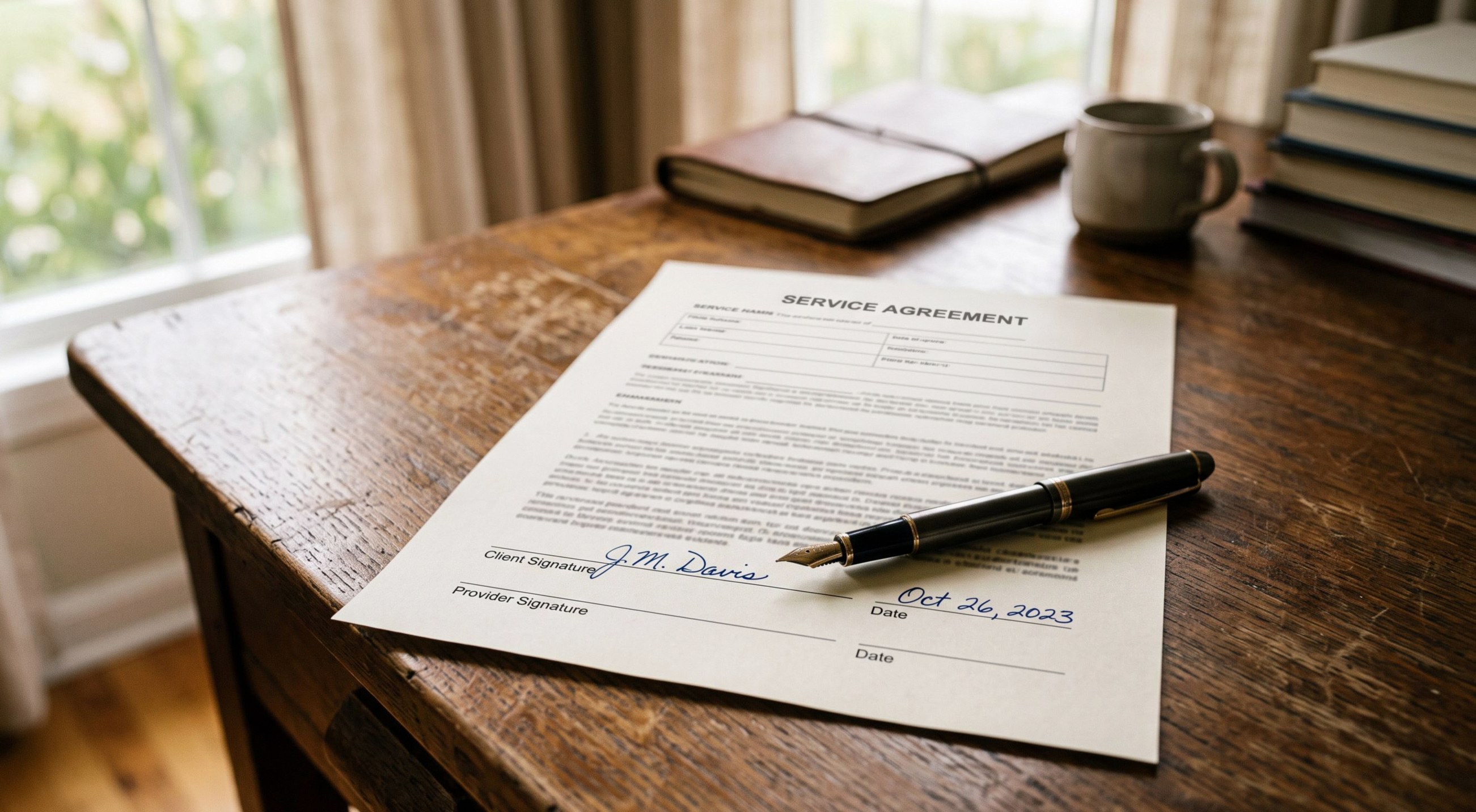
Most repair-shop disputes never reach a courtroom, but the ones that do tend to turn on a single question: what exactly did the two sides agree to? When the only record is a memory of a conversation in a customer's kitchen, you lose that argument more often than you should. Five plain-English sentences on your work order can change that. They won't make you bulletproof, and they're no substitute for insurance or an attorney's review, but they convert vague expectations into a written record you can point to.
This is general education, not legal advice for your specific situation. Contract law varies by state, and the wording below is a starting point to take to a local attorney, not a guarantee. With that said, here are the five clauses that do the most protective work for the least effort.
Clause 1: Define the Scope of Work
The single most common repair dispute isn't about quality. It's about scope. The customer thought you were fixing "the fridge," and you were replacing a compressor. When the ice maker fails two weeks later, they call it your fault.
A scope clause draws a box around what you agreed to do. State the inclusions and, just as important, the exclusions.
Example wording: "This work order covers the diagnosis and repair described above only. It does not include any other component, system, or condition not listed. Additional problems found during service will be quoted separately and are not included in this price."
That last sentence does double duty. It defines scope and it sets up your change-order clause below. A tight scope statement is also the foundation of honest pricing, which our guide to pricing appliance repair in Southern California treats as the starting point for every quote.
Clause 2: Disclaim Pre-Existing Conditions
You walk into a job and the appliance is already half-wrecked. Corroded wiring, a botched previous repair, water damage nobody mentioned. You fix the one thing you were called for, and a month later something else fails. Guess who gets blamed.
A pre-existing-conditions disclaimer says, in effect, "the machine was in the shape it was in when I got here, and I'm responsible for my work, not its history."
Example wording: "The customer acknowledges this appliance may have pre-existing wear, damage, or prior repairs not caused by this service. [Business name] is not responsible for pre-existing conditions or for failures of components other than those repaired under this order."
Back the clause up with two photos. Snap the data plate and any visible pre-existing damage before you start. A dated photo of a rusted-through drain pan does more in a dispute than any sentence, and it costs you fifteen seconds.
Clause 3: Limit Liability to the Invoice Amount
This is the clause that keeps a $300 repair from turning into a $3,000 claim. Without a limit, a customer can argue that your work caused a cascade of downstream damage. A liability-limitation clause caps your exposure for ordinary disputes at what they actually paid you.
Example wording: "The total liability of [business name] for any claim arising from this service is limited to the amount paid by the customer for the service. [Business name] is not liable for incidental, consequential, or secondary damages, including food loss, water damage, or loss of use."
Know the limits of this limit. Many states will enforce a reasonable cap on ordinary contract liability but will not let any business waive responsibility for gross negligence or bodily injury, and consumer-protection statutes can override the clause entirely for residential customers. This is exactly the kind of language a local attorney should bless before you rely on it. And it never replaces a real general liability policy.


Clause 4: Require Written Approval for Extra Work
Scope creep is where margin goes to die, and it's also where disputes are born. A customer verbally okays "whatever it needs," you do the extra work, and then they contest the bigger bill because they never saw the number.
A written-approval clause makes added work conditional on the customer's yes, in writing, before you do it.
Example wording: "No additional or extra work will be performed without the customer's written or texted approval of the added scope and price. Work performed at the customer's verbal request without written approval is billed at standard rates."
This protects you both directions. It stops customers from claiming surprise charges, and it stops you from doing free work on a handshake. Getting a signature or a texted "yes go ahead" takes under a minute, and it turns every add-on into a billable, defensible line.
Clause 5: Spell Out Payment Terms and Late Fees
The last sentence is about getting paid. State when payment is due, what happens if it isn't, and who pays collection costs if it comes to that.
Example wording: "Payment is due upon completion of service unless other terms are agreed in writing. Balances unpaid after [15/30] days accrue a late fee of [amount or percentage] per month. The customer agrees to pay reasonable collection and attorney costs on any unpaid balance permitted by law."
The "permitted by law" phrase matters, because some states cap late fees and regulate attorney-fee recovery. Set the number your attorney tells you is enforceable where you work, and put it in front of the customer before the job, not after.
Putting the Five Clauses to Work
The arithmetic favors doing this once and doing it right. A few hundred dollars for an attorney to review five paragraphs is cheap against a single dispute you lose because your key clause didn't hold in your state.
A few practical rules on making the clauses actually count:
- Put them where the customer sees them before saying yes. Terms shown up front and initialed beat terms discovered on the back of an invoice.
- Capture agreement. A signature or a digital acknowledgment on your field-service app is far stronger than an unsigned printout.
- Keep the language plain. These aren't meant to read like a mortgage. A customer who understands the terms is a customer less likely to fight them.
- Review them once with a local attorney. Then leave them alone until your business changes shape.
These five sentences won't win every dispute, and they don't replace insurance, good work, or clear communication. What they do is give you a written record when memory and goodwill run out. If you're just getting set up, they pair naturally with the licensing and formation steps in our guide to starting an appliance repair business in California. Build the terms into your standard work order once, and they protect every job after that for free.