


How to Find a Trustworthy Appliance Repair Technician
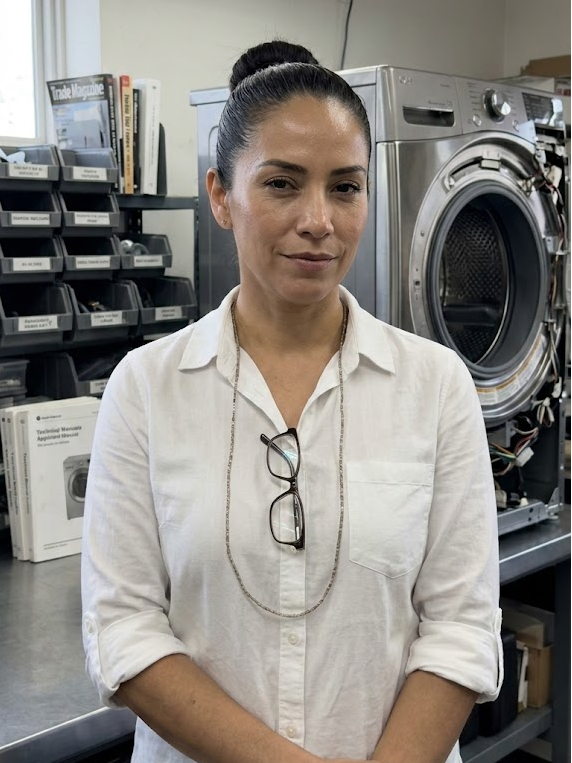
Maria Solano
Former appliance warranty claims adjuster turned investigative repair journalist. Maria's 'What Went Wrong' teardown series has made her the most feared woman in the white-goods industry.
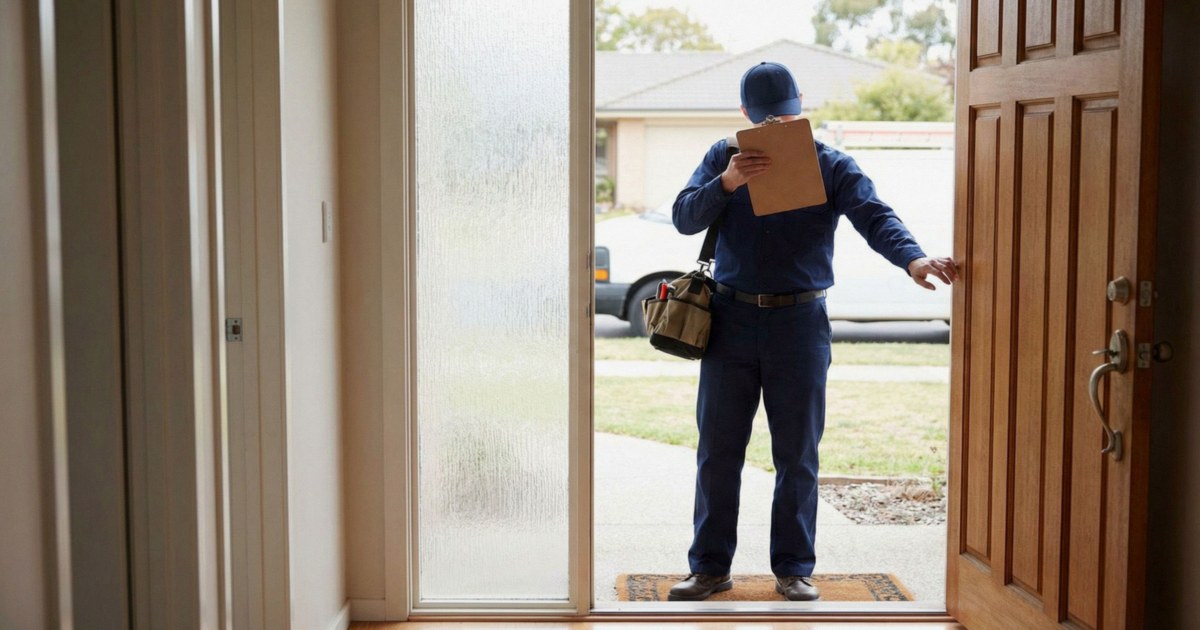
I spent seven years as an appliance warranty claims adjuster before I became a journalist. In that time I saw every variety of bad repair company — the ones that charged for parts they never installed, the ones that misdiagnosed on purpose to inflate the ticket, and the ones that performed no repair at all and disappeared with the diagnostic fee.
This guide is everything I learned from that period, written for the homeowner who needs to get their refrigerator fixed without getting taken.
Start With the BHGS Registration — It's Required for Every Appliance Repair Business
Here's something most homeowners — and even some technicians — get wrong: California does require appliance repair businesses to be registered with the state. The agency is the Bureau of Household Goods and Services (BHGS, formerly the Bureau of Electronic and Appliance Repair, or BEAR), part of the Department of Consumer Affairs.
Any company that repairs household appliances for compensation must hold a BHGS Appliance Service Dealer registration. The registration costs $190 per location and must be renewed annually. A shop operating without it is operating illegally — and that's your first, easiest filter.
To check: go to bhgs.dca.ca.gov and use the license lookup (also called "Check a License" / "Verify a License"). Enter the company name and confirm the registration is current and not expired or revoked. It takes under a minute, and it's the single most useful credential check you can run before letting anyone touch your machine.
When You Also Need a CSLB License
The Contractors State License Board (CSLB) licenses contractors for certain trade work that goes beyond routine appliance repair. BHGS registration covers the appliance repair business itself; CSLB licensing covers gas and HVAC trade work. Verify a CSLB license in these situations:
Gas appliance and gas line work — Disconnecting, reconnecting, or modifying gas supply lines and gas appliance connections falls under the C-36 Plumbing classification. (The C-36 scope explicitly covers gas piping and "all gas appliances, flues and gas connections.") A C-20 HVAC license does not authorize gas supply-line work. A technician who swaps a gas dryer connector, services a gas range, or reroutes a gas line without the proper C-36 license is operating illegally — and if something goes wrong, a gas leak or fire, their unlicensed status can affect your homeowner's insurance claim.
HVAC installation or major repair — Central AC, heat pump installation, and ductwork modifications require a licensed C-20 (Warm-Air Heating, Ventilating and Air-Conditioning) contractor.
Refrigerant work — Any technician who opens a sealed refrigerant circuit (servicing a refrigerator compressor, recovering or recharging refrigerant) must hold EPA Section 608 certification under the Clean Air Act. This is a federal requirement, separate from any state license.
To check a CSLB license: go to cslb.ca.gov, click License Check, and enter the company name or license number. Verify the license is current, not expired or suspended.
Bottom line: BHGS registration applies to every appliance repair business; the CSLB classifications and EPA 608 apply on top of it when gas, HVAC, or refrigerant work is involved. Verify every credential you can.
Verify Business Insurance Before Anyone Enters Your Home
A reputable appliance repair company carries two types of insurance: general liability and commercial auto. General liability covers property damage — if a technician drops a heavy refrigerator door on your hardwood floor, liability insurance pays for the floor repair. Commercial auto covers accidents in their service vehicles.
Ask directly: "Do you carry general liability insurance, and can you provide a certificate of insurance?" A legitimate company will say yes without hesitation. Some will email you the COI before the appointment if you ask. Fly-by-night operators rarely carry this insurance because it costs money. Their hesitation or deflection tells you what you need to know.
You don't need to inspect the policy in detail. You just need to confirm it exists.
If a technician arrives in an unmarked personal vehicle and pays for tools out of pocket, you are likely dealing with a solo operator with no insurance. That's not automatically disqualifying — many excellent independent techs work lean. But ask about insurance explicitly. An uninsured tech working in your home means you absorb any property damage that occurs.
Reading Reviews Like a Skeptic
Online reviews are useful but manipulable. Here's how to extract signal from the noise.
Don't rely on star averages. A company with 4.8 stars and 12 reviews is less informative than one with 4.3 stars and 300 reviews. Volume matters more than average. A small sample can be gamed; 300 reviews cannot be easily faked without detection.
Read the 2- and 3-star reviews. This is where real information lives. Five-star reviews are often templated or incentivized. One-star reviews are often emotional. Two- and three-star reviews from genuinely disappointed customers describe real service failures with specific details.
Look for pattern language. If multiple 1-star reviews mention the same thing — "quoted one price and charged another," "never called back," "part didn't fix the problem" — that's a pattern, not a coincidence.
Check review recency. A shop that was excellent three years ago may have changed ownership, staffing, or practices. Prioritize reviews from the last 12 months.
Cross-reference platforms. Check Google AND Yelp AND the BBB (bbb.org). Companies that suppress or respond aggressively to negative reviews on one platform often have complaint patterns visible on another.
Watch for review gating. Some companies only ask satisfied customers to leave reviews. An unusually high percentage of 5-star reviews (95%+) on a significant review volume is a potential signal of this practice.


Upfront Pricing vs. Diagnostic Fees: What to Expect
This is where most consumers get surprised. Understanding the two dominant pricing models prevents the sticker shock that leads to disputes.
Flat-rate or upfront pricing: The technician diagnoses the problem and provides a written estimate before any repair work begins. You approve the price, then they proceed. This is the customer-friendly model. It protects you from open-ended billing. The repair price is agreed upon before a single screw is turned.
Diagnostic fee model: The company charges a fee to come out and diagnose the problem — typically $65-125 in California. This fee is usually applied toward the repair if you proceed. If you choose not to proceed, you pay only the diagnostic fee. This model is transparent and honest when the diagnostic fee is clearly disclosed upfront.
The hybrid you should be suspicious of: "Free diagnostic" offers that result in astronomical labor or parts estimates. The "free" diagnosis is subsidized by inflated repair quotes. If a technician diagnoses your appliance for free and then quotes $600 for a $120 control board, the diagnosis was never actually free.
Always ask before booking: "What is your diagnostic fee, and is it applied toward the repair?" If they say it's free, ask how they generate revenue if you decline the repair. The answer reveals the business model.
Red Flags: The List
I've compiled these from seven years of warranty claims and several more years of talking to technicians and consumers. Any single item warrants caution. Multiple items warrant walking away.
Cash-only payment. Legitimate businesses accept credit cards. Cash-only is the single most reliable indicator of an operator who doesn't want transactions on record. It also eliminates your ability to dispute the charge if something goes wrong.
No written estimate before work begins. Verbal estimates are worthless. If a technician won't put the repair price in writing before starting, don't let them start. "I'll tell you when I'm done" is not acceptable.
Diagnosis over the phone without inspecting the unit. Any company that diagnoses your appliance and quotes a repair price over the phone, based on your description of symptoms, without physically inspecting the machine, is guessing — and they're guessing in a direction that benefits them.
High-pressure parts upselling. "While I'm in there, I should also replace the X and Y" is sometimes legitimate advice. But if a technician is pushing you toward additional parts you didn't ask about and can't explain concretely why they're necessary, be skeptical. This is where warranty fraud lives.
No receipt or written documentation of work performed. Every repair should generate a written receipt that lists the problem diagnosed, the parts replaced (with part numbers), the labor performed, and the total charged. Anything less is a liability for you if the repair fails and you need to dispute it.
Extremely low quotes to get in the door. $29 service calls and $49 diagnostic fees are usually loss leaders. The money is made on inflated parts. A refrigerator compressor that retails for $120 can appear on a shady invoice at $450. The low door price buys access; the parts markup is where the money is extracted.
Using the ServiceMag Directory
The businesses listed in the ServiceMag California Appliance Repair Directory have been sourced from verified business listings. When searching for a technician in your area, use the directory to identify local options, then apply the verification steps above — BHGS registration, insurance, CSLB licensing for gas or HVAC work, and review research.
Searching in a specific city or for a specific service type will surface the most relevant results. The directory also notes which companies serve commercial clients vs. residential only, and lists service area coverage for businesses that serve multiple cities.
Does an appliance repair business need to be licensed in California?▾
Yes. California requires appliance repair businesses to hold a Bureau of Household Goods and Services (BHGS) Appliance Service Dealer registration — $190 per location, renewed annually. You can verify a dealer's registration on the BHGS license lookup at bhgs.dca.ca.gov. Separately, any work involving gas supply lines or gas appliance connections requires a CSLB C-36 Plumbing license, and HVAC work requires a CSLB C-20 license. Refrigerant work requires EPA Section 608 certification. Always ask for the relevant credential numbers.
What should I expect to pay for a diagnostic fee?▾
Typical diagnostic fees in California range from $65 to $125. Reputable shops apply this fee toward the repair if you proceed. Be suspicious of any company offering a free diagnostic — it's a common bait tactic where the real charge appears later as an inflated parts estimate.
What are the biggest red flags when hiring an appliance repair company?▾
Cash-only payment, no written estimate before work begins, a diagnosis delivered over the phone without inspecting the unit, high-pressure upselling of parts you didn't ask about, and no paper receipt afterward. Any one of these is a warning sign. Multiple together should send you back to Google.
Sources
- Bureau of Household Goods and Services (BHGS), California Department of Consumer Affairs — Service Dealer registration and license verification. bhgs.dca.ca.gov
- BHGS — Electronic and Appliance Repair Dealer fee schedule (Appliance Service Dealer registration $190 per location, annual renewal). Fee Flyer (PDF)
- Contractors State License Board (CSLB) — C-36 Plumbing classification (gas piping, gas appliances, flues, and gas connections). cslb.ca.gov
- Contractors State License Board (CSLB) — C-20 Warm-Air Heating, Ventilating and Air-Conditioning classification. cslb.ca.gov
- U.S. Environmental Protection Agency — Section 608 Technician Certification (refrigerant handling, 40 CFR Part 82, Subpart F). epa.gov/section608
Need a repair professional?
Get free quotes from verified technicians in your area.
Find a Pro Near You