


Freezer Not Freezing But Fridge Is Cold: How to Fix It
Maria Solano
Former appliance warranty claims adjuster turned investigative repair journalist. Maria's 'What Went Wrong' teardown series has made her the most feared woman in the white-goods industry.
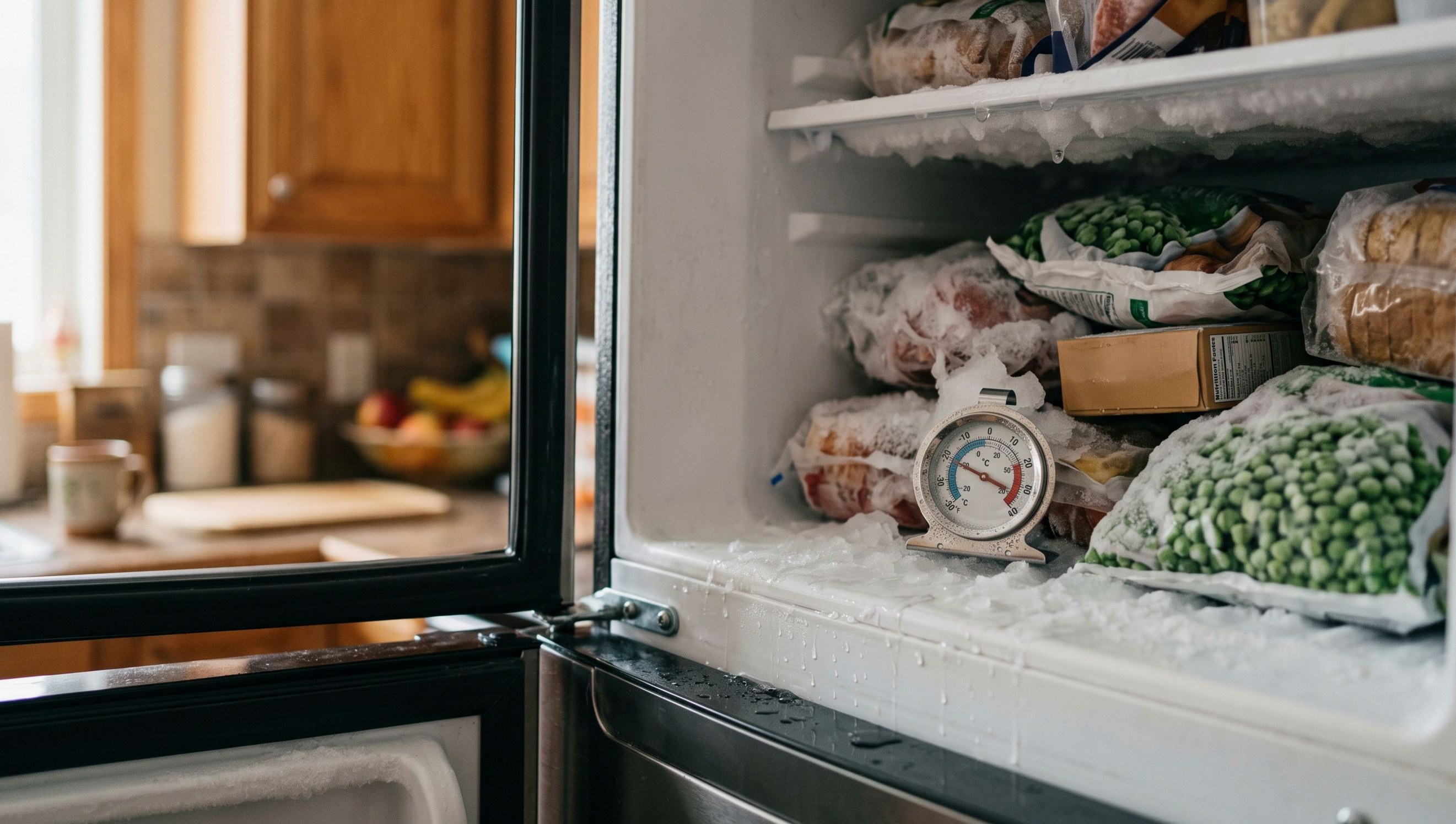
A freezer not freezing while the fridge stays perfectly cold sounds backwards, and mechanically it kind of is. Here's the thing most homeowners don't know: in the majority of modern top-freezer, bottom-freezer, and side-by-side refrigerators, a single evaporator coil sits in the freezer and cools both compartments, with a fan pushing some of that cold air over to the fresh-food side. So the freezer is supposed to be the coldest part of the box. When the freezer goes warm but the fridge holds, you're usually looking at something specific to freezer airflow or the defrost system, not a dead compressor. Let's work through it in a sensible order.
Start Here: The Free Checks
Before pulling panels, rule out the easy stuff.
- Make sure the freezer isn't packed wall to wall. Air has to circulate; a jammed freezer blocks the vents and the section that suffers first is often the freezer itself.
- Check the door seal. Hold a dollar bill in the closed door and tug; if it slides out with no resistance, the gasket is leaking warm air in.
- Confirm the temperature setting wasn't bumped, and that a "quick cool" or demo mode isn't engaged.
If none of that is the problem, move to the components.
Cause 1: A Failed Evaporator Fan Motor
The evaporator fan lives back behind the freezer's rear panel, next to the coil. Its job is to blow cold air off the coil and circulate it through the freezer and up to the fridge. If that fan dies, cold air pools right at the coil and doesn't move. Oddly, this can leave the fridge limping along on convection while the freezer, which depends on forced air, warms up.
Open the freezer and listen. A healthy evaporator fan hums when the door switch is defeated (press the switch by hand). Silence, or a fan that's iced up and jammed, points here. Replacing an evaporator fan motor is a moderate DIY job; match the motor to your model number.
Cause 2: A Frost-Blocked Coil From a Failed Defrost System
This is one of the most common real culprits. Frost-free refrigerators run an automatic defrost cycle several times a day to melt the light frost that naturally forms on the evaporator coil. When that system fails, frost keeps building until it becomes a solid block of ice over the coil. Ice is an insulator, so the fan can't pull cold air off a coil buried under it, and both compartments slowly lose their cool, freezer first in terms of noticeable warming.
Pull everything out of the freezer and remove the rear inside panel. A thick wall of frost is the tell. The failure is in one of three parts: the defrost heater, the defrost thermostat, or the defrost control (a timer or control board). Testing each requires a meter, and you'll want to confirm the exact part and its resistance spec against your model's tech sheet before ordering. A manual thaw (unplug the fridge for 24 to 48 hours with the doors open) will temporarily restore cooling and confirm the diagnosis, but the frost will return until the defrost part is replaced.


Cause 3: A Leaking Door Gasket
A worn or torn freezer gasket lets humid room air seep in continuously. That does two things: it warms the compartment, and the moisture it carries frosts up the coil faster and can overwhelm even a working defrost cycle. Look for cracks, tears, or spots where the magnetic seal no longer grips. A gasket is a straightforward replacement and one of the cheaper fixes on this list.
Cause 4: An Overpacked Freezer Blocking Airflow
Worth repeating on its own because it's so common. Cold air enters the freezer through vents, usually on the back wall. Stack boxes and bags against those vents and you throttle the airflow, creating warm pockets even though the system is working fine. Rearrange so nothing blocks the vents, and don't cram the compartment full. This costs nothing and fixes more cases than people expect.
Cause 5: Dirty Condenser Coils
The condenser coils (underneath or on the back) shed the heat the system pulls out of the food. Cake them in dust and pet hair and the whole refrigerator can't reject heat efficiently, so it struggles to hit temperature everywhere, freezer included. Coils that haven't been cleaned in years are a genuine performance drag.
Unplug the fridge, find the coils, and vacuum and brush them clean. Do it a couple times a year if you have pets. This is pure DIY and often overlooked.
Cause 6: A Stuck Air Damper
Some refrigerators use a damper to control how much cold air flows from the freezer coil into the fresh-food section. If that damper sticks open, it can dump too much cold air toward the fridge and leave the freezer under-served, or a stuck damper can otherwise unbalance the two compartments. It's a less common cause, but worth checking on models that have one.
Cause 7: A Sealed-System or Refrigerant Problem
Last, and least DIY-friendly. If the compressor runs constantly and cools very little anywhere, or the freezer never gets truly cold despite clean coils, clear airflow, and a working fan and defrost system, the sealed refrigerant system may be the issue, a leak, a restriction, or a weak compressor. This is not a homeowner repair. Refrigerant work requires EPA 608 certification, and diagnosis needs proper gauges. Call a pro.
What These Repairs Cost
Costs run from free (rearranging the freezer, cleaning coils) to a real bill if the sealed system is involved.
The Diagnostic Order
Go cheapest and easiest first: unpack the freezer, check the gasket, clean the condenser coils. Then check the evaporator fan and look for a frost-blocked coil, which together account for most real failures. Save the sealed system for last, and hand it to a certified tech. For the far more common flip side of this problem, see our guide on a refrigerator that won't cool, and if you're on a specific brand, the Samsung refrigerator not cooling walkthrough covers model-specific quirks.
Need a repair professional?
Get free quotes from verified technicians in your area.
Find a Pro Near You