


How Much Does General Liability Insurance Cost for HVAC Contractors in California?

Michael Senderovich
Michael Senderovich, MBA, is president of Six-Thirteen Business Insurance, a commercial brokerage that places coverage for contractors and tradespeople across California, Texas, the Carolinas, Missouri, Colorado, and Louisiana. He has spent more than a decade in commercial lines and holds an MBA from the University of Redlands.
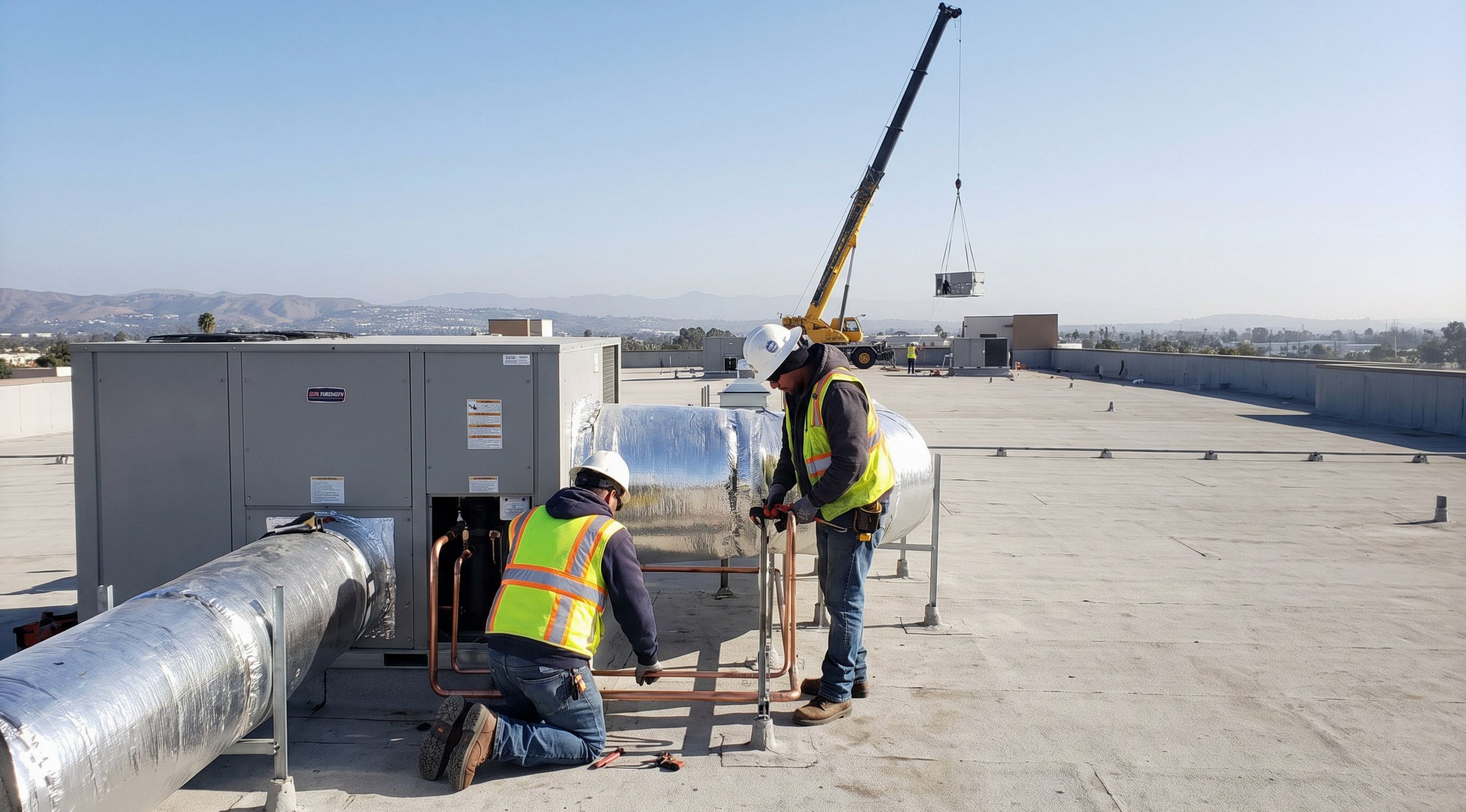
If you run an HVAC business in California, one of the first insurance questions you'll ask is what general liability insurance costs. Most small HVAC contractors can expect general liability premiums to start around $500 per year for a basic policy with $1 million per occurrence and $2 million aggregate coverage — the limits an agent will call "1/2/2." That's the floor, not the average. Your actual number moves with the type of work you do, your annual revenue, your payroll, and a handful of underwriting factors most contractors never see.
Here's how carriers arrive at the price, what the typical ranges look like, and where the coverage gaps hide — especially for anyone setting rooftop units or chasing new-construction work.
Average Cost of HVAC General Liability Insurance in California
For most HVAC contractors, annual premiums land in these ranges. Treat them as starting points — two shops with similar operations can get very different quotes because every carrier scores risk its own way.
What General Liability Insurance Actually Covers
General liability protects an HVAC contractor against claims involving bodily injury, property damage, and personal or advertising injury that arise out of normal business operations. In the field, that looks like:
- Scratching or gouging a customer's flooring while moving an air handler
- A homeowner tripping over your tools at the job site
- Water damage during a service call
- Property damage while running or modifying ductwork
- Legal defense costs when your business gets named in a suit
Commercial property owners and general contractors routinely require proof of this coverage before they'll let you set foot on the job. It's as much a key to the work as it is a safety net.
What Determines the Cost of HVAC General Liability Insurance
Carriers weigh several underwriting factors before they set your premium. Understanding them is the difference between a quote that fits your business and one that charges you for exposures you don't have.
1. Gross Receipts
Your annual gross receipts are one of the biggest levers. From the carrier's seat, more revenue means more jobs, more jobs mean more chances for something to go wrong, and more exposure raises the odds of a claim. A contractor doing $150,000 a year and one doing $2 million can perform nearly identical work and still land in very different price tiers, because the larger book simply presents more opportunities for loss.
2. Number of Employees and Payroll
Carriers look at headcount, payroll, and job duties together. The logic is plain: more technicians on more projects create more chances for property damage or an injury claim. A one-person service operation reads as lower risk than a company fielding several installation crews, and premiums tend to climb as the crew does.
3. Type of HVAC Work Performed
Not all HVAC work carries the same risk, and underwriters pay close attention to what you actually do.
Lower-risk operations — these usually earn friendlier pricing:
- Preventive maintenance
- Service calls and diagnostics
- Minor repairs
- Residential tune-ups
Higher-risk operations — these push premiums up:
- Full system installations, residential or commercial
- Large rooftop unit installs
- Refrigeration systems
- Structural modifications, welding, or other hot work
- Multi-story projects
The more complex the work, the more severe a claim can get — and severity is what carriers price for.
4. Crane Operations
Cranes are one of the biggest underwriting sticking points for HVAC contractors. Large rooftop units frequently need a crane to set them, yet many online insurance programs specifically exclude crane operations. That's a trap: a contractor can believe they're covered and find out otherwise after a unit swings loose.
If your company does any work involving cranes — even occasionally — flag it before you buy, and place the coverage with a carrier that understands the operation. Never assume an online policy folds in crane-related exposure.
5. New Residential Construction
Carriers also ask whether you work on new residential construction, and many treat it as a higher-risk class because of construction-defect litigation and the long tail on those claims — problems can surface years after the work is done. Some insurers add premium for it, others restrict or exclude it outright. If new construction is a meaningful share of your revenue, disclose it during quoting rather than after a claim.


Coverage Limits and Deductibles
Most HVAC contractors buy $1,000,000 per occurrence and $2,000,000 aggregate — the "1/2/2" that property managers, general contractors, commercial building owners, and municipal contracts commonly set as the minimum. Higher limits are available when a contract demands them, and many contractors stack a commercial umbrella policy on top for additional protection.
One quirk in general liability's favor: many policies carry no deductible for covered claims. Depending on the carrier and program, deductibles typically run from $0 to $2,500. Which one you get depends on the carrier and how they classify your business.
Why the Cheapest Online Quote Isn't Always the Best Deal
Plenty of contractors start their search online because it's fast. Online platforms can work fine for straightforward operations, but they usually pull from a limited slate of programs — and the policies can carry restrictions or exclusions that aren't obvious at checkout. Crane work and certain installation activities are exactly where those exclusions bite.
An independent commercial broker can reach a much wider market and match coverage to how your business actually operates, instead of forcing you into a one-size product. For contractors weighing licensing and coverage together, our guide on appliance repair licensing and insurance in California covers the regulatory side that sits alongside general liability.
How to Keep Your Premium Competitive
Pricing follows your operations, but a few habits help hold the line.
Work with an independent commercial broker. A broker who specializes in commercial lines can compare multiple carriers and wholesale markets, and the spread between the first quote and the best one is often significant — in both price and coverage.
Describe your operations accurately. If you mostly do service and repair, make sure your application says so. Accurate information lets the carrier classify you correctly instead of loading the premium for exposures you don't carry.
Review your coverage every year. As the business grows, the insurance needs change. An annual review keeps coverage in step with the work and surfaces savings when a new program or carrier fits better. If you're building out the business side more broadly, our guide to starting an appliance repair business in California and our breakdown of flat-rate versus time-and-materials pricing pair well with an insurance tune-up.
The Bottom Line
General liability is one of the more important line items an HVAC contractor carries, and while a policy may start near $500 a year, the right coverage tracks your company's size, operations, and risk profile. Shopping on price alone is where contractors get burned — a cheap policy that quietly excludes crane work or new construction can leave a six-figure gap exactly where the exposure is highest. Read the exclusions, match the coverage to the work you actually perform, and revisit it as the business changes.
Michael Senderovich, MBA, is president of Six-Thirteen Business Insurance, a commercial brokerage serving contractors across California, Texas, the Carolinas, Missouri, Colorado, and Louisiana. Connect with him on LinkedIn.