


How to Price Emergency and After-Hours Service Calls
Maria Solano
Former appliance warranty claims adjuster turned investigative repair journalist. Maria's 'What Went Wrong' teardown series has made her the most feared woman in the white-goods industry.
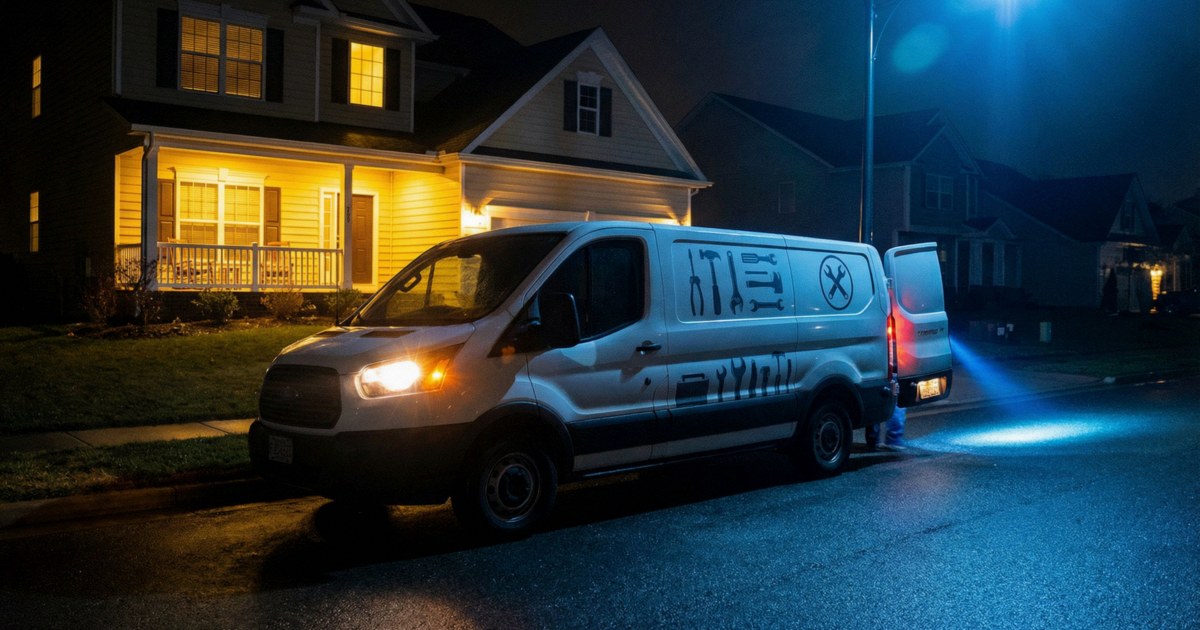
The phone rings at 8:45 PM on a Friday. It's a customer with a refrigerator full of food and a fridge that's been warm since noon. She wants someone there tonight. What do you charge?
How you answer that question — and what you say when you give the number — is one of the highest-leverage decisions in your business. Get it right and you build a reputation for reliability that justifies premium pricing. Get it wrong and you either leave money on the table or lose the call to someone with a $49 diagnostic special who won't show up until Tuesday anyway.
Here's how the top shops in Los Angeles, San Diego, and the Inland Empire structure after-hours pricing, and what you can take directly to your own rate card.
The Three Pricing Models
Model 1: Flat Surcharge
The flat surcharge is the most common model and the easiest to explain. You add a fixed dollar amount on top of your standard service call fee. The call-out fee stays the same whether the job takes 20 minutes or 3 hours.
How it typically looks:
- Standard service call: $89-119
- After-hours surcharge (evenings, weekends): $65-100 additional
- Holiday surcharge: $100-150 additional
The flat surcharge works well when your standard pricing is already based on flat-rate repair pricing (not hourly), because the customer's total isn't hard to predict. They pay the premium to get you there — the repair cost is then quoted separately and doesn't change based on the time of day.
Who uses it: Most mid-size independent shops in Los Angeles County, particularly those serving residential customers in the Valley and South Bay, use a flat surcharge. It's predictable, easy to quote over the phone, and simple to track.
Model 2: Rate Multiplier
The rate multiplier applies a factor to your entire invoice — typically 1.5x for evenings and weekends, 2x for overnight and major holidays. This model scales with job complexity: a big repair at 9 PM costs proportionally more than a small one.
How it typically looks:
- Standard labor rate: $125/hr
- Evening/weekend rate: $185/hr (1.5x)
- Overnight/holiday rate: $250/hr (2x)
The multiplier model works better for shops that quote repairs hourly rather than flat-rate. It's also the right model if your average emergency call is a longer, more complex job — commercial kitchen equipment techs, for example, use multipliers almost universally because their after-hours calls tend to be higher-stakes and longer.
The downside: customers don't always do the math upfront and can get sticker shock when the invoice arrives. Counter this by telling them the rate explicitly before you go out: "Our standard rate is $125 an hour. After 6 PM it's $185. This job will likely run about an hour and a half."
Model 3: Zone-Based Pricing
Zone-based pricing layers geography on top of the time surcharge. You define service zones by drive time or distance and charge more for calls that require significant travel after hours.
Example zone structure:
- Zone 1 (within 10 miles): standard evening surcharge applies
- Zone 2 (10-20 miles): standard surcharge + $25 travel add-on
- Zone 3 (20+ miles): standard surcharge + $50-75 travel add-on, or no after-hours service at all
Zone pricing makes sense in sprawling metro areas where a Friday evening call in Pasadena versus one in Riverside are genuinely different propositions. Several high-end sub-zero appliance service companies in the L.A. Basin use zone pricing explicitly — it's printed on their website and explained at booking, so there are no surprises.
Before you set your after-hours rates, check what the top three Google-ranked competitors in your zip code charge. Not the fly-by-night services — the ones with 200+ reviews and 4.7+ ratings. If they're charging $100 after-hours premiums and you're at $35, you're leaving money on the table and possibly signaling that your service is lower quality. Price anchoring is real in this market.
What to Charge: A Rate Card Template


When the Premium Is Justified — and When to Charge More
Not all after-hours calls are equal. A call where the customer has a freezer full of $500 worth of meat warrants a higher premium than a dishwasher that can wait until Monday. Learning to read urgency — and price accordingly — is a real skill.
Charge at the top of your range when:
- The customer volunteers that food, medication, or business operations are at risk
- They've already called two other shops and no one will come
- The job is in a high-income area where the appliance cost is $2,000+
- It's a holiday weekend or overnight
Consider standard pricing (or a lower surcharge) when:
- The call is marginal — it could wait but they'd prefer tonight
- It's a regular customer or a property management company that sends you consistent volume
- You're slow and want the revenue and the review
How to Communicate the Surcharge Without Losing the Call
The way you phrase the after-hours fee matters almost as much as the number. Customers aren't paying for your inconvenience — they're paying for availability and peace of mind. Frame it that way.
Less effective: "We charge a $75 after-hours fee."
More effective: "I can be there this evening. There's a $75 premium for evening calls — that's in addition to the standard diagnostic. Want me to pencil you in for 7:30?"
Moving immediately to the booking question after stating the fee is a technique borrowed from sales training and it works. It doesn't give the customer space to argue the fee — it asks them to move forward. Most will.
Script for resistance: "I understand. The reason we charge the premium is that we pay our techs extra to be available after hours, and we have to maintain a 24-hour answer line for exactly these situations. That cost is passed through. But if tonight doesn't work, I can get you first thing Monday morning at standard rate."
Giving them a clear alternative that includes Monday-at-standard-rate does two things: it makes them feel respected, and it makes the after-hours premium feel like a real, bounded choice rather than a gotcha.
Policies That Prevent Problems
Write it on your website. Customers who are surprised by a fee feel deceived even if they should have asked. A "Pricing" or "Service Call Fees" page that shows the after-hours surcharge in plain language eliminates 90% of after-the-fact complaints.
State it at booking, in writing. Text or email a confirmation that includes the surcharge amount. "Your appointment is confirmed for tonight at 7:30 PM. After-hours fee of $75 applies, plus standard diagnostic and repair cost."
Don't discount after-hours fees as a closer. Once you discount the surcharge to get a hesitant customer to book, you've established that the fee is negotiable. You'll have the same conversation every time.
Know when to say no. If a call is 45 minutes out at 11 PM for a $150 repair, the math may not work. It's okay to politely decline and offer next-day service. Burning yourself out on unprofitable late-night calls is a path to burnout, not a business.
For a complete picture of how to structure your overall service call pricing and what the market supports in different SoCal regions, see our pricing guide for appliance repair in Southern California. And if you're still building out your service business and want a baseline for how the most successful shops structure their operations, the starting an appliance repair business in California guide covers the full picture.
How much should I charge for after-hours appliance repair?▾
Most SoCal shops charge a flat surcharge of $50-150 on top of standard rates, or a 1.5x multiplier on the base service call fee. Premium and same-day services charge $100-200 extra. Set your rate based on what well-reviewed competitors in your zip code charge — underpricing signals low quality as much as it saves the customer money.
Should I charge more for weekends versus nights?▾
Yes. Tiered surcharges are standard: $50-75 extra for evenings (after 5-6 PM weekdays), $65-100 for weekend daytime, and $100-150 for nights, holidays, and overnight calls. Tiering feels fair to customers and it's easy to explain.
Need a repair professional?
Get free quotes from verified technicians in your area.
Find a Pro Near You