

Kevin Arnow on Maintenance Contracts and the Refrigerant Transition in Burbank
Maria Solano
Former appliance warranty claims adjuster turned investigative repair journalist. Maria's 'What Went Wrong' teardown series has made her the most feared woman in the white-goods industry.
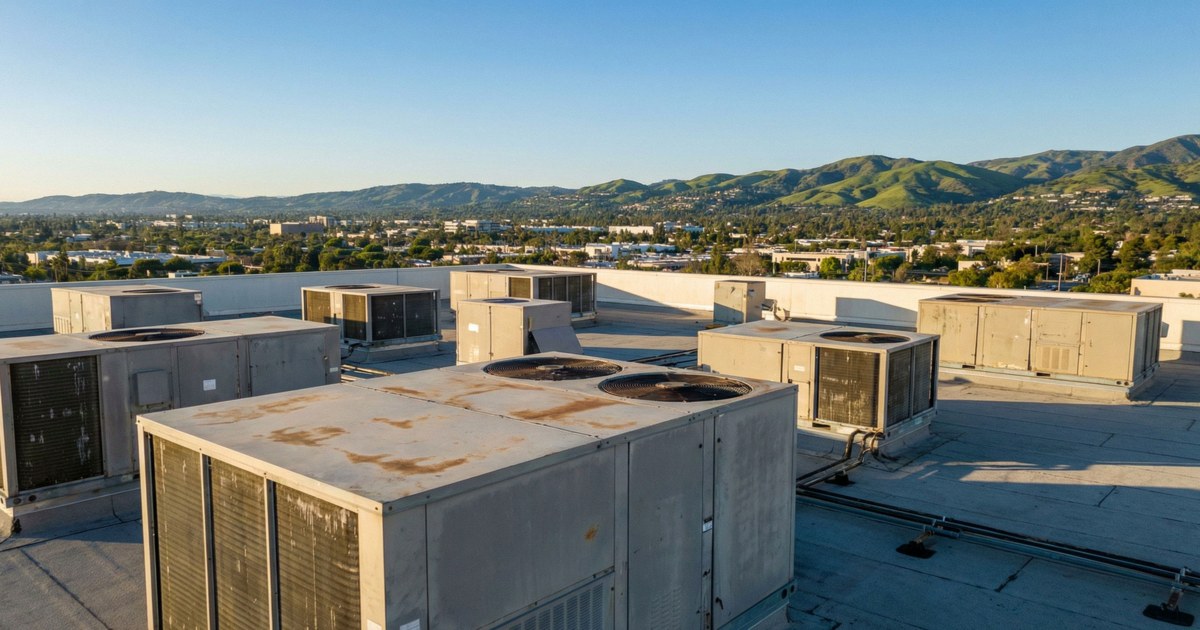
Kevin Arnow has been running Burbank Air Conditioning Repair for over a decade, serving Burbank, Glendale, North Hollywood, and Pasadena. In a market where summer temperatures regularly push past 100°F and a broken AC isn't a nuisance but a genuine health issue, his phone doesn't stop ringing between June and September.
We talked about how he manages that demand surge, the maintenance contract model that stabilized his revenue year-round, and the refrigerant transition that's rewriting how his industry prices work.
ServiceMag: Burbank and the San Fernando Valley — what makes this market different from the rest of LA?
"Heat. That's the simple answer. Burbank hits triple digits in summer in a way that coastal LA doesn't. When it's 78°F in Santa Monica, we might be at 104°F in the Valley. That's not hyperbole — it's the marine layer. The coast gets the cool air off the ocean. We don't."
"What that means for my business is that AC failure here isn't a comfort issue. It's a health issue. I get calls from elderly customers, families with young kids, people on medications that make heat dangerous. When I say I'll be there tomorrow, for some of them, that's not an acceptable answer. I staff for that reality."
ServiceMag: How do you actually manage the summer surge? The period where everyone's AC breaks at once?
"We start preparing in March. I schedule preventive maintenance calls for our contract customers in April and May — before the heat hits. We're tuning up condensers, checking capacitors, verifying refrigerant charge. Most of the failures you see in July broke down slowly over the spring. Catch them in May, and the customer never knows they were about to have a problem."
"For the reactive calls — the true breakdowns — we triage. Elderly customers, anyone with a medical situation, households with infants: they go to the top of the list, same day. Everyone else, we're honest about the timeline. I'd rather tell someone Wednesday than promise Tuesday and show up Thursday. Your reputation is built on whether you do what you said you'd do."
ServiceMag: You mentioned maintenance contracts. Tell me how that model works for you.
"It's the single best thing I've done for the business financially. A maintenance contract is an annual agreement — the customer pays a flat fee, we do two visits per year (spring and fall tune-ups), and they get priority scheduling during peak season and a discount on any repairs that come up."
"For me, it creates predictable revenue in the slow months. November through February, I'm doing the fall maintenance calls for the contract customers. I'm billing in January when nobody is calling for repair work. That cash flow smoothing changed my business. I went from scrambling in winter to running on a consistent schedule twelve months a year."
"The other benefit: maintenance customers stay loyal. A customer who's on a contract has a relationship with you. They're not going to Google 'AC repair' when their system breaks in August — they're calling me directly. The referral rate from contract customers is also much higher than from one-time repair customers."
ServiceMag: What does a maintenance agreement typically include and cost?
"Our standard residential contract covers two visits: spring and fall. The spring visit includes condenser cleaning, electrical connections inspection, capacitor testing, refrigerant pressure check, drain line flush, and a filter. The fall visit is the same plus a check of the heat exchanger if they have a furnace."
"Pricing is $180-250 per year for a single system, $280-380 for a system with both heat and AC. We're in the middle of the market for Burbank and Glendale. Some shops are cheaper, but they're doing a 20-minute walk-through and handing the customer a checklist. Ours is a real tune-up."
If you're a homeowner and your AC company is in and out of a maintenance visit in 20 minutes, you're paying for a sticker on your equipment, not an actual service. A thorough tune-up takes 45-60 minutes minimum. Ask what specifically they're checking and testing. If they can't give you a specific list, find someone who can.
ServiceMag: The refrigerant transition — R-22 out, R-410A phasedown, now R-454B. How has that affected your business?
"R-22 is basically done. If a customer calls with an R-22 system that has a leak, the conversation is: repair the leak and charge it at $80-100 per pound for used refrigerant, or replace the system. Most customers replace. There's no good financial case for maintaining a 20-year-old R-22 system at those prices."
"R-410A is where things get complicated. The EPA phasedown means new equipment can no longer be manufactured with R-410A as of January 2025. New systems are R-454B (Opteon XL41) or R-32. But existing R-410A equipment can still be serviced, and R-410A refrigerant is still available for now — just at higher prices than two years ago."
"What this means practically: if I'm putting refrigerant into an R-410A system, I have a conversation with the customer about the system's age. An R-410A system that's 8+ years old, in a market this hot, is going to need replacement within a few years regardless. I'd rather help them plan for that than have them spend money on a refrigerant charge and then face a compressor failure 18 months later."
ServiceMag: Are you training for R-454B systems now?
"Yes. The new refrigerants are classified as A2L — mildly flammable, whereas R-410A was A1 (non-flammable). That changes installation and service requirements. Leak detection is more critical. Some older procedures need to be modified. We've been through the updated EPA training, and the new equipment we install is R-454B."
"The honest thing is, the equipment is still the equipment. The basic refrigeration cycle is the same. The refrigerant properties differ and some service procedures change, but for an experienced HVAC tech, it's not starting from scratch. It's learning the differences on a foundation you already have."
ServiceMag: You serve Burbank, Glendale, NoHo, and Pasadena. What's different about working in each of those areas?
"Pasadena has more older high-end homes with complex duct systems, sometimes attic duct runs that are 40 years old. When you're working in Pasadena, you often end up discovering that the AC problem is the ductwork, not the equipment. Old flex duct with separated joints, insulation falling apart, duct paths that were designed for smaller equipment. I scope jobs in Pasadena carefully before I quote them."
"Burbank and Glendale have a lot of mid-century construction, single-story houses with attic HVAC. Those systems are sometimes original. I'm up in attics in 120°F conditions pulling out equipment that hasn't been touched in 30 years. That work requires a different pace — hydration, breaks, not rushing."
"North Hollywood and the NoHo area have a lot of multi-unit residential. Apartment owners and property managers are a different customer than homeowners. They're making decisions on cost more than quality. You have to be efficient and price competitively. The relationship is transactional. It's good volume but lower margin."
ServiceMag: If a homeowner is reading this and trying to decide whether to repair or replace their system, what do you tell them?
"I ask three questions. How old is the system? In SoCal heat, a system that's 12 years or older is in the second half of its life. Not necessarily failing tomorrow, but the risk curve is going up."
"Second: what's the repair cost relative to a new system? A capacitor on a 15-year-old system? Repair. A compressor on the same system? We're having a replacement conversation. The rule of thumb in the industry is repair if it's under 30-40% of new system cost. I agree with that ballpark."
"Third: efficiency. A 15-year-old system might be 10-12 SEER. A new system is 16-20 SEER2 minimum. If the customer's SCE or SoCalGas bills are high, the efficiency savings on a new system may genuinely offset a significant portion of the replacement cost over the system's life. I show them the math. Some customers care about that. Some don't. But they should at least see it."
For more on HVAC troubleshooting, see our full AC not cooling diagnostic guide. If you're considering a mini-split system instead of replacing central AC, our mini-split installation guide for Southern California covers the options and what to expect.
How to Contact Burbank Air Conditioning Repair
Burbank Air Conditioning Repair serves Burbank, Glendale, North Hollywood, Pasadena, and the surrounding San Fernando Valley communities. Visit burbank-airconditioning-repair.com or call (818) 350-7823.
Need a repair professional?
Get free quotes from verified technicians in your area.
Find a Pro Near You