

What 142 Studies on Energy-Efficient Appliance Purchases Actually Tell Us
ServiceMag Staff
ServiceMag editorial staff covering the appliance and HVAC trade.
If you sell high-efficiency appliances for a living, a systematic review published in Energy Efficiency in March 2025 is worth knowing about. Hoang Viet Nguyen, Bao Ngoc Le, Weng Marc Lim, Thac Dang-Van, and Ninh Nguyen went through 142 empirical studies on why consumers buy (or don't buy) energy-efficient appliances and organized what the field collectively knows.
The headline for dealers isn't a ranked list of sales triggers. It's that the research base is broad, fragmented, and built mostly on stated-intent surveys, which means the academic literature is better at telling you what people say than what they do.
What the review actually covers
Nguyen and colleagues used the Theory-Context-Characteristics-Methods (TCCM) framework to sort the 142 studies. The single most common theoretical lens across those studies was the Theory of Planned Behavior, which models a purchase as the output of three inputs: attitude toward the behavior, perceived social pressure, and perceived control. If you have ever sat through a manufacturer sales training with a chart of "belief, norm, intent," that's where it came from.
The studies cluster in emerging Asian markets. China, Pakistan, and Malaysia dominate the sample. North American and European data are present but underrepresented, which matters when you try to apply any specific finding to a Southern California showroom.
The review groups the factors those 142 studies examined into four buckets:
Socio-demographic: age, income, education, household composition.
Psychographic: environmental attitude, sustainability orientation, general values.
Situational: context at the point of purchase, including rebates, retail environment, and replacement urgency.
Marketing-related: eco-labels, price framing, promotions, brand communication.
The authors deliberately stop short of a cross-study ranking. They write that the literature is too methodologically inconsistent, too geographically skewed, and too intention-focused to support a single "price beats environment" style bottom line. That's a real limitation, and it's the limitation dealers should quote when someone waves a single study at them.


What the review does say clearly
Three things stand out.
Intention is not purchase. Most of the 142 studies measured what people said they would buy, not what they actually bought. The authors flag this as the biggest gap in the field and recommend longitudinal tracking of real purchase behavior. Any trade pro who has watched a customer spend 20 minutes praising the ENERGY STAR unit before buying the cheaper one already knows this gap exists.
Context matters more than the field has treated it. Situational factors (rebate availability, replacement emergencies, installer recommendations) are underrepresented in the reviewed studies relative to psychographic factors. For a dealer, that's a research gap pointing at your daily reality: the customer replacing a failed fridge in July is not making the same decision as a survey respondent asked about future intent.
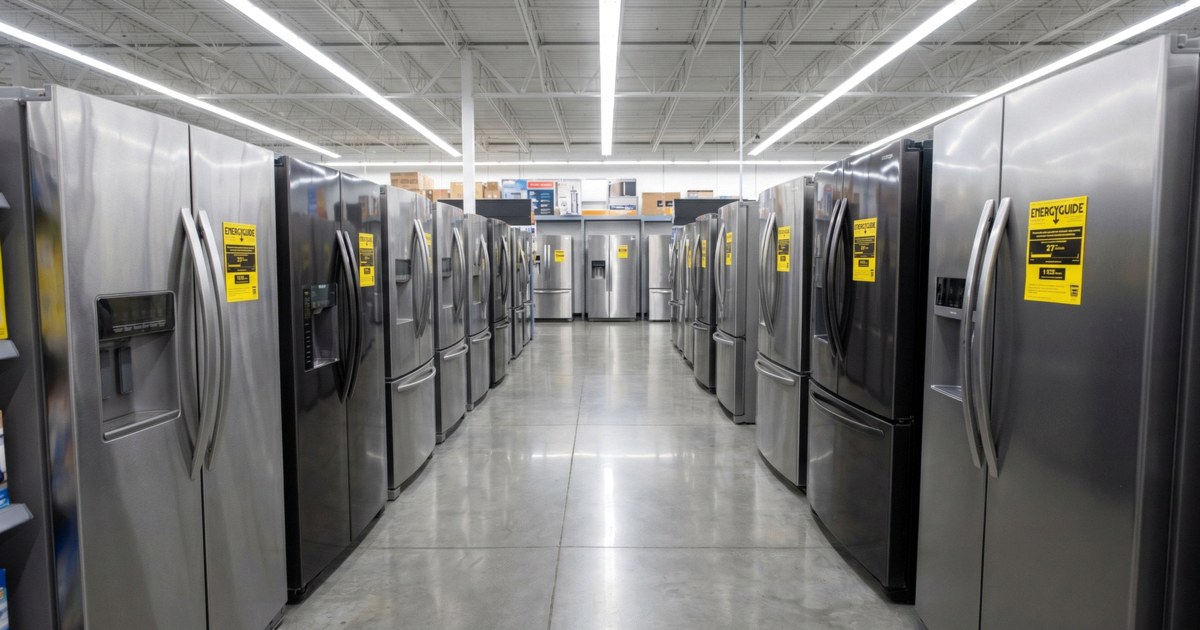
Marketing research is mostly about labels. The marketing-factor bucket is heavy on eco-label studies and lighter on price-framing, financing, and point-of-sale disclosure research. The practical read: there is more peer-reviewed work on whether the blue ENERGY STAR sticker shifts intent than on whether a clear 10-year operating-cost table shifts a signed invoice.
If a manufacturer rep tells you "research shows environmental messaging drives sales," ask which study and in which country. The Nguyen 2025 review makes it clear the evidence base is dominated by intention surveys in emerging Asian markets. That's useful context, not a template for a California sales script.
How to use this on the sales floor
The review isn't a playbook, but it does shape three habits.
Treat survey-based consumer research as directional, not definitive. If a customer says environment is their top driver, weight that against what they finance. The field itself, per Nguyen and colleagues, has not closed the gap between stated and revealed preference.
Lean on situational levers you can actually control. Rebate awareness, financing clarity, and same-day availability are all situational factors, which the review flags as underresearched but practically powerful. California's utility and TECH Clean rebate stacks are exactly the kind of situational input the academic literature is still catching up to.
Document what works locally. The review's Asia-heavy sample is a reminder that nobody has published a good study on your specific customer base. Your own close rates by sales script are, for practical purposes, better evidence than anything in the 142 studies when it comes to a Riverside County showroom.
Our extrapolation, not the paper's: the Nguyen review's findings about intent-versus-purchase gaps probably apply more sharply in California, where high sticker prices and aggressive rebate programs create more room between what buyers say and what they sign. The authors did not study the California market specifically.
For adjacent coverage, see our reporting on heat pump sales trends and the 2027 DOE efficiency standards update.
Source
Nguyen, H. V., Le, B. N., Lim, W. M., Dang-Van, T., & Nguyen, N. (2025). "Consumer purchases of energy-efficient appliances: A systematic literature review and research agenda." Energy Efficiency, 18(29). https://doi.org/10.1007/s12053-025-10317-1
Need a repair professional?
Get free quotes from verified technicians in your area.
Find a Pro Near You