

California's REFRESH Pilot Will Pay Contractors for Recovered R-410A and R-22
Terry Okafor
Master refrigeration tech and NATE-certified instructor.
The California Air Resources Board picked Hudson Technologies on December 9, 2025 as one of two reclaimers for REFRESH, the state's first refrigerant-recovery incentive program. The second selected reclaimer is A-Gas (Ohio). Funding runs up to $5 million under the F-gas Reduction Incentive Program, with day-to-day administration by the North American Sustainable Refrigeration Council. Initially, the pilot partners those two reclaimers with refrigerant contractors participating in the California Energy Commission's Equitable Building Decarbonization (EBD) Statewide Direct Install program to buy back recovered HFC and HCFC refrigerants — it is not yet open to the general California HVAC contractor population.
For shops that have been eating the labor cost of proper recovery, that's a real change.
The program arrives ahead of California's 2030 ban on bulk virgin R-410A sales (SB 1206), which prohibits the sale of bulk refrigerant with a GWP above 1,500 — capturing virgin R-410A — effective January 1, 2030, while exempting reclaimed refrigerant. That deadline already has distributors rethinking inventory and contractors rethinking how much reclaimed gas they can stockpile legally. REFRESH is, in effect, the state's answer to a simple question: what happens to the millions of pounds of R-410A and R-22 still circulating in the installed base when replacement equipment can't use it?
How the Payments Flow
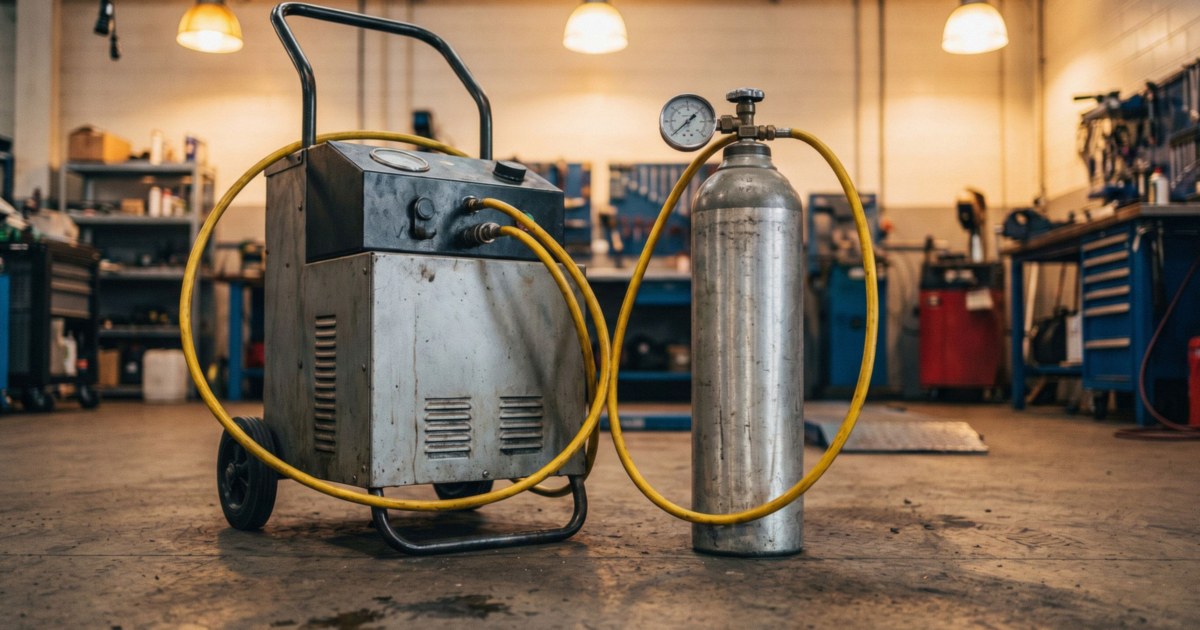
Contractors recover refrigerant the way they always have, using certified machines and DOT-tagged cylinders. Recovered refrigerant moves to a selected reclaimer — Hudson Technologies or A-Gas — for lab testing and reprocessing. Under the pilot, up to $5 million of FRIP funds is available to buy back that recovered refrigerant and to support administrative and labor costs. The pilot is set to launch in early 2026; specific payment rates and enrollment mechanics will follow from CARB and NASRC.
Two details technicians should note. First, R-22 is eligible alongside HFCs like R-410A, which matters because a lot of recovered gas comes off aging residential splits and gets disposed of grudgingly. Second, documentation matters more than it used to. If your recovery log looks like it was scribbled in a glove box, clean it up before applying.


Where This Fits in the Bigger Picture
REFRESH doesn't change federal EPA 608 obligations, it adds a financial layer on top of them. Contractors who already run proper recovery programs get paid more for the same work. Shops that have been venting or under-recovering get nothing, which is presumably the point.
For background on the refrigerant rules driving this, see our 2026 EPA refrigerant transition update and our piece on the R-410A ban rollback debate under the AIM Act.
With the pilot launching in early 2026, contractors enrolled in the CEC's EBD Direct Install program should get their recovery equipment calibration and DOT cylinder certifications current now.
Sources
Hudson Technologies. (December 9, 2025). "Hudson Technologies Selected to Support California Air Resources Board's REFRESH Pilot Program for Refrigerant Recovery & Reclamation." Press release
California Air Resources Board. "F-gas Reduction Incentive Program (FRIP)." Program page