


Owners Recover Less Than Their Employees Do: What Actually Reduces Contractor Burnout
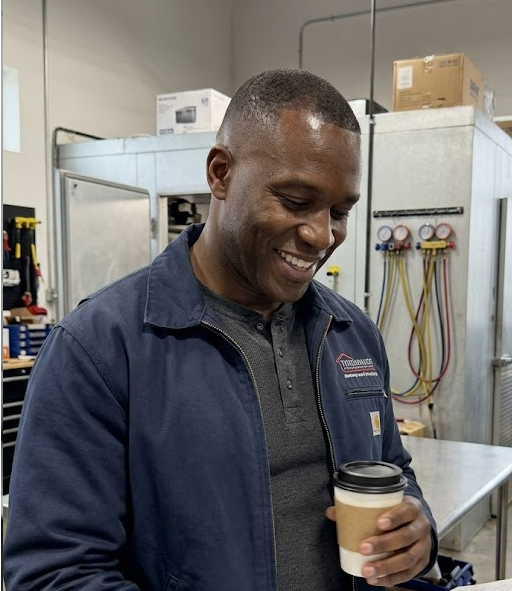
Terry Okafor
Master refrigeration tech and NATE-certified instructor who moonlights as the magazine's advice columnist. His 'Ask Big Terry' mailbag has been settling shop disputes and diagnosing mystery leaks since 2011.

If you own the shop, you already suspect this. You're the one still answering the phone at 8pm, still doing payroll on Sunday, still carrying the callback in your head through dinner. New research backs up the hunch and adds a useful twist for anyone chasing lower contractor burnout: small-business owners recover less from work than their own employees do, and not all recovery is worth the same.
The study, by Mathieu Le Moal, Roy Thurik, Olivier Torrès, and Guillaume Soenen, ran across four surveys of French small-business owners and appeared in Small Business Economics. It measured daily off-work recovery experiences, the things that let you actually reset between shifts, and compared owners to employees.
Owners came up short. They reported fewer of those recovery experiences across the board: less psychological detachment, less relaxation, less mastery, less control. The people with the most responsibility were getting the least recovery. That's the part that won't surprise a single owner-operator reading this.
What Actually Moves the Needle on Contractor Burnout
Here's where the study earns its keep. It didn't just measure recovery in bulk. It broke it into four components and checked which ones were tied to feeling better and which to lower burnout. The answers aren't what the usual "work-life balance" advice would predict.
Overall, higher recovery quality was associated with greater well-being and lower burnout. No shock there. But the components split apart in a way that matters if your time is scarce.
Relaxation and control showed the strongest links to well-being. Control, meaning a real say over your own time and how your day goes, had the strongest link of all to lower burnout. That's the lever.
And two things people assume are load-bearing turned out not to be, at least in this data. Psychological detachment, the "completely switch off and don't think about work" idea, was not correlated with well-being. Mastery, the "recharge by learning a new hobby" idea, was not correlated with burnout. Neither is useless, but neither carried the weight the popular advice assigns it.


From Finding to Fix
Read plainly, the study reframes what an owner should spend limited energy on. "Just unplug" is the advice everyone gives, and detachment barely registered here. Control did. So the move isn't to feel guilty about checking your phone; it's to build a business where fewer things require you to check it.
That's a structural problem, not a willpower problem. The single biggest source of lost control for most owner-operators is being the only person who can do the work. The first real hire is what starts to give the calendar back, which is exactly why we spend so much time on hiring your first appliance repair technician. It's not just capacity. It's recovery.
Relaxation, the other strong link to well-being, is simpler and more literal than mastery. It's not a project. It's genuine downtime that asks nothing of you. Owners tend to schedule everything except that, and the data suggests it's worth protecting a slot for it the way you'd protect a paying job.
There's a revenue angle to the control problem too. A book of business that only pays when you personally show up keeps you on the hook every day. Predictable, recurring work spreads the load and makes it easier to step back without the income falling off, which is part of the case for maintenance agreements and recurring revenue.
One honest limit before you build your whole schedule around this: the study is based on French small-business owners and reports associations, not proof that more control causes less burnout. But the direction lines up with what the trade already knows, and it's specific enough to act on. Stop treating recovery as one undifferentiated thing. Buy back control of your time first, guard real relaxation second, and quit feeling like a failure for not fully unplugging. The research says that last one was never the point.
Sources
Le Moal, M., Thurik, R., Torrès, O., Soenen, G. (2025). "Mental health of entrepreneurs and daily recovery experiences." Small Business Economics (published online 2025). https://doi.org/10.1007/s11187-025-01087-2