
A Year After DOE's Efficiency Rollback, Four Rules Are Gone for Good
Maria Solano
Former appliance warranty claims adjuster turned investigative repair journalist.
One year ago this February, Energy Secretary Chris Wright postponed seven Biden-era appliance efficiency rules. What looked at the time like a temporary regulatory freeze did not stay temporary. Congress stepped in, and on May 9, 2025, President Trump signed four Congressional Review Act resolutions that permanently struck down four of those rules. The other three remain in regulatory limbo.
The four CRA repeals are the real story for installers bidding 2026 projects. The postponements were only a pause; the CRA resolutions are now law, and under the CRA a repealed rule cannot simply be reissued.
What Congress Actually Repealed
Four Congressional Review Act resolutions — H.J.Res.20, 24, 42, and 75 — were signed into law together on May 9, 2025. Each nullifies a specific DOE rule.
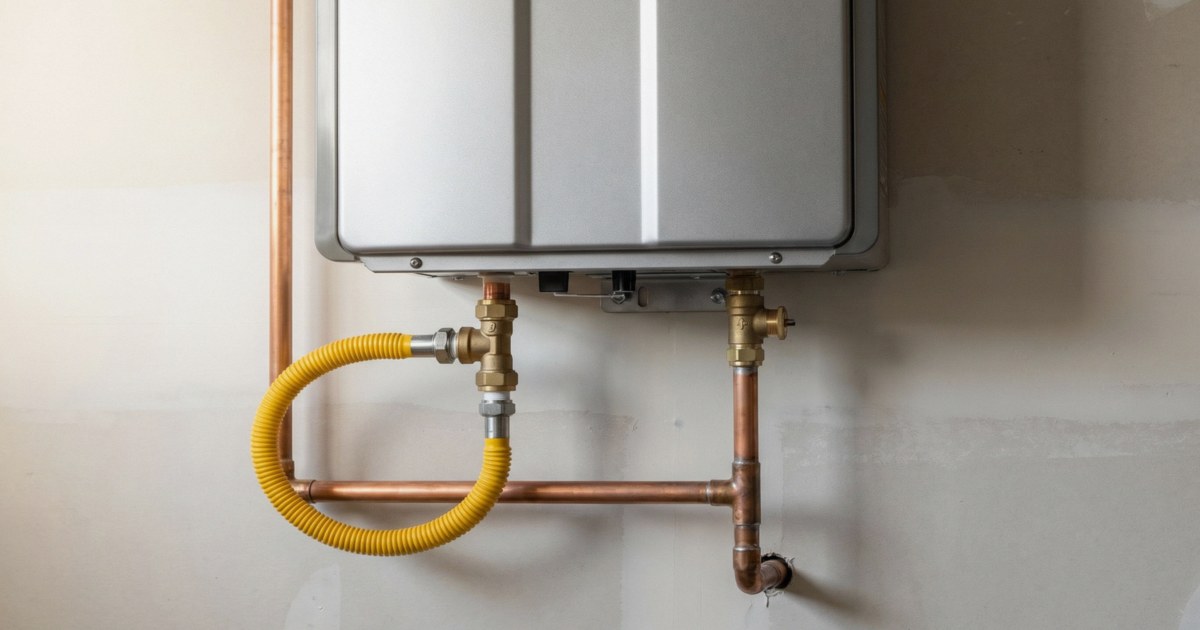
H.J.Res.20 struck down the consumer gas-fired instantaneous water heater rule, the one that would have ended sales of non-condensing tankless gas models. That was the piece drawing the most California installer attention because non-condensing units fit a broader range of venting retrofits at a lower price. Those models are staying on shelves indefinitely under federal law.
H.J.Res.24 repealed the walk-in cooler and walk-in freezer efficiency standard. H.J.Res.75 repealed the commercial refrigerator and freezer standard. Both rules had been driving late-2024 and early-2025 product redesigns at the major commercial-equipment OEMs. Those redesigns aren't being reversed, but the federal regulatory floor is no longer there either.
H.J.Res.42 is the broadest of the four. It repealed a DOE rule covering certification, labeling, and enforcement provisions across roughly 20 categories of consumer products and commercial equipment. Despite the dry title, it touched the paperwork and compliance-reporting backbone for everything from dishwashers to central AC, which is why it drew separate attention from manufacturers.
What's Still Unsettled
Three of the seven postponed rules were not part of the May 9 CRA package: the central air conditioner, clothes washer and dryer, and general service lamp standards. These were neither repealed by Congress nor cleanly finalized — they remain subject to ongoing DOE rulemaking and could be revised, withdrawn, or reproposed. Installers should not assume any fixed outcome on these three; the only settled federal actions so far are the four CRA repeals.


What This Means for California Installers
Title 24 and the California Energy Commission's appliance rules operate independently of federal standards. In water heating, commercial refrigeration, and several other categories, state rules are already stricter than the now-defunct federal ones would have been. Contractors working California exclusively can treat the federal rollback as informational, the state keeps its own goalposts.
Multi-state operators have it messier. A HVAC company serving California and Nevada now faces a patchwork. California installers can't sell the non-condensing tankless unit the federal CRA preserved if Title 24 blocks it, and the state's appliance efficiency database (MAEDBS) is the authoritative source for which models qualify in California.
Before quoting any 2027 or 2028 equipment install in California, confirm the model number against the current MAEDBS listing. Federal-legal doesn't mean California-legal, and that gap widened in 2025.
For related coverage, see our earlier piece on how the House voted to roll back DOE efficiency standards and the DOE 2027 standards original rollout.
The advocacy side has not gone quiet. The Appliance Standards Awareness Project has continued publishing analyses of the CRA repeals and the likely next round of DOE rulemaking. A future administration can restart the standard-setting process, but under the CRA, any replacement rule has to be "substantially the same" as the one Congress rejected only at the risk of being struck down again — Congress's disapproval bars a substantially similar rule unless specifically authorized by later law. That constraint will shape whatever comes next more than anything happening in Washington right now.
Need a repair professional?
Get free quotes from verified technicians in your area.
Find a Pro Near YouSources
- U.S. Department of Energy. (2025). "Energy Department Advances Efforts to Lower Costs and Increase Consumer Choice." energy.gov
- H.J.Res.20, 119th Congress — gas-fired instantaneous (tankless) water heaters. congress.gov
- H.J.Res.24, 119th Congress — walk-in coolers and walk-in freezers. congress.gov
- H.J.Res.42, 119th Congress — certification, labeling, and enforcement provisions. congress.gov
- H.J.Res.75, 119th Congress — commercial refrigerators and freezers. congress.gov
- Appliance Standards Awareness Project (ASAP). Analysis of DOE appliance standards actions. appliance-standards.org