

Right-to-Repair Laws Now Active in More States; Federal Bill Introduced
Maria Solano
Investigative reporter covering product safety and warranty issues in the appliance industry
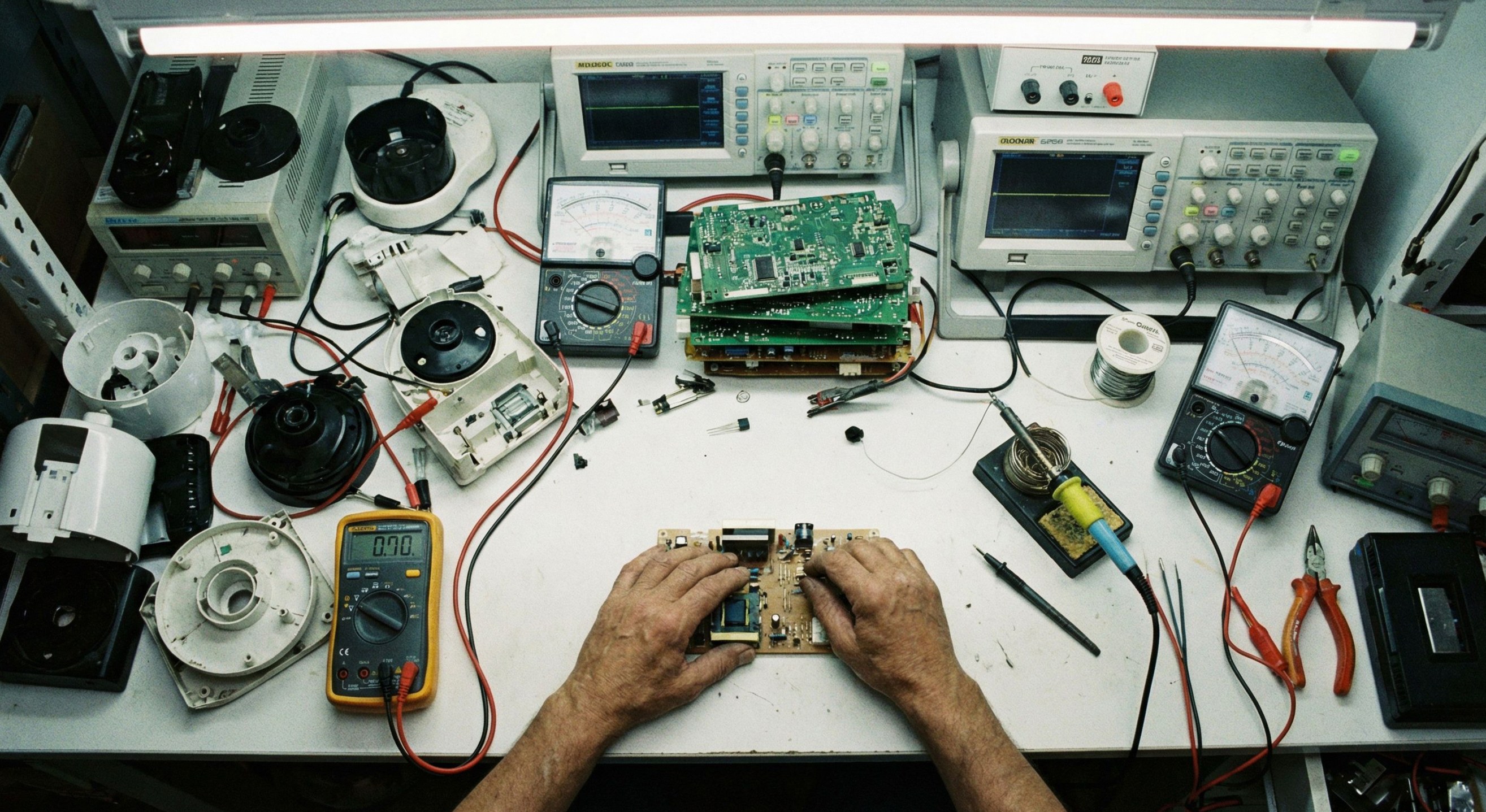
A fresh round of state right-to-repair provisions went live on January 1, 2026 — Colorado's expanded digital-electronics law, Nevada (AB 407), and Washington (HB 1483). Oregon's SB 1596, by contrast, has been on the books since January 1, 2025, with enforcement phasing in through 2027. Connecticut's provisions follow in mid-2026, and Texas (HB 2963) takes effect September 1. On the federal side, the Fair Repair Act (HR 7404 / S 3821) was reintroduced in both chambers of Congress in February. According to the U.S. PIRG, more than a quarter of Americans — about 25.75% — now live in a state with an enforceable right-to-repair law.
For independent appliance repair shops, this changes the economics of parts sourcing, diagnostic access, and competitive positioning against manufacturer-authorized service networks.
What the Laws Require
The specifics vary by state, but the core requirements are consistent:
Parts access. Manufacturers must sell replacement parts to independent repair providers and consumers at fair and reasonable prices. No more "authorized service center only" restrictions on common components like control boards, compressors, door assemblies, or heating elements.
Diagnostic tools and documentation. Service manuals, wiring diagrams, error code databases, firmware update tools, and diagnostic software must be made available. Manufacturers can charge a reasonable fee, but they can't refuse access or charge prices designed to be prohibitive.
No warranty voiding. Manufacturers cannot void a product warranty solely because an independent technician performed a repair. The repair must be done competently — if a botched repair causes damage, that damage isn't covered — but the act of using an independent shop doesn't invalidate the warranty.
Firmware and software. This is the newest provision and the most contested. Manufacturers must provide firmware updates necessary for repair. They do not have to provide proprietary software that controls product features (like a smart refrigerator's app ecosystem), but they do have to provide the firmware needed to reset error codes, recalibrate sensors, and restore functionality after a hardware repair.
What's Actually Changing on the Ground
The biggest practical win isn't parts — most common parts were already available through aftermarket channels. It's diagnostic software. Samsung's SmartThings diagnostic suite, LG's ThinQ service mode, and Whirlpool's connected diagnostics have been locked to authorized networks. These laws force access.
Before these laws: A Samsung refrigerator throws a 22E error (evaporator fan issue). You can replace the fan motor, but clearing the fault code and running the post-repair calibration cycle requires Samsung's diagnostic tool — which was only available to Samsung-authorized service centers. Independent shops had to either become authorized (minimum volume requirements, training costs, controlled parts pricing) or use workarounds.
After these laws: Samsung must sell you access to the diagnostic tool at a reasonable price. Same for LG's service app, Whirlpool's diagnostic port software, and GE's SmartHQ Pro tools. "Reasonable price" isn't defined precisely in most state laws, but the legislative intent is clear: the price can't be so high that it functions as a de facto barrier.


The Federal Bill
The Fair Repair Act (HR 7404 in the House, S 3821 in the Senate) would create a national baseline for the patchwork of state laws facing manufacturers who operate nationwide. Key provisions:
- Scoped to "digital electronic equipment" — products that depend in whole or in part on digital electronics to function
- Requires original equipment manufacturers to make documentation, parts, tools, and diagnostic and repair information available to independent repair providers and owners on fair and reasonable terms
- Enforced through the FTC: a violation of the act's requirements is treated as an unfair or deceptive act or practice under Section 18(a)(1)(B) of the Federal Trade Commission Act, rather than through a fixed per-violation dollar penalty written into the bill
The bill has bipartisan co-sponsors but faces opposition from manufacturer trade groups. Odds of passage in this Congress are uncertain, but the state-level momentum is making a federal framework increasingly attractive to manufacturers who'd prefer one set of rules over fifty.
What Independent Shops Should Do Now
Document access requests. If a manufacturer denies you parts, diagnostic tools, or documentation for a product covered by your state's law, document the refusal. State attorneys general are actively collecting these complaints to build enforcement cases.
Update your marketing. "We can now service all brands with full manufacturer diagnostic tools" is a strong message. Customers have been told for years that only authorized service centers can properly repair their appliances. That's no longer true — and they need to hear it.
Watch parts pricing. The laws require "fair and reasonable" pricing, but manufacturers will test the boundaries. Track OEM parts prices over the next six months and report significant increases to your state's consumer protection office.
For related coverage, see our report on California's right-to-repair law and smart appliance diagnostics changing service calls.
Sources
- U.S. PIRG. "More than one-quarter of Americans covered by Right to Repair come Jan. 1." https://pirg.org/articles/more-than-one-quarter-of-americans-covered-by-right-to-repair-come-jan-1/
- U.S. Congress. H.R. 7404 — Fair Repair Act, 119th Congress (2025-2026). https://www.congress.gov/bill/119th-congress/house-bill/7404/text
- U.S. Congress. S. 3821 — Fair Repair Act, 119th Congress (2025-2026). https://www.congress.gov/bill/119th-congress/senate-bill/3821/text
- Colorado General Assembly. HB24-1121, Consumer Right to Repair Digital Electronic Equipment. https://leg.colorado.gov/bills/hb24-1121
- Nevada Legislature. AB 407 (83rd Session, 2025). https://www.leg.state.nv.us/App/NELIS/REL/83rd2025/Bill/12116/Overview
- Oregon State Legislature. SB 1596 (2024 Regular Session). https://olis.oregonlegislature.gov/liz/2024R1/Measures/Overview/SB1596
- Washington State Legislature. HB 1483 (2025-2026). https://app.leg.wa.gov/billsummary?BillNumber=1483&Year=2025
- Connecticut General Assembly. Right to Repair provisions (Public Act). https://www.cga.ct.gov/
- Texas Legislature. HB 2963 (89th Legislature, 2025). https://capitol.texas.gov/BillLookup/History.aspx?LegSess=89R&Bill=HB2963
Need a repair professional?
Get free quotes from verified technicians in your area.
Find a Pro Near You