

Tariffs Push Appliance Prices Up — Repair Demand Surges
ServiceMag Staff
ServiceMag editorial team
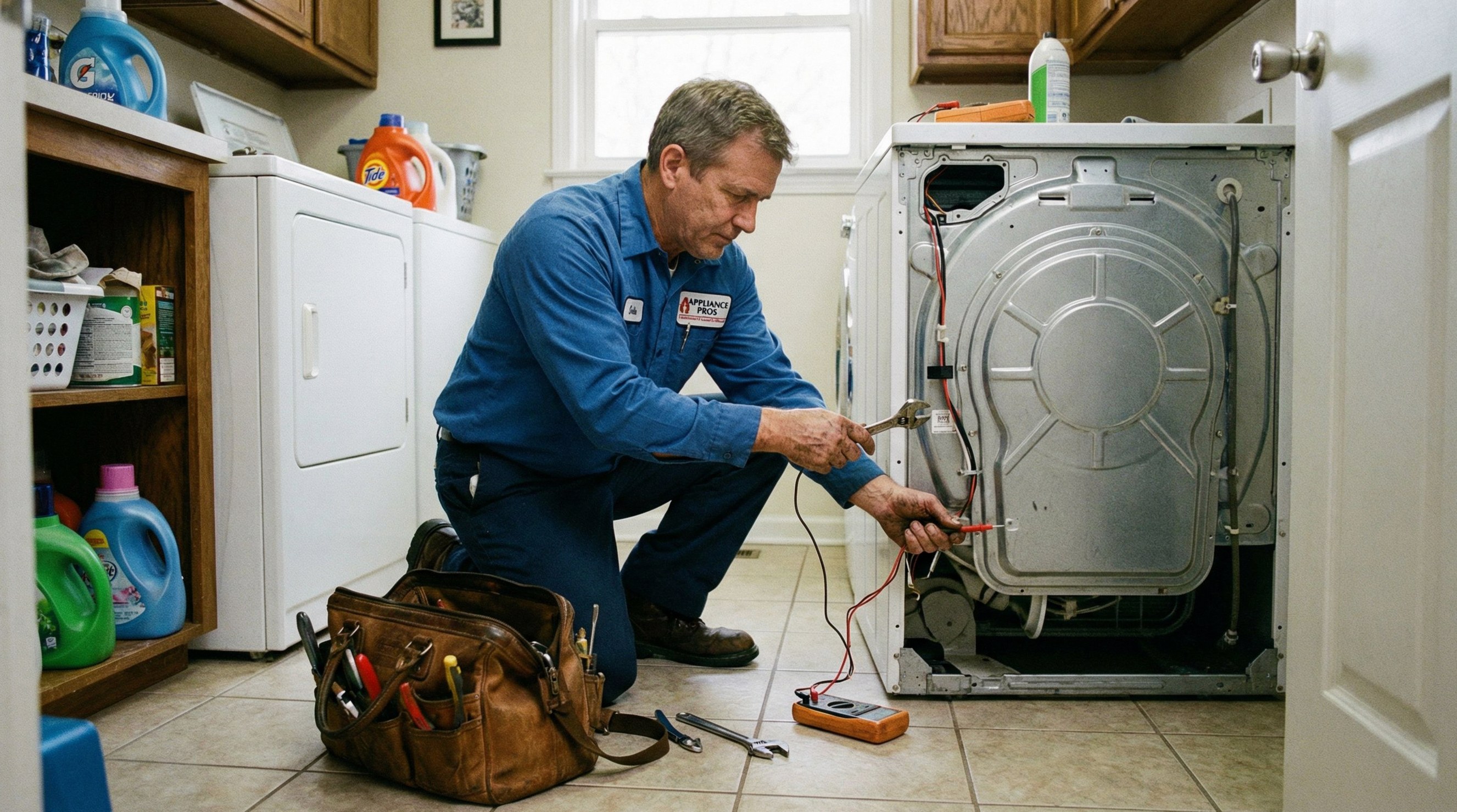
The math on repair vs. replacement just shifted hard toward repair. A temporary surcharge on most imports took effect February 24, 2026 under Section 122 of the Trade Act of 1974 — set at 15% (raised from 10% on February 22) and scheduled to run for 150 days unless extended. On top of that, Section 232 metals duties now sit at 50% on primary steel and aluminum articles and 25% on derivative products. For an industry built on fixing things that cost a lot to replace, the timing couldn't be better.
Yale Budget Lab estimates the enacted 2026 tariff regime costs the average U.S. household roughly $760 to $940 per year across all goods, if the Section 122 surcharge expires as scheduled. (A separate Yale scenario for a permanent broad tariff runs higher, around $1,200-1,500, but that is not the policy currently in effect.) For appliances specifically, a November 2024 National Retail Federation study of the then-proposed tariffs — a universal 10-20% import tariff plus added China duties — projected consumers could pay $6.4 to $10.9 billion more per year on household appliances. That study modeled proposed policy, not the enacted 2026 regime, but it signals the direction of travel. On the ground, a standard 25-cubic-foot side-by-side refrigerator that retailed near $1,400 in late 2025 is now commonly listing higher, depending on brand and sourcing chain.
Where the Price Increases Hit
Steel-heavy appliances are worst off. A typical full-size refrigerator contains 100-150 pounds of steel. Washing machines, 80-120 pounds. Dishwashers, 50-70 pounds. With Section 232 duties at 50% on primary metals and 25% on derivative articles — and many finished appliances now covered as steel derivatives — the material cost alone adds meaningfully to each unit before assembly, shipping, or retail markup.
Imported finished goods get the Section 122 surcharge on top of materials duties. Samsung and LG manufacture most of their appliances in South Korea and Vietnam. Bosch imports from Germany and Turkey. Even Whirlpool, which manufactures domestically, sources compressors, electronic control boards, and motors from Mexico and China.
Parts are affected too. Compressors, control boards, heating elements, and motors imported for repair use face the same import surcharge, and metal-intensive parts can also fall under Section 232. Distributors have been passing tariff costs through on OEM parts since the duties took effect; aftermarket parts have generally risen less, because many aftermarket suppliers had already diversified manufacturing to tariff-advantaged countries.


What This Means for Repair Shops
Update your parts pricing now — don't wait for margin erosion to show up in your quarterly numbers. As tariffs flow through to wholesale costs, a deliberate markup policy beats reacting after the fact. Pass the increase through or eat it, but decide on purpose.
More repair calls, higher average ticket. When a new dishwasher costs more, a $250 repair looks a lot more attractive. Cost is already the dominant factor in repair-vs-replace decisions: in Consumer Reports' 2024 Right to Repair Survey of 2,154 U.S. adults, roughly seven in 10 consumers said the cost of the repair was a key consideration when deciding whether to fix a product. As replacement prices climb under tariffs, that math tilts further toward repair.
Longer appliance lifecycles. Consumers are holding onto appliances longer as replacement gets more expensive. Older appliances need more service. More parts. More callbacks.
Parts inventory strategy matters. If you stock common parts — compressors, control boards, heating elements, door gaskets — consider buying ahead. Tariffs aren't going down in the near term, and parts sitting in your warehouse today are cheaper than parts you'll order in six months.
Marketing angle. "Repair it for $300, or replace it for $1,800" is a strong pitch. If you're running any kind of local advertising or Google Ads, the cost-of-replacement comparison is the most compelling message you can lead with right now.
The Manufacturer Response
Major manufacturers are responding in three broad ways. First, selective list-price increases to offset higher input and import costs. Second, sourcing shifts — accelerating plans to move production to tariff-exempt or reduced-tariff countries, though retooling a major line typically takes years, not months. Third, promotional financing such as extended 0% APR offers, which props up unit volume but compresses margins rather than removing the underlying cost.
None of these responses reduce the fundamental cost pressure. The picture is also unsettled: the Section 122 surcharge is a temporary 150-day measure, it has faced legal challenge in the Court of International Trade, and the Section 232 metals framework has been modified more than once in 2026. But until the duties clearly come down, the cost pressure on new appliances — and the relative appeal of repair — holds.
For related analysis, see our coverage of the DOE 2027 efficiency standards and the appliance repair workforce shortage.
Need a repair professional?
Get free quotes from verified technicians in your area.
Find a Pro Near YouSources
National Retail Federation (2024, November 4). "Estimated Impacts of Proposed Tariffs on Imports: Apparel, Toys, Furniture, Household Appliances, Footwear and Travel Goods." nrf.com
The Budget Lab at Yale (2026, April 8). "State of U.S. Tariffs: April 8, 2026." budgetlab.yale.edu
Consumer Reports (2024). "Right to Repair Survey" (nationally representative survey of 2,154 U.S. adults). advocacy.consumerreports.org
The White House / U.S. Trade actions — Section 122 of the Trade Act of 1974 import surcharge (effective February 24, 2026; raised to 15% on February 22, 2026; 150-day duration) and Section 232 steel, aluminum, and copper tariff modifications (50% primary / 25% derivative, effective April 6, 2026). White & Case analysis of Section 122 | White & Case analysis of Section 232 modifications