


The Appliance Repair Workforce Shortage Is Getting Worse
ServiceMag Staff
ServiceMag editorial team
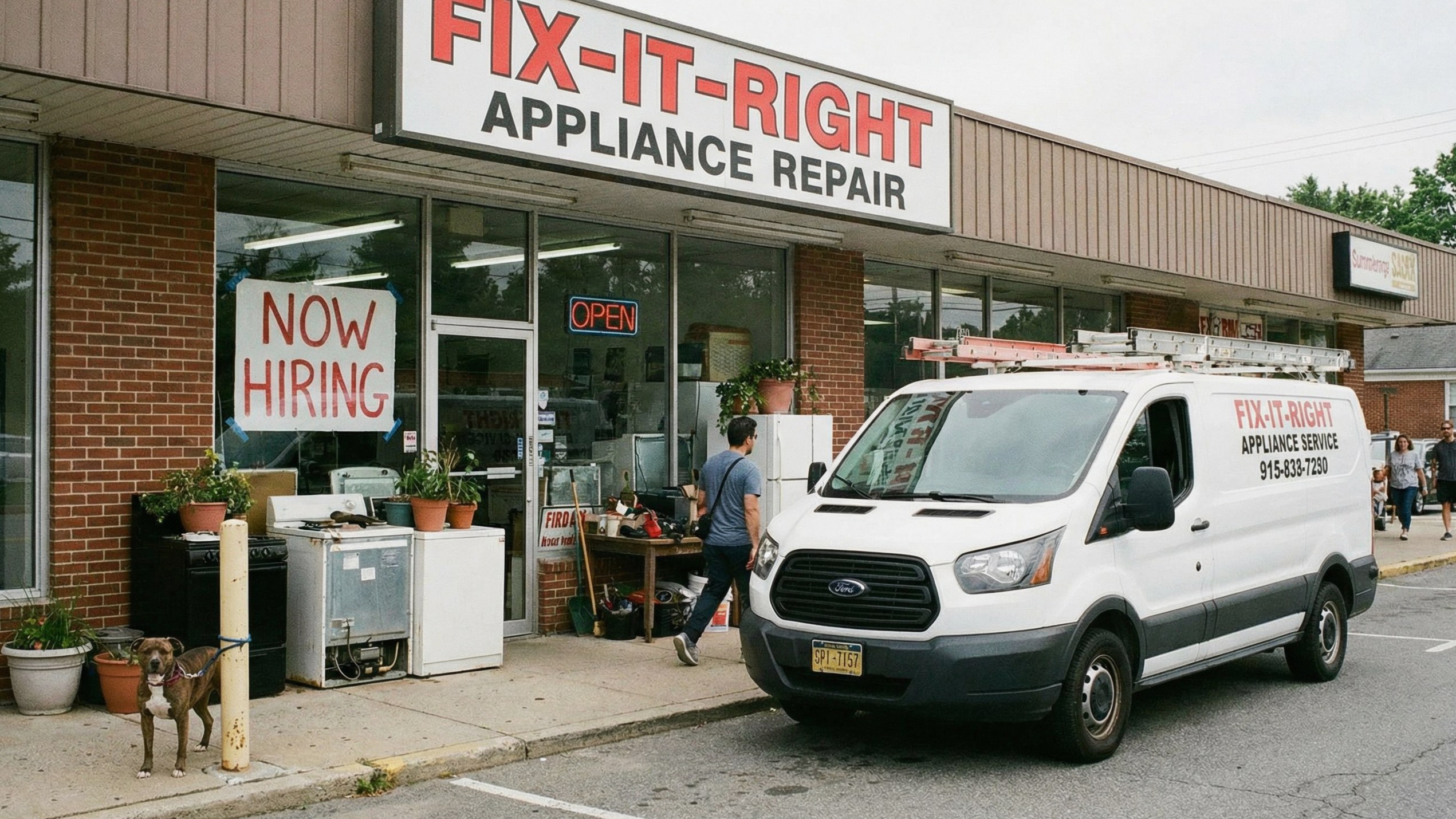
The appliance repair industry generated roughly $7 billion in U.S. revenue in 2025. Staffing it is another matter. The Bureau of Labor Statistics counted only about 37,300 home appliance repairers nationwide in its May 2024 wage survey — a small, slow-growing occupation — and shop owners across the country report that filling an open technician seat has never been harder. There's no official count of unfilled roles, but the squeeze is real: an aging workforce is retiring faster than new hires arrive.
The math isn't complicated. The average appliance repair technician is in their early-to-mid forties — around 43 to 44 years old, according to occupational demographic data drawn from BLS and Census figures. Retirements are accelerating. Trade school enrollment in appliance-specific programs is flat. And the appliances coming into the field are harder to fix than ever.
Why the Gap Is Growing
Retirements. The generation of technicians who entered the trade in the 1990s and 2000s — when appliances were largely mechanical and electrical — is aging out. The broader installation, maintenance, and repair workforce skews older than the U.S. labor force as a whole, and a meaningful share of today's experienced techs are within a decade of retirement age. As they leave, the institutional knowledge of older mechanical platforms walks out the door with them.
Perception. The trades still carry a stigma in many communities. High school guidance counselors steer students toward four-year degrees. Parents want their kids in college, not under a dishwasher. The irony: a competent appliance repair tech with five years of experience out-earns the median bachelor's degree holder in California by roughly $8,000-12,000 per year, and carries zero student debt.
Complexity. A 2015-era washing machine had an electromechanical timer, a motor, a pump, and a water valve. A 2026 washing machine has a variable-frequency drive, multiple hall-effect sensors, a main control board running embedded firmware, Wi-Fi connectivity, and an app-controlled user interface. Diagnosing a "won't spin" complaint on the older machine required a multimeter and five minutes. The new one might require a firmware reflash, a bus communication trace, or a sensor calibration procedure that's only in the manufacturer's proprietary diagnostic software.
Competition for talent. The same technicians who could fix appliances can also work in HVAC, electrical, plumbing, or industrial maintenance — often at higher starting wages and with better benefits. HVAC in particular has pulled talent from the appliance repair sector: BLS projects employment of heating, air conditioning, and refrigeration mechanics and installers to grow about 9% from 2023 to 2033 — faster than average — with roughly 42,500 openings per year, driven by the heat pump installation boom and higher average ticket values.
What It Costs to Leave Positions Unfilled
An unfilled technician position doesn't just cost you the revenue that tech would generate. It costs you the reputation damage from the customers you had to reschedule, the service calls your competitors took instead, and the Google reviews you didn't earn.
A single experienced appliance repair technician generates $150,000-250,000 in annual revenue for a service company, depending on market, specialization, and efficiency. An unfilled position for six months costs $75,000-125,000 in lost revenue — plus the overtime, burnout, and turnover risk imposed on the remaining team.
For shop owners running lean (2-5 trucks), losing even one technician can mean declining service calls, stretching response times from same-day to 3-5 days, and watching your online reviews deteriorate. Slower response times tend to drag down star ratings, and even a fraction of a star can measurably reduce the volume of inbound calls a local service business wins — a compounding penalty on top of the lost revenue itself.


What's Working
In-house apprenticeship programs. The shops reporting the lowest vacancy rates are the ones that grow their own technicians. Hire mechanically inclined people — veterans, auto mechanics, electricians, handy people — and train them on appliance-specific skills. A structured 12-month apprenticeship with graduated responsibilities, mentor pairing, and manufacturer training modules produces a capable technician faster than waiting for one to appear on Indeed.
Trade school partnerships. Community colleges in California (LA Trade-Tech, San Jose City College, and others) offer appliance repair certificate programs. Shops that establish formal partnerships — sponsoring students, offering paid internships, guaranteeing employment — get first pick of graduates.
Competitive compensation. With BLS pegging the national median for home appliance repairers near $23.76/hour, shops still advertising the low end of the range struggle to compete. Owners who raise starting pay toward — and above — that median consistently report a fuller applicant pipeline. Adding health insurance, a tool allowance, and a company vehicle closes the deal for candidates who might otherwise choose HVAC or electrical.
Smart appliance certification as a differentiator. Technicians who can diagnose and repair connected appliances command a premium. Shops that invest in this training attract technicians who want to work on interesting equipment — not just swap heating elements all day.
The Bottom Line
The technician shortage isn't a temporary blip. It's a structural condition that will persist for at least the next decade. Shops that invest in recruitment, training, and retention now will capture market share from competitors who can't staff their trucks. The demand is there — the question is whether you can build the team to meet it.
For related coverage, see our California appliance repair salary survey and our report on smart appliance diagnostics.
Sources
- U.S. Bureau of Labor Statistics. "Home Appliance Repairers (49-9031)." Occupational Employment and Wage Statistics, May 2024. bls.gov/oes/current/oes499031.htm (wage and employment figures via O*NET OnLine, 49-9031.00)
- U.S. Bureau of Labor Statistics. "Heating, Air Conditioning, and Refrigeration Mechanics and Installers." Occupational Outlook Handbook. bls.gov/ooh/installation-maintenance-and-repair/heating-air-conditioning-and-refrigeration-mechanics-and-installers.htm
- IBISWorld. "Appliance Repair in the US — Industry Analysis." ibisworld.com/united-states/industry/appliance-repair/1710/ (industry revenue ~$7B)
- ConsumerAffairs. "Appliance Repair Industry Statistics." consumeraffairs.com/homeowners/appliance-repair-industry-statistics.html
- Zippia. "Appliance Technician Demographics and Statistics in the US" (workforce age data, verified against BLS and Census). zippia.com/appliance-technician-jobs/demographics/
Need a repair professional?
Get free quotes from verified technicians in your area.
Find a Pro Near You