


How to Read Your Appliance Model and Serial Number: A Brand-by-Brand Guide
Maria Solano
Former appliance warranty claims adjuster turned investigative repair journalist. Maria's 'What Went Wrong' teardown series has made her the most feared woman in the white-goods industry.
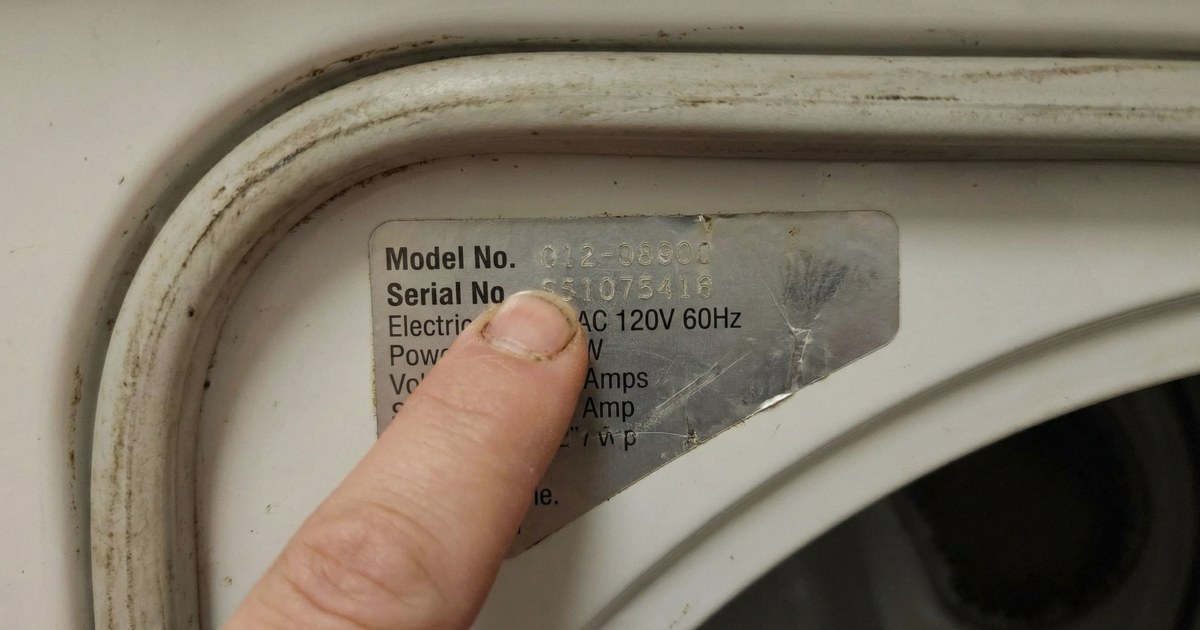
Every service call starts with the same question: what's the model number? If you're a homeowner trying to order a part, you need it before you can find anything. If you're handing information to a technician, they need it to show up with the right parts on the first visit. If you're weighing whether to repair or replace an aging appliance, the manufacture date hidden in the serial number is part of that math.
The problem is that manufacturers don't agree on where to put the label, and some of them seem to actively enjoy making it hard to find. After years of digging behind refrigerator drawers and contorting under washers, I've compiled every hiding spot worth knowing — organized by brand.
Why the Full Model Number Matters
A model number like "WRF535SWHZ" looks like a complete identifier. It is — for the product line. But manufacturers produce the same model across multiple production runs with revision letters that change internal components. The full model number including every suffix character (WRF535SWHZ00, WRF535SWHZ01) may correspond to different control boards, door gasket part numbers, or motor variants.
This matters enormously for parts ordering. A control board that fits the "00" revision may not fit the "01." The visual appearance is identical. The connector is different. Order the wrong one and you're waiting on a return and second shipment.
Same principle applies to the serial number. A service tech ordering parts for a Samsung refrigerator made in 2019 is working with different failure mode history and different part availability than one made in 2022 with the same model number.
Take a photo of the entire label — not just the model number — before the appliance gets moved, repainted, or the label wears off.
Refrigerators: Where to Look
Whirlpool, Maytag, KitchenAid, Amana — Inside the fresh food compartment, on the left or right interior wall near the top. On French door models, check the door frame edge on the left door. On older side-by-side models, check the ceiling of the fresh food section near the front.
Samsung — Inside the door on the door frame edge (the part that faces you when you open the door). On some French door models it's on the left side wall of the fresh food section. If you can't find it in those two spots, check behind the crisper drawer on the back wall.
LG — Usually on the left interior wall of the fresh food compartment, near the top. On bottom-freezer models, it's sometimes on the ceiling of the fresh food section. LG InstaView models have it inside the door frame visible when the door is open.
GE, GE Profile, Café — Inside the fresh food compartment on the left side wall, mid-height. On older top-freezer models, it's sometimes on the right wall or on the ceiling near the light fixture.
Frigidaire, Electrolux — Inside the fresh food compartment on the left wall near the top, or on the ceiling. Gallery and Professional series typically have it on the interior door frame.
Sub-Zero — Behind the grille panel at the bottom of the unit. Remove the grille (usually two screws or clips) to access the data plate. Some older Sub-Zero models have a second label inside the refrigerator compartment, but the primary data plate is at the bottom.
Bosch — Inside the refrigerator compartment on the left interior wall or the interior door frame. Counter-depth models sometimes place the label on the side wall near the crispers.
Washing Machines: Where to Look
Whirlpool, Maytag, Kenmore (Whirlpool-built) — Top-loaders: inside the lid frame along the top right opening edge. Front-loaders: inside the door frame visible when the door is open, or on the inside rear of the door.
Samsung — Front-loaders: inside the door frame, on the inner rim of the door gasket area. Top-loaders: inside the lid frame or on the back of the machine near the top.
LG — Front-loaders: inside the door on the door frame edge. Top-loaders: inside the lid frame on the right side.
GE — Inside the door frame on front-loaders. Inside the lid frame on top-loaders. On some older GE top-loaders, check the back panel near the top right corner.
Dryers: Where to Look
Most dryers follow a similar convention: inside the door frame, visible when the door is open. This applies to Whirlpool, Maytag, Samsung, LG, GE, Frigidaire, and Electrolux. The label is usually on the door frame itself or on the drum opening rim.
On gas dryers with a kick plate at the bottom, a second label is sometimes behind the kick plate. If the door frame label is worn or missing, the kick plate location is your backup.
Dishwashers: Where to Look
Almost every brand places the dishwasher label on the door — but there are two different spots:
- Along the top inner edge of the door (visible when you open the door and look at the top of the door panel) — this is the most common location for Bosch, Samsung, LG, and GE.
- On the door frame inside the tub (the part of the tub that the door seals against, visible when the door is open) — Whirlpool, Maytag, and KitchenAid tend to use this location.
On Bosch dishwashers, the label is always on the door edge visible when open. The full 18-character part number is printed here and is essential for parts — Bosch model variations are among the most suffix-sensitive in the industry.
Ranges and Ovens: Where to Look
Freestanding ranges — Behind the drawer at the bottom front, on the frame visible when the storage drawer is removed. This is standard for Whirlpool, GE, Samsung, and LG. Some models also have a label on the back frame, but that requires pulling the range away from the wall.
Wall ovens — Inside the oven door on the frame edge, visible when the door is open. Alternatively on the left side of the oven cavity just inside the door opening.
Cooktops — On the underside of the cooktop (requires lifting or removing). Some brands add a secondary label inside a storage drawer if there is one below.


Decoding Manufacture Dates from Serial Numbers
The serial number contains the manufacture date, encoded differently by each brand. Here's how to read it:
Whirlpool (also Maytag, KitchenAid, JennAir, Amana, Kenmore-Whirlpool): Whirlpool serials are 9 or 10 characters long, and the date code is a single letter for the year followed by two digits for the week. On a 9-character serial the year letter is the 2nd character; on a 10-character serial it's the 3rd character. The two digits immediately after that letter are the production week (01–52).
Example: serial KC1707945 — the year letter is "C" and the next two digits are "17," so it was built in week 17 of the "C" year. Whirlpool's year letters run on a cyclic code that repeats roughly every decade, so a given letter can map to more than one year (for instance, "X" on a recent serial like MX0640786 points to 2020, week 06). Because the letter repeats, confirm the decade against the appliance's condition or purchase records — or just run the serial through Whirlpool's official lookup tool at whirlpool.com, which returns the manufacture date directly.
Samsung: The date code lives in the middle of the serial, not at the start. On a 15-digit Samsung serial, the 8th character is the year and the 9th character is the month. The year uses a letter code that runs on a 20-year repeating cycle, and the month is a single character (1–9 for January through September, then A/B/C for October/November/December). On the shorter 11-digit format the same code sits in the 4th (year) and 5th (month) characters. Because the year letter repeats on a 20-year cycle, a single code can point to two possible years — confirm the decade against purchase records or condition, or use Samsung's official lookup tool.
LG: LG serials begin with three numbers: the first digit is the last digit of the year, and the next two digits are the month (01–12). A serial starting with "503" was built in March of a year ending in 5 — 2015 or 2025, for example. The decade isn't encoded, so use the appliance's model and approximate age (or LG's lookup tool) to settle which decade applies.
GE (including GE Profile, Café, Monogram): GE uses a two-letter date code at the beginning of the serial. The first letter is the manufacturing month: A=January, D=February, F=March, G=April, H=May, L=June, M=July, R=August, S=September, T=October, V=November, Z=December (the skipped letters are intentional). The second letter is the year, drawn from the same 12-letter sequence and cycling every 12 years: A=2013, D=2014, F=2015, G=2016, H=2017, L=2018, M=2019, R=2020, S=2021, T=2022, V=2023, Z=2024, then back to A=2025. Because the cycle repeats every 12 years, the same letter also stood for 2001, 1989, and so on — check the owner's manual or appliance condition if the decade is ambiguous.
Bosch: Look for the FD code — "FD" followed by a four-digit number. Add 20 to the first two digits to get the year, and the last two digits are the month (01–12). So FD2303 decodes to 2023 (23 + 20), month 03 — March 2023. An older FD9203 works the same way: 92 + 20 = 2012, month 03, so March 2012. (The "+20" offset is a Bosch convention, not a typo.) The full code is printed on the door edge, visible when the door is open.
Why the Age Matters: Repair vs. Replace
Once you know the manufacture date, you can make a much more informed repair-or-replace decision. A widely used rule of thumb among technicians: if the appliance is more than halfway through its expected lifespan and the repair cost exceeds 50% of what a comparable replacement would run, replacement is usually the better financial choice. (Treat the 50% figure as a guideline, not a law — energy savings on a newer unit and the value of a fresh warranty can tip the math either way.)
Expected lifespans vary by appliance type and brand. The National Association of Home Builders' Study of Life Expectancy of Home Components puts the averages in this ballpark: refrigerators around 13 years, washers and dryers 10–13 years, dishwashers about 9 years, and gas ranges around 15 years (electric ranges around 13). Premium and well-maintained units often run a few years longer.
For more detail on how to run the numbers on that decision, see our guide to appliance repair vs. replace.
Where is the model number on a refrigerator?▾
On most refrigerators, the model and serial number tag is inside the fresh food compartment on the left or right interior wall near the top, or on the ceiling of the compartment. Samsung and LG often place it inside the door on the door frame edge. Sub-Zero places it behind the grille panel at the bottom of the unit. Always photograph the entire label — not just the model number — before you move or lose access to the appliance.
How do I find the age of my appliance from the serial number?▾
Serial number date codes vary by brand. Samsung's 15-digit serials put the year in the 8th character and the month in the 9th (the year letter runs on a 20-year cycle). LG serials start with three numbers: the last digit of the year followed by the two-digit month. GE uses a first-letter month code and a second-letter year code, with the year letters cycling every 12 years (A=2013, D=2014, and so on). On Whirlpool serials, a single year letter — the 2nd character on a 9-digit serial, the 3rd on a 10-digit one — is followed by the two-digit production week. When a code is ambiguous, the manufacturer's official lookup tool is the safest bet.
Why does the model number matter when ordering parts?▾
Manufacturers produce multiple revision versions of the same product line under nearly identical model numbers. A single suffix letter or number difference can mean a completely different control board, motor, or wiring harness. Ordering parts by symptom or brand alone leads to wrong parts and wasted time. The full model number — every character including suffixes — is required for accurate parts lookup.
Sources
- Whirlpool serial-number date codes (year letter + two-digit week, 2nd/3rd character by serial length): Electrical Forensics — Whirlpool Date Codes
- Samsung 15-digit serial date code (8th character = year, 9th = month; 20-year cyclic letters): Electrical Forensics — Samsung Date Codes
- LG serials beginning with three numbers (last digit of year + two-digit month): Electrical Forensics — LG Date Codes
- GE first-letter month and second-letter year codes (12-year cycle, A=2013 onward): GE Appliances — How to Determine the Age or Manufacture Date
- Bosch FD code (add 20 to the first two digits for the year, last two digits = month): Tab-TV — Bosch FD Number Production Date Decode
- Appliance life expectancy figures: National Association of Home Builders, Study of Life Expectancy of Home Components (PDF)
Need a repair professional?
Get free quotes from verified technicians in your area.
Find a Pro Near You