


Building a Referral Network with Realtors and Property Managers: The Most Profitable Customer You're Not Chasing
Maria Solano
Former appliance warranty claims adjuster turned investigative repair journalist. Maria's 'What Went Wrong' teardown series has made her the most feared woman in the white-goods industry.
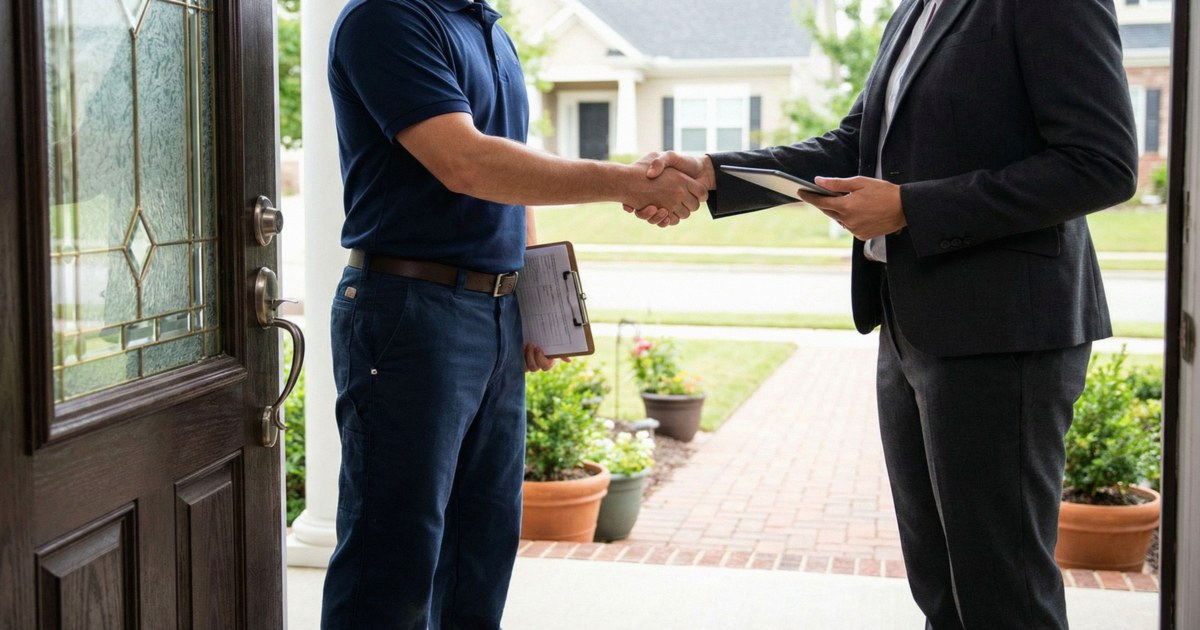
Every appliance repair business operator I've interviewed in the last few years has said some version of the same thing: the best customers they have came from a realtor or a property manager. Not from Google Ads. Not from door hangers. From a professional in the real estate ecosystem who needed a tech they could trust, found one, and kept sending work.
The math on why this matters is straightforward. A homeowner is a customer maybe twice over the life of their appliances. A property manager with 60 units is a customer dozens of times per year, potentially for as long as you do good work. A realtor who closes 30 transactions a year and routinely recommends your services for pre-listing inspections and post-offer repairs is worth more per year than a dozen regular residential customers.
Most appliance repair shops never systematically pursue this segment. That's your opportunity.
What Realtors Actually Need
A realtor's professional life involves appliances at three specific transaction moments:
Pre-listing: The seller wants to know if the appliances in the home they're selling will cause problems on inspection. A pre-listing appliance inspection that documents condition and identifies issues before the buyer's inspector does is valuable to every listing agent who's had a deal die over a refrigerator with a failed ice maker.
Post-inspection negotiation: The buyer's inspector flags an appliance issue and the parties negotiate a credit or a repair. The realtor needs a tech who can give an accurate written estimate fast — ideally within 24 hours of the inspection report. Transactions have closing timelines. Slow response here costs the realtor a deal.
Buyer move-in: New homeowners discover appliance problems in the first 30-60 days. If the realtor has a trusted repair resource to give them, the referral goes to you. If they don't, the homeowner googles it and you're never in the picture.
The common thread: speed and documentation. Realtors don't need the cheapest tech. They need a tech who will show up quickly and produce professional written documentation. An email with a letterhead invoice from a clearly named business does more for a realtor relationship than any price concession.
What Property Managers Need
Property managers operate at scale. A PM managing 50 residential units deals with appliance failures constantly — refrigerators, washers, dryers, dishwashers, ranges. They are not comparison-shopping each call. They want one or two reliable vendors they can call and trust to handle it.
What they care about, in order:
1. Same-day or next-day availability. A tenant without a refrigerator or washer is a habitability issue. Property managers in California face legal timelines for addressing habitability items. A tech who can turn around calls within 24 hours is worth more than a cheaper one with 3-day scheduling.
2. Direct communication. The PM does not want to chase the tech for status updates. A brief text when you arrive, a text when you complete the call with the diagnosis and resolution, and an invoice in their email by end of day. This sounds basic. It is not the standard experience in the field, which is why PMs who find a tech that does this hold on to them.
3. Professional invoicing. Invoices need to be detailed enough for the PM to charge back to the tenant file or the property owner: date of service, address, unit, description of repair, parts, labor, total. An invoice that says "fixed washer $200" does not work for property management accounting. An itemized invoice that could survive an audit does.
4. Preferred vendor agreements. Larger property management companies have preferred vendor programs. Getting on the approved vendor list often requires a business license verification, certificate of insurance, and a brief application. It's worth doing. The payoff is being the default call for their entire portfolio.
Ask your existing property manager accounts if they will provide a written reference or complete a vendor qualification form for you. Once you have one or two references from established PMs, getting into preferred vendor programs with larger companies becomes easier. The first PM account is the hardest to get. After that, references do the selling.
How to Approach Realtors: The First Meeting
Cold outreach to realtors works, but it works slowly. The faster path is warm introduction — through a mutual contact, a community organization (the local chamber, a BNI chapter), or a home services networking event. Every mid-size California city has real estate associations with regular member events. Joining the right one is a 12-month investment that generates years of referrals.
When you do introduce yourself to a realtor, the pitch is brief and specific:
- What you do and your service area (specific neighborhoods, not vague)
- Your response time guarantee (same-day, next-day)
- What your documentation looks like (show them a sample invoice or inspection report)
- That you're available for pre-listing appliance condition reviews
Don't pitch discounts. Pitch reliability and documentation. That's what they're buying.
Follow up with something useful — not a flyer with your phone number, but something that demonstrates competence. A one-page reference guide on the appliance life expectancy benchmarks relevant to their market. A quick email with the model-year breakdown of common appliance issues for homes in the age range they commonly list. Something that makes them think "this person knows what they're talking about."


How to Approach Property Managers
The property manager outreach is more direct because the value proposition is more straightforward. PM organizations in California include the California Apartment Association (CAA) and local affiliates. Becoming a vendor member of your local CAA chapter puts you in front of hundreds of PMs at meetings and in the vendor directory.
Beyond association membership:
Direct mail to property management companies still works in this industry. A postcard or letter to the 20-30 property management companies in your service area, specifically addressed to the maintenance coordinator or operations manager, with your response time guarantee and sample invoice format, will generate some response rate. Follow up by phone 5-7 days after mailing.
Build a B2B version of your quote/invoice process. Before you approach PMs, make sure your invoicing and communication system can support what they need. If you're hand-writing invoices on a pad, upgrade before the meeting. A simple field service software (ServiceTitan, Jobber, Housecall Pro) produces the professional documentation that property managers require.
Maintaining B2B Referral Relationships
Getting the first call from a realtor or PM is step one. Staying in the relationship is where most shops fail.
Response time is the retention lever. If your first three calls for a new PM are same-day, you've built an expectation. The fourth call that takes two days without explanation will put the relationship at risk. Don't make promises on response time you can't consistently keep. If you're a one-tech operation, your B2B capacity has a real ceiling — be honest about it.
Annual check-ins. Call or email your realtor and PM accounts once or twice a year — not with a sales pitch, but with something useful. Updated pricing for the next year, a note about a common appliance problem you're seeing in the market, a heads-up about a manufacturer recall affecting a common appliance in their portfolio. Staying present without being pushy is the relationship maintenance standard.
Handle problems immediately. When something goes wrong — a callback, a scheduling miss, a billing dispute — handle it immediately and to the other party's satisfaction, even if you're right. Losing an argument with a property manager and losing the account is a much worse outcome than giving a credit you technically didn't owe. The lifetime value of a good PM account is too high to risk over a single-call dispute.
The Preferred Vendor Agreement
When a property management company invites you into their preferred vendor program, the agreement typically specifies:
- Response time commitments (often 24-hour or 4-hour for emergency)
- Insurance requirements (general liability minimums, often $1M-$2M per occurrence)
- Billing format requirements
- Background check requirements for technicians entering occupied units
- Pricing structure (hourly, flat-rate, or rate schedule)
The insurance minimums matter. If your current GL policy is below what the PM requires, upgrade before signing. Operating without the required insurance coverage under a preferred vendor agreement creates exposure for you and the PM company if an incident occurs.
The pricing in a preferred vendor agreement is typically negotiated to be fair to both parties — not discounted to commoditize your services. The PM gets reliability and volume capacity; you get consistent, recurring call volume. Price accordingly.
For the broader picture on how referral network development fits into a sustainable service business model, see our guide to starting and growing an appliance repair business in California. For how to price your services correctly before taking on high-volume B2B accounts, see our pricing guide for appliance repair in Southern California.
How do I get realtors to refer appliance repair business to me?▾
Lead with reliability and documentation, not price. Realtors need fast response (transactions have deadlines) and professional written documentation (inspection reports, itemized invoices). Introduce yourself with your response time guarantee and a sample invoice. Offer pre-listing appliance inspection services. One realtor who trusts you can generate 20-30 calls per year from buyers and sellers. Earn that trust once and maintain it with consistent service.
What do property managers need from an appliance repair company?▾
Same-day or next-day availability, real-time status communication (brief texts when you arrive and complete the call), and itemized invoices their accounting system can process. PMs are not price-sensitive — they're reliability-sensitive. One unreliable contractor creates tenant complaints and habitability liability. A reliable contractor gets called for every unit in the portfolio. Build the operational systems that support consistent B2B service before you pursue PM accounts.
Should I offer discounts to get realtor and property manager accounts?▾
Not on labor rates. Offer priority scheduling as the differentiator — guaranteed same-day or next-day response for preferred accounts. Price-based relationships attract partners who will leave for a 10% price difference. Reliability-based relationships attract partners who stay for years because they've built the workflow around your dependability. Be the most reliable option at fair market rates, not the cheapest option.
Need a repair professional?
Get free quotes from verified technicians in your area.
Find a Pro Near You