


Your General Liability Policy Won't Pay for a Refrigerant Leak: The Pollution Exclusion Gap

Michael Senderovich
Michael Senderovich, MBA, is president of Six-Thirteen Business Insurance, a commercial brokerage that places coverage for contractors and tradespeople across California, Texas, the Carolinas, Missouri, Colorado, and Louisiana. He has spent more than a decade in commercial lines and holds an MBA from the University of Redlands.
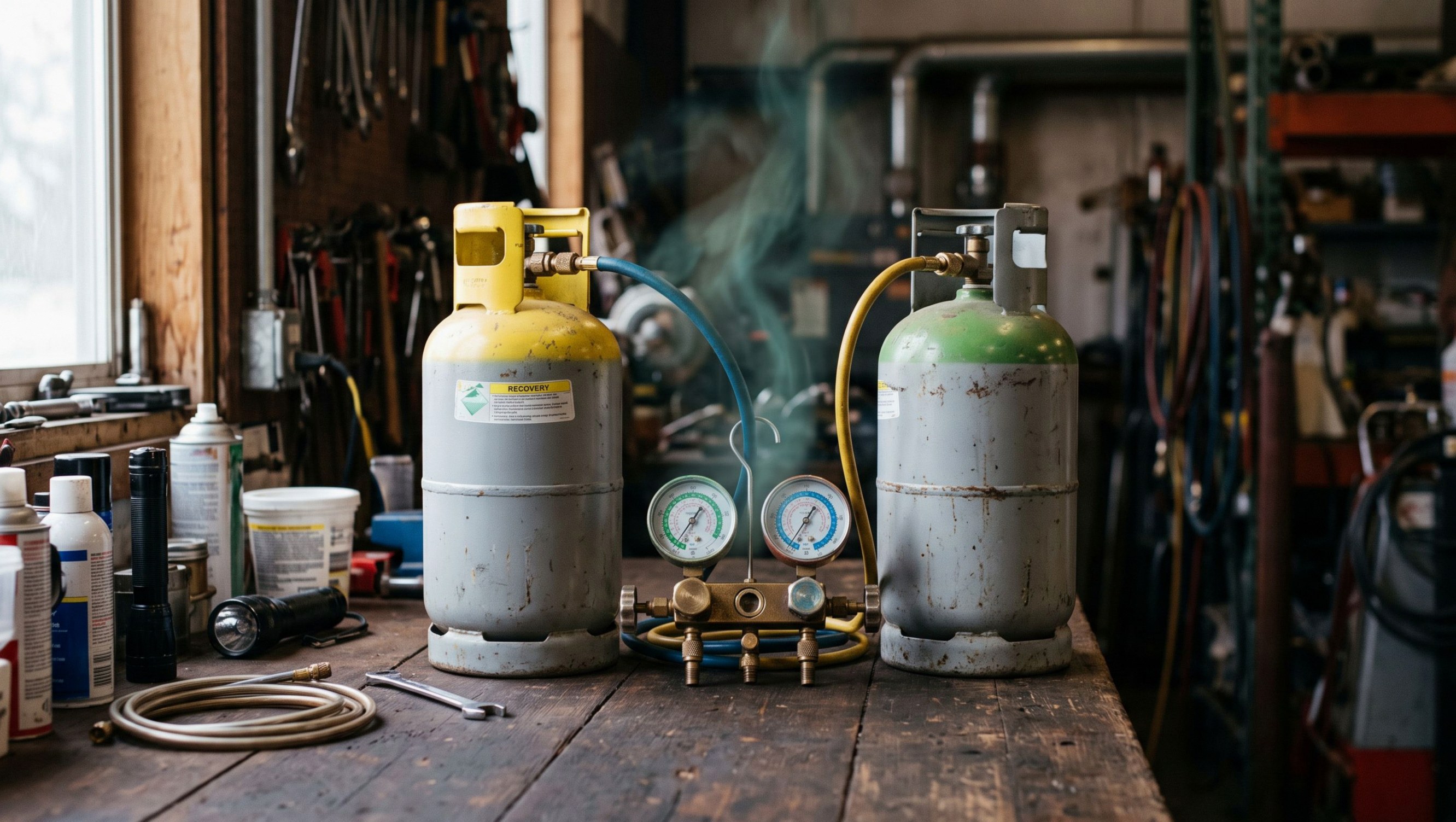
Here's a scenario that ends a lot of HVAC contractors' good weeks. A refrigerant line lets go on a commercial job. There's a release, a cleanup, maybe a habitability question in the building. The contractor files it with their general liability carrier, expecting the policy they've paid for every year to respond. The carrier denies it. The reason is four words buried in the policy: the absolute pollution exclusion.
If you handle refrigerant, this gap is aimed directly at you. And your standard commercial general liability policy does not close it.
Why Refrigerant Counts as Pollution
Standard commercial general liability (CGL) policies include what the industry calls an "absolute pollution exclusion." It removes coverage for bodily injury and property damage arising out of the release of pollutants. The policy then defines "pollutants" broadly, as any solid, liquid, gaseous, or thermal irritant or contaminant.
Refrigerant fits that definition. A released refrigerant is a gaseous contaminant, so an insurer applying the pollution exclusion can, and routinely does, treat a refrigerant leak as an excluded pollution event. It doesn't matter that you're a licensed tech doing normal work with a normal substance. The policy language doesn't ask what the substance is for. It asks whether it's an irritant or contaminant that got released.
The part that catches people is the word "absolute." The exclusion applies whether the release was sudden, gradual, accidental, or somebody else's fault entirely. There's no exception for the leak you didn't see coming. That's the whole design of the endorsement.
Don't assume you're covered because "it was an accident." The absolute pollution exclusion was written specifically to remove the sudden-and-accidental carve-outs that older policies used to have. Accidental is exactly the kind of leak it excludes.
What Contractors Pollution Liability Does
The coverage that responds to a refrigerant release is a separate policy: Contractors Pollution Liability, or CPL. It exists precisely because the CGL pollution exclusion leaves a hole that trade contractors fall into.
CPL covers the environmental exposures your general liability shuts out. For a mechanical or HVAC contractor that means refrigerant releases first and foremost, but a CPL policy typically also picks up mold, fuel spills, and other contaminants tied to your operations. It responds to third-party bodily injury, property damage, and cleanup costs from a covered pollution condition arising out of your work.
Think of it as the second half of a pair. CGL handles ordinary bodily injury and property damage. CPL handles the environmental slice that CGL carves out. Neither one alone covers an HVAC contractor's full exposure.
Run the supermarket scenario through both policies and the split gets concrete. A rack system leaks, refrigerant fills a back room, an employee gets sick, and product in an adjacent case spoils when the system goes down. The bodily injury and the property damage claims land on your desk. Your CGL carrier looks at the cause, sees a pollutant release, and applies the exclusion. Your CPL policy is the one written to respond to that exact chain of events. Without CPL, the contractor eats the cleanup, the bodily injury claim, and the legal defense out of pocket, on a job that was otherwise routine.
The other thing CPL buys you is a defense. Liability policies pay not just for damages but for the cost of defending a claim, and environmental claims get expensive to defend fast, with consultants, testing, and sometimes regulators involved. A CGL carrier that denies a refrigerant claim on the pollution exclusion also walks away from the defense. You're left hiring your own lawyer. CPL keeps that cost on the policy where it belongs.


How Much to Carry
Limits depend on the size of the work you take on. As a starting point, advisors commonly recommend a minimum of $1 million per occurrence and $2 million aggregate for CPL. That's a reasonable floor for a residential and light-commercial service shop.
Move up from there as the jobs get bigger. Large commercial and industrial refrigeration work, where a single system holds a serious refrigerant charge and the building exposure is real, justifies higher limits. A supermarket rack system or a cold-storage warehouse is a different risk than a rooftop package unit, and the limit should reflect it.
These limits are common recommendations, not a legal requirement, and your broker should size them to your actual jobs and any contract requirements you're bidding into.
Some large commercial and institutional clients now write CPL into their contract insurance requirements the same way they write in general liability and additional insured status. A hospital, a data center, or a big-box retailer with refrigeration knows what a pollution event costs, and they don't want to be the one holding it. If you bid that kind of work, you may find CPL isn't optional at all; it's a line item on the certificate you have to produce before you're allowed on site. Better to already carry it than to scramble for a policy after you've won the job.
A word on what CPL is not. It isn't a substitute for doing the work right, and it isn't a license to be careless with recovery and disposal. A carrier that sees a pattern of preventable releases will react at renewal, the same as with any other line. The policy is there for the event you couldn't prevent, not the ones you didn't bother to.
Where This Ties Into Your EPA Obligations
CPL doesn't stand alone in the refrigerant conversation. It pairs with your EPA Section 608 responsibilities. The federal rules govern how you recover, handle, and account for refrigerant, and doing that work correctly is your first line of defense against a release in the first place. Good 608 practice reduces the odds of a claim; CPL is what stands behind you when a release happens anyway. For the handling side, see our guide on EPA Section 608 refrigerant compliance.
The insurance side is worth mapping in one sitting with a broker who understands trade exposures. For where general liability itself fits and what it costs in California, see our HVAC general liability cost guide.
The lesson is short. A refrigerant leak is a pollution event to your CGL carrier, and pollution events are exactly what that policy excludes. If you touch refrigerant, CPL isn't an upsell. It's the coverage that matches the work.
Sources
- Rancho Mesa Insurance Services. "The Critical Role of Pollution Liability Insurance for Mechanical Contractors." ranchomesa.com
- Citizens General Insurance. "What Is Contractor Pollution Liability Insurance?" citizensgeneral.com