


Replacing an Electric Range Burner Element: Why the Receptacle Block Matters

Maria Solano
Former appliance warranty claims adjuster turned investigative repair journalist. Maria's 'What Went Wrong' teardown series has made her the most feared woman in the white-goods industry.
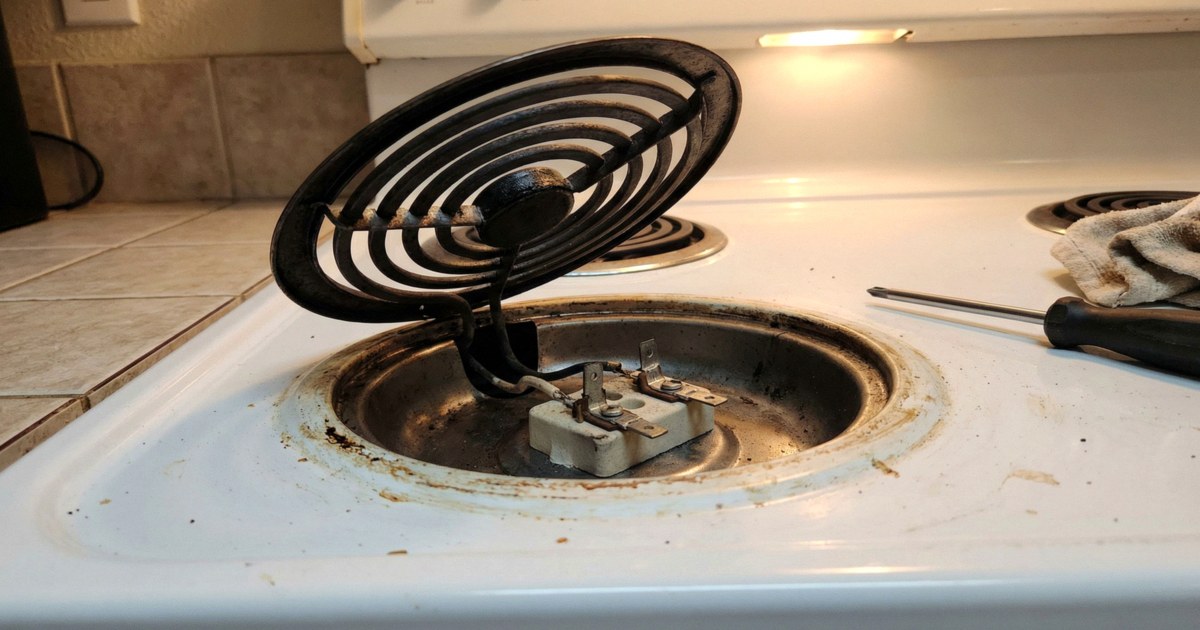
A burned-out burner element on an electric range looks like a simple DIY fix. In many cases it is. The element pulls out, a new one plugs in, the whole job takes 10 minutes. But there's a second component that often fails alongside the element, and it's the one that determines whether your fix holds or whether the new element burns out again in three months.
That component is the receptacle block — the socket the element plugs into. When an element fails from arcing or overheating, it almost always damages the terminals it's connected to. A new element going into burned receptacle terminals will run hot at the connection point, arc again, and fail again. The receptacle costs $8-15 and takes 10 additional minutes to swap. It's the part that makes the repair actually last.
Plug-In vs. Hardwired: Know What You Have
Before you do anything, identify what type of element your range uses.
Plug-in elements are the most common type on older and mid-range electric ranges. The element has two male prongs that insert into a receptacle block mounted on the range top. To remove: lift the outer edge of the element slightly and pull it straight toward you. The element pulls free from the receptacle. This type is the easiest DIY repair.
Hardwired elements are found on some ranges (particularly sealed-top smoothtop ranges) and on wall ovens. The element connections are wired directly with high-temperature wire leads rather than a plug-and-socket connection. Replacement requires pulling the range out, removing the cooktop or oven back panel to access the wiring, and using a crimp connector or high-temperature wire nut. Not more difficult technically, but more involved.
Ceramic glass (smoothtop) cooktops use radiant or induction heating elements underneath the glass surface. These are not field-swappable by lifting an element — replacement involves removing the glass top or the element assembly from below. This guide covers coil-element cooktops. Smoothtop repairs are a separate procedure.
Testing Before Ordering: Confirm the Element Is Actually Dead
Don't order a replacement element based on visual symptoms alone. A cracked element is obviously dead. But an element that just "doesn't seem to get as hot" might be a wiring problem, a surface unit switch issue, or a breaker problem — not the element itself.
Visual inspection: Look for a visible break in the coil wire, a charred spot, blistering on the element coating, or areas where the element glows unevenly — some sections orange-hot while others are dark. Any of these confirms element failure.
Multimeter test (definitive): Unplug the range or turn off the breaker. Remove the element. Set your meter to resistance (ohms). Touch one probe to each terminal of the element. A working element reads between 10 and 50 ohms depending on wattage — a large 8-inch burner element (2,000-2,600W) reads lower, a small 6-inch element (1,250-1,500W) reads higher. An open (OL or infinite resistance) reading means the coil is broken. Replace the element.
Also test continuity between each terminal and the element housing or outer coil. Any continuity to ground indicates the coil wire is touching the housing sheath — that's a short that can trip your breaker.
Inspecting the Receptacle: The Step Most People Skip
With the element out, look at the receptacle block — the two-socket piece mounted in the range. This is where the repair usually gets more complicated.
Look for:
- Burn marks or discoloration on the terminals or the plastic housing
- Pitting or corrosion on the metal contact terminals
- Melted or deformed plastic on the receptacle body
- Loose terminals — the terminal should grip the element prong firmly; a terminal that wiggles or doesn't spring back has lost its tension
If you see any of these signs, the receptacle needs to be replaced along with the element. A burned or pitted terminal has high resistance. High resistance means heat at the connection point. The new element plugs into a hot connection and experiences accelerated failure at the terminal end.
Even if the receptacle looks okay, if the element burned out from arcing at the terminal rather than from a mid-coil break, replace the receptacle anyway. Arcing damage isn't always visible on inspection. The $10 receptacle is cheap insurance against a callback three months from now.
Ordering the Right Replacement
Identify the element wattage and size. The wattage is stamped on the old element body (look for "2100W" or similar) or listed in the range's parts diagram. Element size: 6-inch (small burner) or 8-inch (large burner). Size and wattage must match the original. Don't upsize to a higher-wattage element — the wiring and receptacle aren't rated for it.
Common part numbers by brand (verify against your full model number before ordering):
Whirlpool / Kenmore / Maytag — The 8-inch large plug-in element is WPW10259865 (2,100W). The 6-inch element is WPW10259868 (1,500W). These Whirlpool numbers cover a wide range of models from 2010 onward. Confirm with the full model number for older units.
GE / Hotpoint — 8-inch plug-in Calrod element WB30M2 (2,350W), 6-inch element WB30M1 (1,250W). GE uses these across a long production span. The corresponding surface-element receptacle is WB17X5113 (sold as a receptacle-and-wire kit covering both burner sizes).
Frigidaire / Electrolux — 8-inch element 316442300, 6-inch element 316439801 (1,500W). The surface-element receptacle kit is 5303935058.
Note: Samsung and LG sell electric ranges almost exclusively as radiant smoothtop (glass-top) models, which do not use plug-in coil elements — there is no field-swappable coil to lift out. If you own a Samsung or LG electric range, look up your exact model at a parts supplier to confirm whether it is a coil or smoothtop design before ordering anything from this guide.
The receptacle part number is in the range's full parts diagram, searchable by model number at any major parts supplier (AppliancePartsPros, RepairClinic, PartSelect).


Replacing the Receptacle Block
With the range unplugged and the element removed:
- The receptacle block is mounted to the range top with one or two screws, or simply snapped into a bracket.
- Behind the receptacle, two wires connect to the terminals — usually push-on spade connectors.
- Remove the mounting screws and pull the receptacle toward you. The wires are typically long enough to work with without disconnecting them, but label which wire goes to which terminal before you remove anything if you're unsure.
- Disconnect the wire connectors from the old receptacle terminals and connect them to the new receptacle. Ensure the spade connectors seat fully — a loose connection here is the cause of future arcing.
- Mount the new receptacle, insert the new element, restore power and test.
Brand Notes
Whirlpool/Maytag: These ranges are among the easiest to work on. The cooktop lifts off easily (two screws at the front), giving full access to the wiring and receptacle mounting. If you're replacing a receptacle, the lift-top design makes the job much cleaner than reaching through the burner opening.
GE: GE's coil-element ranges have a removable drip bowl and trim ring under each element. Make sure you're sourcing the element for the correct burner position — front and rear elements sometimes differ in wattage on the same range.
Samsung and LG: Both brands sell their electric ranges almost exclusively as radiant smoothtop (glass-top) models rather than coil-element ranges, so the lift-out coil procedure in this guide generally does not apply to them. If your Samsung or LG range does have removable coil burners, confirm the exact element and receptacle part numbers against your model at a parts supplier before ordering — do not assume a coil part exists for the model.
Older Frigidaire: Some older Frigidaire ranges used a different terminal style with a slot-and-tab element prong rather than a standard two-round-prong configuration. Verify the terminal style when ordering.
For bake element failures in the oven cavity itself, and for ranges where the oven isn't heating rather than a surface burner, see our related guide to oven not heating — which covers both bake element and broil element diagnosis.
How do I know if my electric stove burner element is burned out?▾
Visual signs: a visible break in the element coil, a charred or blistered spot, or uneven glowing (some sections orange, others dark). Confirm with a multimeter: disconnect the element and test resistance across the terminals. A working element reads 10-50 ohms depending on wattage. An open reading (OL/infinite) means the element is burned out and needs replacement.
How do I replace a plug-in burner element?▾
Lift the outer edge of the element slightly and pull it straight toward you — it pulls free from the receptacle. The replacement plugs into the same receptacle. Before installing the new element, inspect the receptacle terminals for burn marks, pitting, or melted plastic. A damaged receptacle must be replaced along with the element, or the new element will fail prematurely from poor contact heating.
Why did my burner element burn out?▾
Elements fail from age and thermal stress — the coil heats and cools thousands of times until the resistance wire breaks. Boil-overs that allow liquid into the element terminals accelerate failure. Once an element glows unevenly (some sections dark while others glow), the wire is thinning and failure is imminent. Using an element at maximum heat routinely also shortens its life.
Can I use any replacement element or does it have to match?▾
The replacement must match the original in wattage, terminal style (plug-in vs. hardwired), and physical size. Wattage is stamped on the old element or listed in the range's parts diagram. Installing a higher-wattage element can damage the wiring. Plug-in elements can be interchangeable across brands using the same terminal style, but always verify wattage first.
Sources
Part numbers and specifications in this guide were verified against the following OEM and major appliance-parts suppliers:
- GE WB30M2 (8-inch, 2,350W plug-in Calrod element) and WB30M1 (6-inch, 1,250W): GE Appliances Parts, PartSelect
- GE WB17X5113 surface-element receptacle kit: AppliancePartsPros
- Whirlpool WPW10259865 (8-inch, 2,100W) and WPW10259868 (6-inch, 1,500W): PartSelect 8-inch, PartSelect 6-inch
- Frigidaire 316442300 (8-inch), 316439801 (6-inch, 1,500W), and 5303935058 receptacle kit: PartSelect 8-inch, AppliancePartsPros receptacle
Need a repair professional?
Get free quotes from verified technicians in your area.
Find a Pro Near You