


Whirlpool Dishwasher Not Draining: The Full Diagnostic Walkthrough

Terry Okafor
Master refrigeration tech and NATE-certified instructor who moonlights as the magazine's advice columnist. His 'Ask Big Terry' mailbag has been settling shop disputes and diagnosing mystery leaks since 2011.
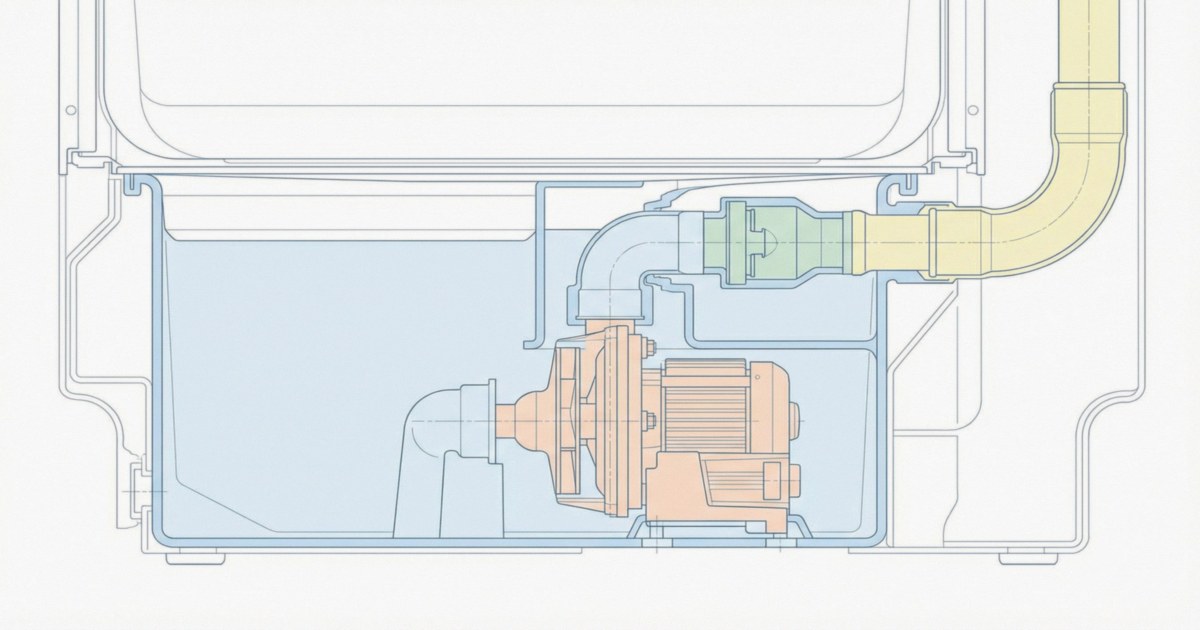
Standing water at the bottom of a Whirlpool dishwasher is a top-five service call for any tech running kitchen appliance work. I get asked about this one constantly in the mailbag. And the answer is almost always the same: it's one of four things, the diagnostic tree is short, and 80% of these jobs close with a single part.
Here's how to work through it.
Rule Out the Obvious First
Before you pull anything apart, check three things that account for roughly a third of these calls.
First, the garbage disposal knockout plug. If the disposal was recently installed and the dishwasher drain hose connects to it, confirm the plug was punched out. I've seen this on new construction callbacks more times than I can count. A customer with a brand-new kitchen and two inches of standing water, and the fix is a screwdriver and five seconds.
Second, the high loop. The drain hose needs to loop up to the underside of the countertop before dropping to the disposal or drain. No high loop means backflow. It's a plumbing basic that gets missed on DIY installs and occasionally by plumbers who should know better.
Third, the drain hose itself. Pull the dishwasher forward enough to see the full run. Kinks happen when things get shoved under the sink, and even a partial kink can block drainage.
On any "not draining" call, ask the customer: "Has anything changed recently? New garbage disposal? Kitchen remodel?" About one in three of these calls turns out to be installation-related, not a component failure. You can sometimes diagnose it over the phone and show up with the right expectations.
The Drain Pump
If the external stuff checks out, the drain pump motor is your first suspect. On Whirlpool models (including Kenmore units built by Whirlpool), the drain pump sits at the bottom of the unit, accessible through the lower kick plate.
Kill power at the breaker. Remove the kick plate. Locate the smaller of the two pump assemblies. Disconnect the wiring harness and check resistance across the terminals. You're looking for 5 to 20 ohms. An open reading means the motor winding is toast. A reading to ground means the insulation has broken down. Either way, replace it.
The part number for most WDT and WDF series units is W10348269. For the WDTA50 series, it's W10876537.
One failure pattern worth knowing: on the WDT750 and WDT730 models, the drain pump impeller cracks after three to five years of use. The motor still spins. It'll test fine electrically. But the impeller freewheels and no water moves. You'll hear it hum without drainage. Pull the pump and look at the impeller. If it's cracked or separated from the shaft, that's your answer.


The Check Valve
The check valve sits between the pump outlet and the drain hose. It prevents backflow. When it fails, the dishwasher drains fine during the active pump cycle but water seeps back in once the pump shuts off. Classic symptom: the tub is clear right after a wash, but 30 to 60 minutes later there's standing water again. And it smells worse than usual because it's sewer water flowing backward.
Pop the check valve out of the pump housing and inspect it. These are cheap parts, $8-12. If it doesn't seat cleanly, or if there's any debris or warping, replace it.
Replace the check valve every time you swap a drain pump. It's a $10 part and 30 seconds of labor. Bundle it into your flat rate. Prevents a callback that costs you far more than the valve.
The Control Board
If the pump motor tests good, the check valve is clean, and the drain path is clear, the problem may be upstream. The main control board might not be sending voltage to the pump during the drain cycle.
Start a drain-only cycle (Cancel/Drain on most models) and put your meter on the drain pump connector. You should see 120V AC during the drain phase. If the pump gets voltage and doesn't run, it's the pump regardless of your resistance reading (internal mechanical failure). If there's no voltage at the connector, the control board's drain relay has failed.
The W10084141 board and its replacements (W10854230) are known for burning out the drain relay contacts over time. Inrush current from the pump motor does it. The board will run everything else fine. Just the drain output dies.
Model Notes
The WDT750 is the most common Whirlpool dishwasher in the field right now. When ordering a drain pump for these, get the complete assembly (W10529161) rather than just the motor. The impeller and housing seal are updated in the full assembly. Worth the extra $20.
The WDF520 budget line uses a simpler pump that's actually more durable. Most drain issues on those units are hose or sump related, not pump failures. Clean the filter and check the install before you start quoting parts.
The WDTA50 third-rack models put more load on the drain system. The fine filter clogs faster because of the additional wash zones. On these, always pull and clean the filter before you do anything else. It's the most common cause of drain problems on this specific line.
The dishwasher drains during the cycle but has standing water at the end. Where do I look?▾
Start with the check valve. The pump is strong enough to push water out during the active drain phase, but a failed check valve lets it flow back once the pump shuts off. A $10 check valve solves this symptom about 70% of the time.
Can I clear a clogged drain pump instead of replacing it?▾
You can try, but it's not a permanent fix. If debris got past the filter and into the pump housing, the impeller is likely scored or chipped. A pump that tests OK after clearing will often fail again within weeks. Save yourself the callback.
Need a repair professional?
Get free quotes from verified technicians in your area.
Find a Pro Near You