


Whirlpool Refrigerator Ice Maker Not Working: Full Diagnostic Guide
Terry Okafor
Master refrigeration tech and NATE-certified instructor who moonlights as the magazine's advice columnist. His 'Ask Big Terry' mailbag has been settling shop disputes and diagnosing mystery leaks since 2011.
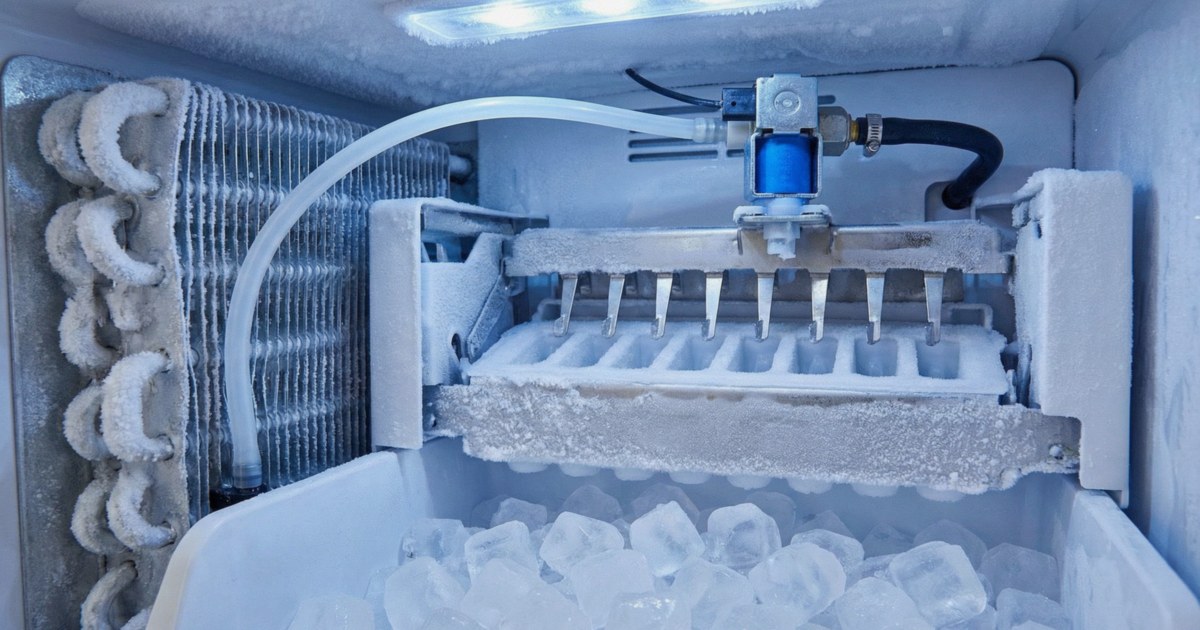
Ice maker calls are the most common refrigerator service call I run, and Whirlpool/KitchenAid/Maytag accounts for roughly half of them. The good news: these three brands share the same ice maker platform going back to the mid-2000s. The diagnostic process, part numbers, and even the diagnostic mode are nearly identical across the entire family. Once you know the Whirlpool system, you know all three.
Here's the complete diagnostic tree, in failure-probability order.
Check Freezer Temperature First
The Whirlpool modular ice maker will not initiate a harvest cycle if the freezer temperature is above 10°F. The thermistor on the ice maker module reads the temperature, and there's a built-in lockout. I've watched techs replace modules and valves while the real problem was a refrigerant shortage keeping the freezer at 18°F.
Before you touch anything else, check the freezer temp. Put a calibrated thermometer in the fresh-food compartment and the freezer. The freezer should be between 0°F and 5°F for normal ice production. If you're above 10°F, diagnose the cooling system first — see our refrigerator not cooling guide for that tree.
Run the Whirlpool Diagnostic Mode
Whirlpool, KitchenAid, and Maytag built a diagnostic mode into the ice maker module that saves significant diagnostic time. Here's how to trigger it:
On models with a feeler arm (the wire bail): push the arm down three times within 15 seconds. On models with a push-button on/off switch: press the button three times within 15 seconds.
The module will run through a complete harvest cycle — you'll hear the ejector motor rotate the blades, then the fill valve should energize and fill the tray. The whole cycle takes about 3 minutes.
What the results tell you:
- Cycle completes with water fill: The ice maker is functioning. Your problem is ice not being stored, dispensed, or the customer's expectations about production rate.
- Cycle completes without water fill: Ice maker module and motor are good. Inlet valve or supply problem.
- Ejector motor doesn't run: Failed module or failed motor (on modular designs these are separate).
- Nothing happens at all: Check the wire harness connector and the freezer temperature lockout first.
On older Whirlpool modular ice makers (the "flex tray" design, pre-2015), the diagnostic mode fill can be incomplete even on a working system because the tray has to be at a specific position when you trigger it. If the diagnostic seems to complete normally but without filling, trigger it again when you can see the tray is in the home position. I've chased phantom "fill valve failures" for 20 minutes before I figured that one out.
The Water Inlet Valve — Most Common Actual Failure
If the diagnostic mode runs the motor but doesn't fill, the inlet valve is suspect. On most Whirlpool-family refrigerators, the inlet valve is mounted on the lower rear of the unit. Many models use a dual-solenoid valve — one coil for the ice maker, one for the water dispenser, both on the same valve body — but single-solenoid (ice-only) valves are also common, so confirm against your specific model.
Testing the valve:
- Pull the fridge from the wall and access the rear lower panel.
- Disconnect the harness from the ice maker solenoid coil.
- Test solenoid resistance across the terminals. Normal range: 200-500 ohms. Open or shorted = bad solenoid/valve.
- Check for voltage at the valve when the ice maker calls for water (run the diagnostic mode and measure at the valve harness with the connectors jumped). You should see 120V AC during the fill portion of the cycle.
- If you have voltage and the solenoid tests good, check water pressure. The Whirlpool inlet valve requires 20-120 PSI to open. Below 20 PSI, it won't open reliably.
Common inlet valve part numbers:
- Whirlpool side-by-side / French door (most models 2010-present) — W10498990. This covers a very wide range including KitchenAid KFIS and KRFF series.
- Maytag MFI / MFF series — same W10498990 in most cases.
- Older Whirlpool ED5 series (pre-2010) — 4389177 (also sold as W10408179; same valve). Whether it carries one or two solenoids depends on the model.
- Older Whirlpool with dedicated dispenser fill — W10279866.
Water Filter Flow Rate Test
A clogged or expired water filter causes more ice maker no-production calls than most techs realize. The filter restriction raises the pressure drop across the valve, and if supply pressure is already on the low side (which it often is in older Southern California homes with corroded supply lines), the valve won't open reliably.
The test: disconnect the water supply line from the inlet valve. Place it in a bucket and run the supply for 20 seconds. You should get at least 13.5 oz (400 mL) in 20 seconds — that's the minimum flow rate the valve needs. Less than that and the filter is the problem, or there's a supply issue upstream.
Whirlpool-family refrigerators use EveryDrop filters. The most common:
- EDR1RXD1 (Filter 1) — most 2014+ French-door and side-by-side models
- EDR3RXD1 (Filter 3) — older side-by-side models
- EDR4RXD1 (Filter 4) — select models with external filter
Filters should be replaced every 6 months or 200 gallons, whichever comes first. The "replace filter" light usually triggers at 6 months regardless of actual flow. Don't rely on the light — test flow rate.
If a customer insists their filter is only 2 months old, test flow anyway. Cheap aftermarket filters can fail quickly, and I've seen no-name filters restrict flow to near zero at 4 weeks. The EveryDrop branding is licensed to third-party manufacturers — quality varies. When the customer says "I just changed the filter and ice stopped," that's a red flag that the new filter is the problem, not the solution.


Ice Maker Module Testing
If the diagnostic mode shows the motor won't run, the module is suspect. The Whirlpool modular ice maker module (W10190965 is the current service part covering a very wide range) contains the thermistor, the ejector motor, and the control logic.
Before replacing the module, check:
- Wire harness connector — Remove the ice maker, unplug the wire harness from the module, and inspect the terminals. Corrosion and bent pins are common on freezer connectors.
- Feeler arm switch (if applicable) — Test continuity with the arm in the down position. Should be open (arm down = ice present = stop making). Should be closed with arm up.
- Thermistor — The module thermistor reads between 16K and 20K ohms at 0°F. Out of range? Thermistor is bad. On most Whirlpool ice makers the thermistor is not sold separately — the module is the part.
Module part numbers:
- W10190965 — Current service replacement for most Whirlpool, KitchenAid, Maytag modular ice makers (2007-present)
- 626663 — Older Whirlpool flex-tray module (pre-2007)
- W10377151 — KitchenAid models that use the front-fill design
The Frozen Fill Tube
The fill tube is the small plastic tube that runs from the inlet valve down to the fill cup on the ice maker. In freezers where door seals are weak or the freezer runs slightly warm and then overcorrects, humidity enters and the fill tube ices over at the end. The valve opens, water runs, but it hits an ice dam before reaching the tray.
Symptom: you can hear or measure the inlet valve opening, but no water reaches the ice maker. Sometimes you'll find a cone of ice just above the ice maker where water backed up and froze.
Fix: thaw the tube with a hair dryer (don't overheat), replace the fill tube if it's deformed (look up the fill-tube part by your specific model number — it varies by chassis), and then find out why it's freezing. Usually the fill cup isn't positioned correctly or the door seal is letting warm air in.
Harvesting and Dispenser Issues
If ice is being made but not dispensed, or if ice is clumping in the bin, those are different problems:
- Ice clumping — Freezer running above 10°F causes partial melt and refreeze. Fix the temperature. Can also be caused by an ice maker that's overfilling (check fill volume — should be about 140-180 mL per cycle for standard trays).
- Auger motor not dispensing — The auger motor drives ice from the bin to the door chute. Test the auger motor directly. Part WPW10317991 on most current models.
- Ice not dropping from tray — Ejector blades are not completing a full rotation. Usually a stalled motor or a mechanical jam. Run the diagnostic mode and watch the blade rotation.
For a broader diagnostic of why your refrigerator isn't keeping things cold, see our refrigerator not cooling guide. And for Samsung-specific ice maker failures (which have their own distinct failure patterns), check our Samsung fridge ice maker fix guide.
Quick-Reference Diagnostic Order
- Freezer temperature — Must be below 10°F for ice maker to run. Check first.
- Diagnostic mode — Press feeler arm or button 3x in 15 seconds. Determines motor vs. water supply problem.
- Water filter flow rate — 13.5 oz in 20 seconds minimum. Change the filter if in doubt.
- Inlet valve — Test solenoid resistance (200-500 ohms) and verify 120V at valve during fill call.
- Fill tube — Check for ice dam if valve opens but no water reaches the tray.
- Ice maker module — Replace if motor doesn't run and harness checks out.
Why did my Whirlpool ice maker stop making ice?▾
The three most common causes are a failed inlet valve, a water filter that has dropped flow rate below the minimum threshold, and a frozen fill tube. Freezer temperature is also a frequent culprit — the ice maker module will not complete a harvest cycle if the freezer is above 10°F. Run the 3-press diagnostic mode first to split the problem between motor/module and water supply.
How do I run the Whirlpool ice maker diagnostic test?▾
On most Whirlpool, KitchenAid, and Maytag models, press the feeler arm (or ice maker on/off switch) down three times within 15 seconds. The ice maker will run through a complete harvest cycle. You will hear the ejector blades rotate and then the fill valve should open and fill the tray. If the motor runs but no water fills, your problem is the water supply or inlet valve — not the module.
How much does it cost to fix a Whirlpool ice maker?▾
An inlet valve replacement runs $135-215 total with labor. An ice maker module assembly swap is $150-235. If a clogged water filter is causing low flow, a filter replacement is a $18-45 DIY fix. A frozen fill tube is typically a $75-125 service call. Total repairs usually stay under $250 for everything except cases where the issue is in the refrigeration system itself.
Need a repair professional?
Get free quotes from verified technicians in your area.
Find a Pro Near You