
AI-Powered Predictive Maintenance Is Reshaping How Appliance Service Works
Terry Okafor
Appliance repair technician and diagnostics specialist
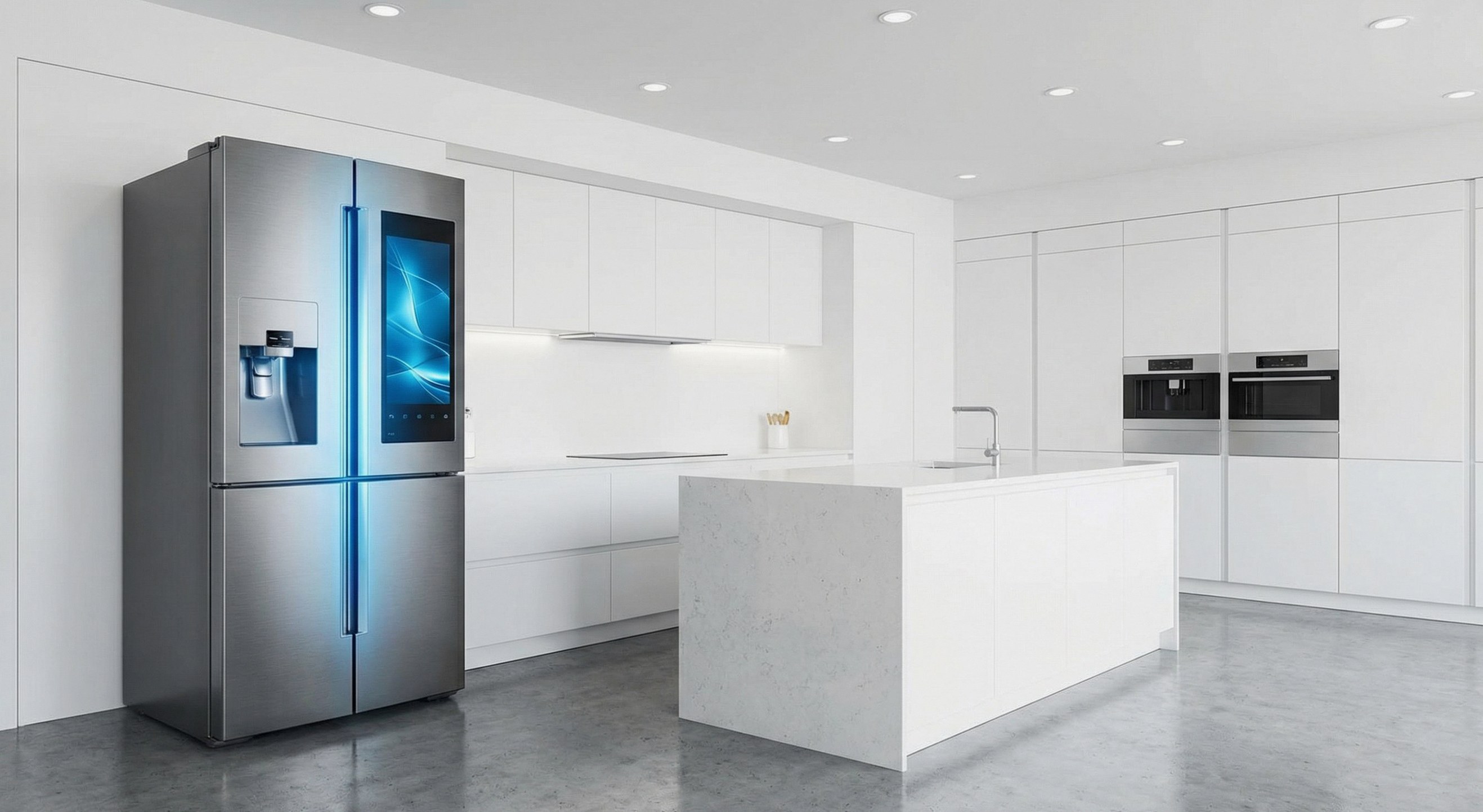
Samsung's SmartThings platform now pushes proactive "Home Care" maintenance alerts to owners' phones — notifications telling them a component is degrading before it fails outright. LG's ThinQ system does something similar, flagging anomalies in connected refrigerators, washers, and air conditioners and surfacing a probable diagnosis well before complete failure.
This isn't theoretical anymore. As the installed base of connected appliances grows, AI-driven predictive maintenance is generating real service demand — and changing how that demand reaches repair businesses.
How It Works
The sensors aren't new. Appliances have had thermistors, hall-effect sensors, and current monitors for 15 years. What's new is the cloud-based AI that analyzes the data continuously.
A connected refrigerator's compressor draws a specific current profile during normal operation — a startup spike, a steady-state plateau, and a shutdown curve. The AI baseline learns that profile for each individual unit. When the current draw creeps 10-15% above baseline, or the compressor runtime per cycle extends, or the cabinet temperature variance increases — the system flags it.
The alert goes to the consumer's app: "Your refrigerator compressor is showing signs of reduced efficiency. Schedule a service check to prevent a potential failure." Some systems go further, providing a probable diagnosis and estimated time to failure. LG's ThinQ platform includes a "share diagnostic report" function that sends the sensor data directly to the service provider.
What This Changes for Repair Businesses
The tech who shows up to a predictive maintenance call with the probable replacement part already on the truck closes the job in one visit. That's better first-time fix rate, better customer review, and better revenue per call. Treat the AI diagnostic report like a pre-screen — verify it, but trust it enough to bring the part.
Pre-diagnosed service calls. The traditional workflow is: customer notices a symptom, calls for service, tech arrives, diagnoses, orders part, returns to install. Predictive maintenance compresses this to: AI detects anomaly, customer requests service, tech arrives with probable part, fixes in one visit. Field-service research consistently shows that predictive, pre-diagnosed work lifts first-time fix rates well above the reactive baseline — industry analyses put predictive-maintenance fix rates in the high 80s to low 90s percent, versus an industry average closer to 70-75%.
Shift from emergency to scheduled. A $200 compressor replacement on a Tuesday afternoon is better business than a $200 compressor replacement on a Saturday night emergency call — for the tech, the shop, and the customer. Predictive maintenance converts emergency break-fix calls into scheduled maintenance appointments. That's better truck utilization, lower overtime costs, and higher customer satisfaction.
New service model: monitoring contracts. Some forward-looking repair shops are offering "connected appliance monitoring" packages — $15-25/month per household. The shop monitors the customer's connected appliances via manufacturer APIs (where available) or third-party platforms, proactively schedules service when anomalies appear, and guarantees priority response. It's recurring revenue with high retention.
Data-informed parts inventory. If your customer base includes 500 connected Samsung refrigerators and SmartThings data shows compressor degradation trending across 2021-2022 model years, you know to stock parts like the DA35-00099A PTC start relay before the failure wave hits. That's inventory intelligence that didn't exist three years ago.


The Limitations
AI diagnostics are good at pattern recognition. They're not good at root cause analysis. A compressor current spike could mean a failing compressor — or it could mean a dirty condenser coil restricting airflow, a refrigerant undercharge, or a faulty start relay. The AI flags the symptom. The technician diagnoses the cause.
Manufacturer diagnostic platforms are also inconsistent. Samsung's SmartThings provides detailed sensor data and probable diagnoses. Whirlpool's Connected platform offers basic error codes but limited predictive capability. GE's SmartHQ falls somewhere in between. And the large majority of the installed appliance base still isn't connected at all — no Wi-Fi, no sensors beyond the basics, no cloud analytics.
The technician who can bridge both worlds — diagnosing a 2015 mechanical dishwasher and interpreting a 2025 AI diagnostic report from a connected refrigerator — is the most valuable person in any repair shop.
Getting Started
Connect with manufacturer platforms. Samsung, LG, and GE all have service provider portals that surface diagnostic data from connected appliances in your service area. Registration is typically free for licensed repair businesses.
Invest in training. Industry bodies offer credentials and continuing education that increasingly cover connected appliances. The NASTeC certification (National Appliance Service Technician Certification, administered by ISCET with support from AHAM) is the recognized US technician credential, and the United Appliance Servicers Association (UASA) runs smart-appliance diagnostic training through webinars, self-paced modules, and its annual ASTI event. Exam and course fees vary — NASTeC specialty exams run roughly $50-185, and self-paced appliance courses are commonly a few hundred dollars — but the ROI is the same: the ability to command a premium rate on connected appliance service calls.
Don't abandon your core skills. The vast majority of major appliances in US homes have no smart features at all. They'll need traditional diagnosis and repair for the next 10-15 years. AI is an addition to your capability — not a replacement.
For related reading, see our coverage of smart appliance diagnostics changing service calls and the right-to-repair laws opening diagnostic access.
Sources
- Samsung. "SmartThings Home Care: proactive appliance care." Samsung US and Samsung Business Insights — How predictive tech cuts downtime
- Expansive FM. "How Preventive & Predictive Maintenance Can Boost First-Time Fix Rates." expansivefm.com
- International Society of Certified Electronics Technicians (ISCET). "NASTeC Appliance Exams." certifiedelectronicstechnician.org
- United Appliance Servicers Association (UASA). "Member Benefits / Smart Appliance Training." unitedservicers.com
- Samsung. "DA35-00099A Refrigerator PTC Start Relay" (part reference). Reliable Parts
Need a repair professional?
Get free quotes from verified technicians in your area.
Find a Pro Near You