


DOE Guidance Ends Gas-to-Electric Rebates in $4.5 Billion HEAR Program

Maria Solano
Former appliance warranty claims adjuster turned investigative repair journalist. Maria's 'What Went Wrong' teardown series has made her the most feared woman in the white-goods industry.
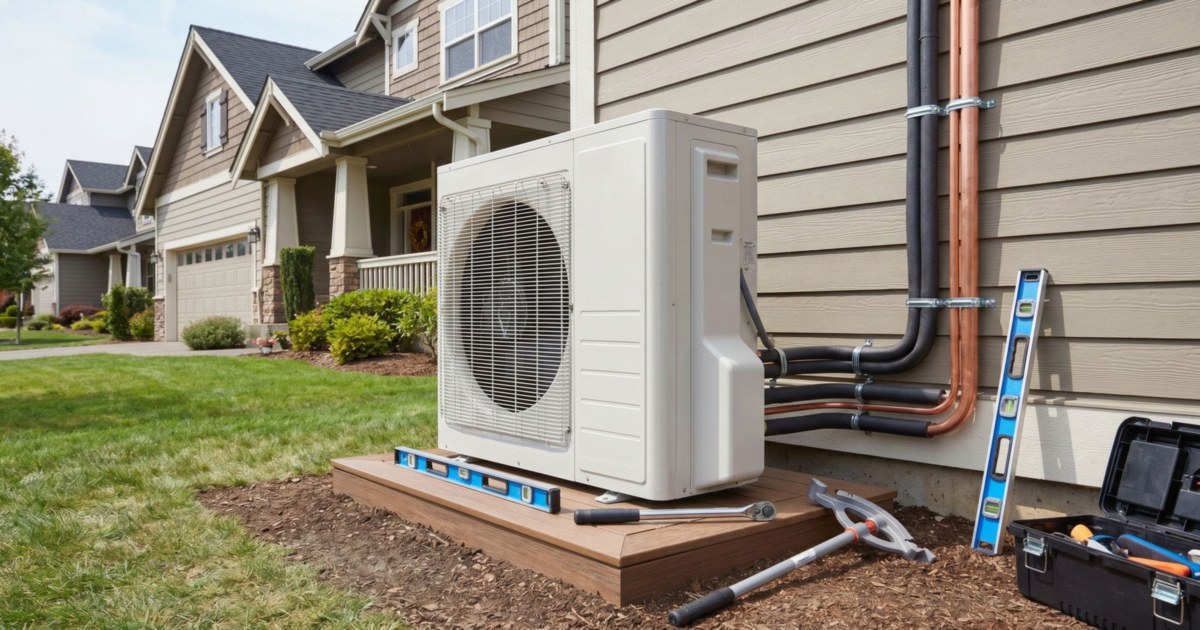
The Department of Energy issued guidance on May 29 that ends households' ability to qualify for High-Efficiency Electric Home Rebate funding when they replace a fossil-fuel appliance with an electric one. Under the new rules, first reported by Utility Dive, heat pump rebates apply only to new construction or to homes that already heat with electricity.
That closes the gas-furnace-to-heat-pump pathway, the single biggest selling tool the program ever gave contractors.
HEAR (you'll also see it written HEEHR) is the $4.5 billion electrification rebate program created by the Inflation Reduction Act in 2022. It offered low- and moderate-income households up to $8,000 toward a qualified heat pump and up to $14,000 in total rebates. The companion $4.3 billion HOMES retrofit program got its own revisions in the same guidance, including making ENERGY STAR certification optional.
There's more in the fine print. The guidance replaces consumer protection plans with fraud, waste and abuse mitigation plans, restricts self-attestation for income qualification, and drops the program's equity requirements. Inside Climate News reported that households must now complete insulation and air-sealing work before claiming appliance rebates, and that states have three months to bring active programs into compliance.
About a dozen states plus Washington, D.C. were running electrification rebate programs when the guidance landed, including Arizona, California, Colorado, Georgia, Maine, Michigan, New York, North Carolina and Wisconsin. Every one of them now has to rework eligibility midstream.
"The rebate programs have the potential to cut energy bills in half for participating Americans," Kara Saul-Rinaldi, chief policy officer at the Building Performance Association, told Utility Dive.
Robin Yochum of the Southwest Energy Efficiency Project told Inside Climate News the fuel-switching restriction strips out "one of the most transformative aspects" of the original program design.
What Contractors Selling Heat Pump Conversions Should Do Now
If you sell gas-to-heat-pump conversions in a state with an active HEAR program, every open quote that assumes rebate money is suspect. Re-quote before the homeowner signs, not after the rebate application bounces. A conversion that penciled out with $8,000 in HEAR funding now carries the full sticker, and the homeowner will remember who promised the discount.
The stacking math was already getting worse. The federal 25C tax credit, worth up to $2,000 on a qualifying air-source heat pump, expired on December 31, 2025. That leaves state and utility incentives as the only money on the table for most conversion jobs, and those vary wildly by territory.
California contractors have lived through a version of this. The state's HEEHRA heat pump rebates went fully waitlisted well before this guidance arrived, and shops that built sales pitches around the funding had to unwind them fast.
Demand itself hasn't gone anywhere. Heat pumps have outsold gas furnaces nationally for several years running, and the equipment wins on operating cost in most climates regardless of who subsidizes it. The pitch just got harder in the middle of the market, where an $8,000 rebate was often the difference between a conversion and a like-for-like furnace swap.
States have until late summer to submit compliant program rules. Expect pauses, new eligibility screens, and some awkward kitchen-table conversations before then.
Sources
- Utility Dive, "DOE issues guidance ending gas-to-electric appliance rebates." https://www.utilitydive.com/news/doe-issues-guidance-gas-electric-appliance-rebate/821720/
- Inside Climate News, "DOE Restarts Home Efficiency Rebates, and Electrification Is the Biggest Loser." https://insideclimatenews.org/news/01062026/energy-department-restarts-home-efficiency-rebates/
- U.S. Department of Energy, Home Energy Rebates / Home Upgrades. https://www.energy.gov/save/home-upgrades
- Internal Revenue Service, Energy Efficient Home Improvement Credit (Section 25C). https://www.irs.gov/credits-deductions/energy-efficient-home-improvement-credit The 25C credit's December 31, 2025 expiration was set by P.L. 119-21 (the One Big Beautiful Bill Act).