


Heat Pumps Break the Green-Tech Income Barrier, Making IRA Rebates Uniquely Equitable

Dale Resnick
A 30-year veteran of residential HVAC who's crawled through more attics than he can count.
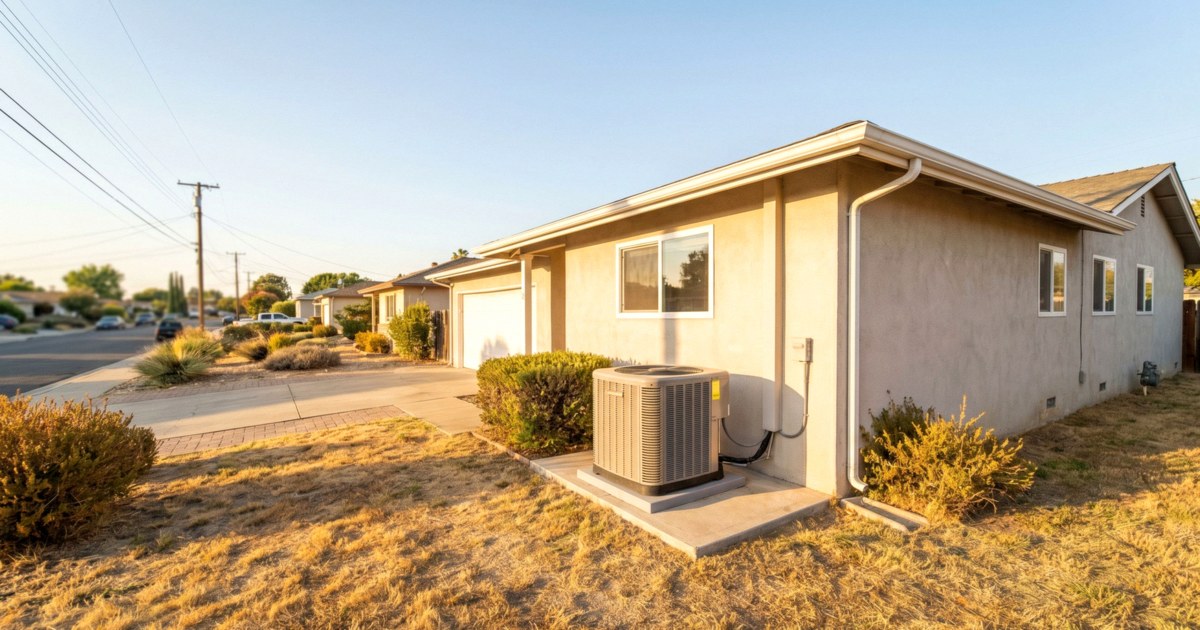
Here's one for contractors pitching in working-class neighborhoods. A 2024 NBER paper in Environmental and Energy Policy and the Economy used nationally representative RECS microdata — a sample of 18,496 households — to trace who is actually installing heat pumps. The finding is that heat pump adoption is essentially flat across income levels, which is a sharp break from almost every other residential green-tech category.
Solar and EV subsidies skew heavily high-income. The paper notes that the top income quintile receives roughly 60% of the federal tax credits for rooftop solar and about 90% of the tax credits for electric vehicles. Heat pumps don't follow that pattern. Adoption rates are nearly the same from the second quintile through the top, with only modest drop-off at the very bottom.
That distribution is unusual enough to change how contractors and policymakers should think about IRA rebate rollout.
Why Heat Pumps Are Different
The author argues that the difference comes down to the purchase occasion. Solar panels and EVs are discretionary upgrades — you buy them when you want them, which is when you can afford them. Heat pumps, by contrast, typically get installed when an existing HVAC system fails. The failure event happens across all income brackets at roughly the same rate, because furnaces and air conditioners don't care how rich you are.
Davis also points to climate and geography as stronger predictors of heat pump adoption than income. Mild-climate regions with low natural gas availability see higher adoption, while higher electricity prices are associated with lower adoption. Cold-climate regions have seen adoption rise as cold-climate-capable models reached the market in recent years.
State policy matters too. Electrification-focused states like California, Washington, New York, and Maine have higher adoption across income levels than comparable states without those policies. The IRA's federal rebates layer on top of state incentives, and for once the stacking lands on lower-income homes as often as higher-income ones.


Why This Matters to a Contractor's Pitch
Three implications.
The IRA heat pump rebates work as designed in mixed-income service areas. A contractor quoting in a working-class neighborhood can lean on the 30% federal credit plus HEEHRA rebates, which for qualifying households can cover up to 100% of installed cost. That's a pitch solar contractors rarely get to make. Heat pump contractors can.
The purchase occasion is usually an emergency. When the furnace dies in January or the AC dies in July, the household that was going to replace with a like-for-like unit is suddenly open to hearing a heat pump pitch — especially if the contractor can quote net cost after incentives on the spot. Shops that keep rebate paperwork and a Manual J calculation ready for the truck close more of these jobs.
Public policy has a rare equity lever here. The paper's finding has been circulating in Washington, and it's strengthening arguments to keep IRA heat pump funding intact even as other clean-energy programs face pressure. Contractors working with utility programs should expect continued rebate availability.
One caveat the paper is honest about: HEEHRA rollout has been slow. Many states still don't have fully operational portals. Contractors should track state-level program launches and be ready to steer customers to whichever incentive is active.
See our coverage of heat pumps outselling gas furnaces and tariffs affecting appliance prices and repair demand for related market context.
Source
Davis, Lucas W. (2024). "The Economic Determinants of Heat Pump Adoption." Environmental and Energy Policy and the Economy, Vol. 5. NBER Working Paper No. 31344. https://www.nber.org/papers/w31344