


UK Heat Pump Data: Gas Use Drops 90%, and the Right Rate Plan Cuts Peak Draw in Half

Dale Resnick
A 30-year veteran of residential HVAC who's crawled through more attics than he can count. Dale writes the 'Duct Tape & Beyond' column and believes every compressor tells a story if you listen close enough.
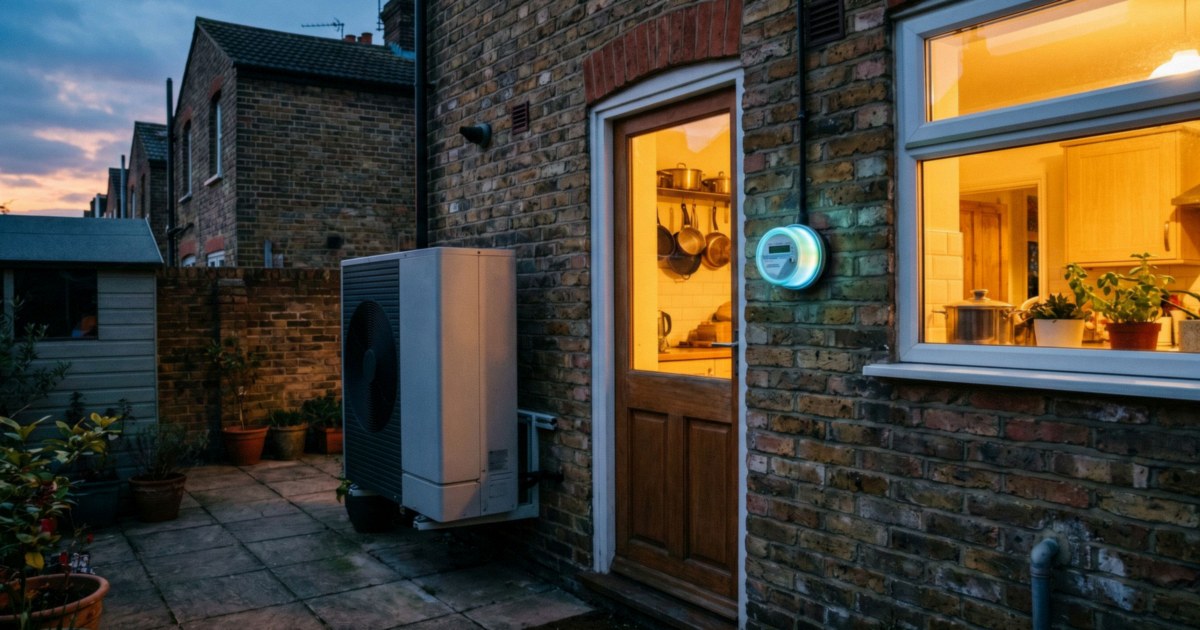
When a homeowner asks what a heat pump will actually cost to run, most installers reach for a rule of thumb. Four economists just published something better. In NBER Working Paper 33036, Louise Bernard, Andy Hackett, Robert Metcalfe, and Andrew Schein analyzed household energy data from UK utility Octopus Energy, tracking what happened to consumption when homes swapped gas boilers for heat pumps.
The headline numbers are clean. Gas consumption fell roughly 90%. Electricity use climbed 61%. Net those against each other and total household energy consumption dropped about 40%.
That 40% is the physics showing up in billing data.
A condensing boiler tops out near 90% efficiency. A heat pump delivering two and a half to three units of heat per unit of electricity simply needs less input energy to keep the same house at the same temperature. The researchers tallied the carbon side too: emissions fell 36% in the first year measured, with average lifetime savings around 68% as the grid keeps getting cleaner.
But the section installers should actually study is the tariff experiment. Octopus offers a time-of-use rate built for heat pump households, with cheap windows outside the evening peak. Customers on that tariff cut their peak-hour electricity consumption roughly in half. They preheated the house during the cheap windows and coasted through the expensive hours. And the load shifting held up across building types and on the coldest days of winter, which is exactly when grid operators lose sleep over electrified heating.
So the honest answer to "what will it cost me to run" comes with a twist. It depends on the rate plan as much as the equipment.
Selling the Rate Along With the Box
Here's where this gets practical for a US shop. Time-of-use rates are already the default for most California households, and utilities offer plans aimed squarely at electrified homes (SCE's TOU-D-PRIME is one example). An installer who walks the customer through a rate comparison at the kitchen table closes the running-cost objection before it forms, and fields fewer angry callbacks in February. A smart thermostat scheduled around the cheap windows does the preheating automatically, same as the Octopus households did.
The study also graded the UK's heat pump subsidy and found each pound of government money produced about £1.24 in value. That's a useful data point in the American rebate fight, where demand keeps outrunning funding; California's HEEHRA heat pump rebates went fully waitlisted almost as soon as the money landed. Other NBER work has found heat pump adoption spreads more evenly across income levels than most green technology, which makes the subsidy math more interesting, not less.
The usual caveats apply. UK homes run hydronic heat off boilers, the housing stock is older and leakier, and a British cold snap is a mild week in Minneapolis. A US furnace-and-AC changeout won't map one-to-one onto these percentages. The direction of the findings is what matters, and the direction is consistent with what field studies keep showing elsewhere; our Southern California heat pump vs. furnace guide runs the local version of this math.
One more thing jumped out at me after three decades of bid-night conversations. The biggest variable in this study wasn't the compressor. It was the rate plan, something most contractors never bring up. The shops that learn to talk tariffs will own the running-cost conversation, and the ones that don't will keep losing bids to a spreadsheet they never saw.
Source
Bernard, L., Hackett, A., Metcalfe, R.D., Schein, A. (2024). "Decarbonizing Heat: The Impact of Heat Pumps and a Time-of-Use Heat Pump Tariff on Energy Demand." NBER Working Paper Series, No. 33036. https://www.nber.org/papers/w33036
Need a repair professional?
Get free quotes from verified technicians in your area.
Find a Pro Near You