


Field-Deployed Model-Predictive Control Slashes Dual-Fuel Utility Costs 27%

Terry Okafor
Master refrigeration tech and NATE-certified instructor.
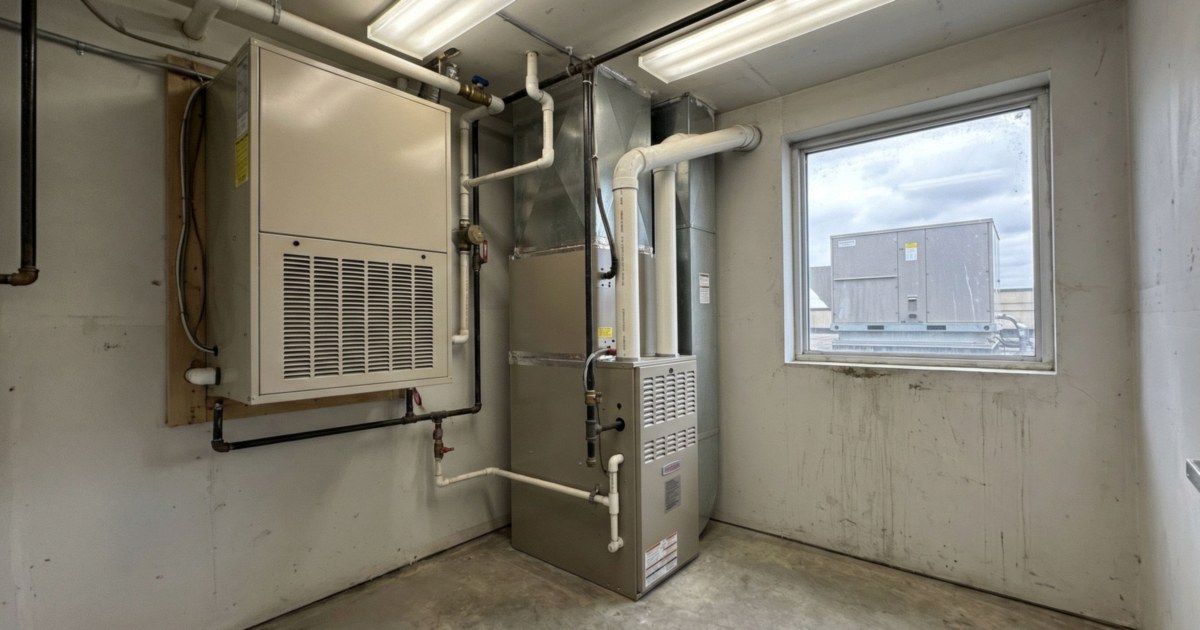
Ham and colleagues published a field study in Applied Energy in 2024 that dual-fuel contractors should read twice. They installed a low-cost model-predictive controller on a heat pump plus gas furnace system in a small commercial building and ran it for two months. Utility costs fell 27%. The furnace never fired. About 23% of the thermal load shifted to off-peak hours.
The furnace part is the one that gets attention.
Across a full winter measurement window in a climate cold enough to make the baseline heat pump struggle, the MPC never found a moment where gas combustion beat the heat pump on cost. Time-of-use rates on the electric side, combined with gas prices that have climbed over the past few years, tilted the economics far enough that the backup heat just sat there.
For contractors selling dual-fuel against straight gas or against basic thermostat-controlled dual-fuel, this is a real sales tool. The savings didn't come from better hardware. It came from smarter scheduling.
What the MPC actually does
Model-predictive control looks a few hours ahead. It pulls weather forecasts, utility rate schedules, and a building-thermal model, then decides when to pre-heat the building, when to run the heat pump hard, and when to let temperature drift within a comfort band. The furnace becomes a true emergency backup rather than a frequent stand-in.
The controller in the study was inexpensive. That matters. Earlier MPC research ran on fancy research setups that nobody was going to deploy. This one used an edge controller that a contractor could actually spec into a job without blowing up the budget. Several BMS vendors now offer MPC add-ons, and custom Raspberry Pi-class builds are doable for the handful of contractors who want to roll their own.
If you're selling dual-fuel into a small commercial building with time-of-use electric rates, price out an MPC module as an optional line item. A 27% bill cut creates a very short payback story that nothing else in the HVAC quote can match.


What this doesn't solve
Extreme cold still matters. The study site had cold days but not deep-polar-vortex days. A 48-hour stretch at minus 20 will still push even a cold-climate heat pump into its auxiliary heat envelope, and MPC can't change physics. Contractors quoting in truly cold climates should still size the gas backup for that case.
Electric utility tariffs drive the economics. Flat-rate customers see smaller savings. Customers on aggressive TOU schedules or on demand-charge commercial tariffs see bigger ones. Read the tariff carefully before quoting numbers.
Installation quality still determines whether the predicted savings show up. A poorly charged heat pump, a leaky duct system, or a thermostat placed in the wrong spot can erase the advantage. MPC works on top of solid mechanical work, not instead of it.
For related reading, see our heat pumps outsell gas furnaces market analysis and smart appliance diagnostics.
Source
Ham, S.W., Paul, L., Kim, D., Pritoni, M., Brown, R., & Feng, J. (2024). "Decarbonization of heat pump dual fuel systems using a practical model predictive control: Field demonstration in a small commercial building." Applied Energy, Vol. 361. https://www.sciencedirect.com/science/article/abs/pii/S0306261924003180