


Ground-Source Heat Pumps in Cold Climates: Controls and Storage Are the Next Frontier

Dale Resnick
A 30-year veteran of residential HVAC who's crawled through more attics than he can count.
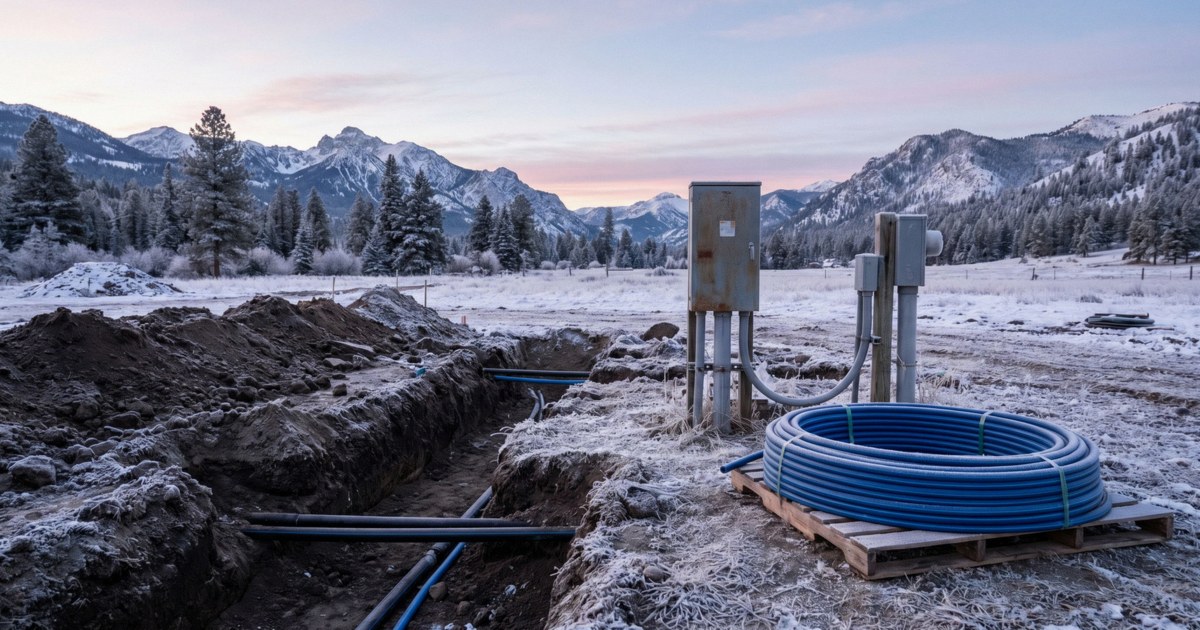
Energy and Buildings ran a 2024 systematic review by Adebayo and colleagues that sweeps across more than a decade of ground-source heat pump research and draws a clean conclusion. The hardware is good. The controls are not.
For contractors working on GSHP projects in California's high desert and Sierra communities, that reframes the conversation with customers. The ground loop is mostly a solved problem. The compressor side is mature. The variable left on the table, the one most likely to cost a client real efficiency, is how the system gets orchestrated across a heating season.
The review compared ground heat exchanger geometries (vertical boreholes, horizontal slinky, energy piles), working fluid choices, and hybrid configurations that pair GSHPs with solar thermal collectors or seasonal thermal storage. Hybrid systems with solar thermal recharging the ground loop showed the largest COP gains, especially in climates with short balance seasons.
Controls came out as the biggest remaining research gap.
Why controls matter more than you'd think
Staging decisions, circulator speeds, supplemental heat triggers, and desuperheater logic all interact in ways that simple setpoint thermostats don't handle well. The paper flags controls as the largest remaining research gap and notes that poor control strategy can materially erode the theoretical COP gain from a well-designed ground loop. That gap is bigger than what separates a mediocre loop install from a good one.
Seasonal thermal storage, especially borehole thermal energy storage (BTES), came up repeatedly as the configuration with the most headroom. The idea is to dump summer excess heat from the building or a solar array into the ground and pull it back out in winter. Pilot projects in Scandinavia have documented round-trip efficiencies high enough to reshape the economics of all-electric heating in cold climates.
On a GSHP project in Truckee, Mammoth, or similar mountain zones, get the controls strategy in writing as part of the design scope. Don't let it default to whatever the unit's onboard logic does. Staging and auxiliary heat behavior are where the customer's actual winter bill is made.


The practical takeaway for installers
Most residential GSHP contractors don't do seasonal thermal storage projects. That's fine. The review's findings still apply in smaller ways. Weather-compensated curves that account for ground loop temperature trends over weeks, not hours, can tighten efficiency on a typical home. So can smarter integration with solar PV if the homeowner runs a self-consumption strategy.
Commercial installs are where the bigger wins sit. A university retrofit or a large mixed-use building with a modeled load profile can justify a more sophisticated control platform, and the review shows clearly that the investment pays off in COP terms.
The rest of the story is on the component side where progress is incremental. Better circulators. Lower-pressure-drop loop designs. Slightly improved grouts. Nothing that's going to double performance. The next real leap is on the software and storage sides.
For readers tracking the overall heat pump market, see our heat pumps outsell gas furnaces coverage and the DOE 2027 efficiency standards update.
Source
Adebayo, P., Beragama Jathunge, C., Darbandi, A., Fry, N., Shor, R., Mohamad, A., Wemhöner, C., & Mwesigye, A. (2024). "Development, modeling, and optimization of ground source heat pump systems for cold climates: A comprehensive review." Energy and Buildings. https://www.sciencedirect.com/science/article/pii/S037877882400762X