

Induction Cooking Goes Mainstream in 2026 as Samsung, Thermador, Wolf, and Bosch Flood the Market
ServiceMag Staff
ServiceMag editorial staff covering the appliance and HVAC trade.
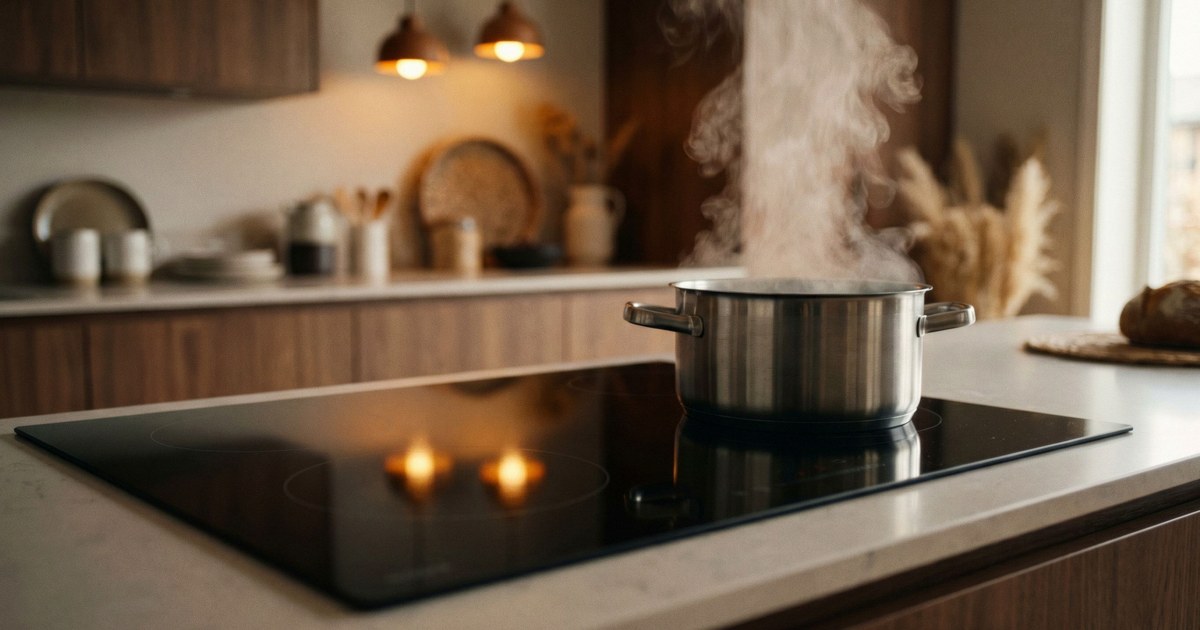
Induction cooktops are no longer a niche product in 2026. AJ Madison's annual trends report, published in March, flags induction as the fastest-moving category across every price tier, with new product from Samsung, Thermador, Wolf, Bosch, and Fisher & Paykel landing on showroom floors this quarter.
The report is retailer-originated market commentary, not independent trade research. Worth reading for the product-launch detail. Skeptical eye on the "mainstream" framing.
What's Actually New
Samsung introduced an Extractor Induction Hob with a built-in downdraft ventilation system. That's a combined appliance that had been a European specialty category for years and is now getting a US push. Target: kitchens without overhead hood space, notably island installations and condo remodels.
Wolf launched a 48-inch induction smart range. Pro-range buyers who wouldn't touch induction five years ago are now cross-shopping it against gas on kitchen remodels where local codes or HOA rules discourage gas. Wolf's move signals that the luxury segment, not just the entry segment, is ready to carry induction volume.
Thermador refreshed its Freedom Induction cooktop line with new burner zones and updated controls. Bosch expanded its Benchmark FlexInduction lineup, where 30-inch models generally list in the $2,000 to $4,500 range depending on configuration. Fisher & Paykel updated its Series 7 induction line — built around SmartZone, PowerBoost, and Touch&Slide controls — including the 36-inch, five-zone CI365DTB4.
Across the launches, the consistent themes are bigger active cooking zones (the whole-surface "flex" zones that eliminate the puck-shaped heating element layout), better pan detection, and faster boil times.


What's Driving It
If you're a service tech who has avoided induction work, it's time. The diagnostic side is different from gas or coil electric — most faults are in the inverter board and pan-detection sensors — but the parts chain is maturing and the call volume is climbing fast.
Two policy forces are doing most of the work. California's ongoing restrictions on gas appliances in new construction keep pushing induction into the spec for permitted builds. At the federal level, the DOE's 2024 Direct Final Rule caps electric cooktop annual energy use at 207 kWh starting January 31, 2028, a threshold most conventional radiant electric cooktops can't hit but most induction cooktops can.
Manufacturers are building to the 2028 rule now. That's why 2026 is the model-year flood. Anyone shipping a cooktop in 2027 or later that can't clear the efficiency cap is going to get stuck in inventory.
On the consumer side, the other driver is the heat pump water heater effect. Homeowners who are already considering full electrification during a major remodel swap the range as part of the same project. Induction comes along for the ride.
Pricing is still a consideration. A comparable 36-inch induction range runs 25% to 40% more than the gas equivalent in the same brand tier. But the gap is narrowing every year as volume goes up, and most of the manufacturers we tracked are holding or cutting MSRPs on their 2026 induction models rather than raising them.
For more on how appliance category shifts are moving the repair trade, see our coverage of AI-driven predictive maintenance.
Need a repair professional?
Get free quotes from verified technicians in your area.
Find a Pro Near YouSources
AJ Madison. (2026). "2026 Cooking Appliance Trends." ajmadison.com
U.S. Department of Energy. (2024). "Energy Conservation Program: Energy Conservation Standards for Consumer Conventional Cooking Products." Federal Register, 89 FR 65508. federalregister.gov