


Furnace Blowing Cold Air: 7 Causes and How to Fix Each
Dale Resnick
A 30-year veteran of residential HVAC who's crawled through more attics than he can count. Dale writes the 'Duct Tape & Beyond' column and believes every compressor tells a story if you listen close enough.
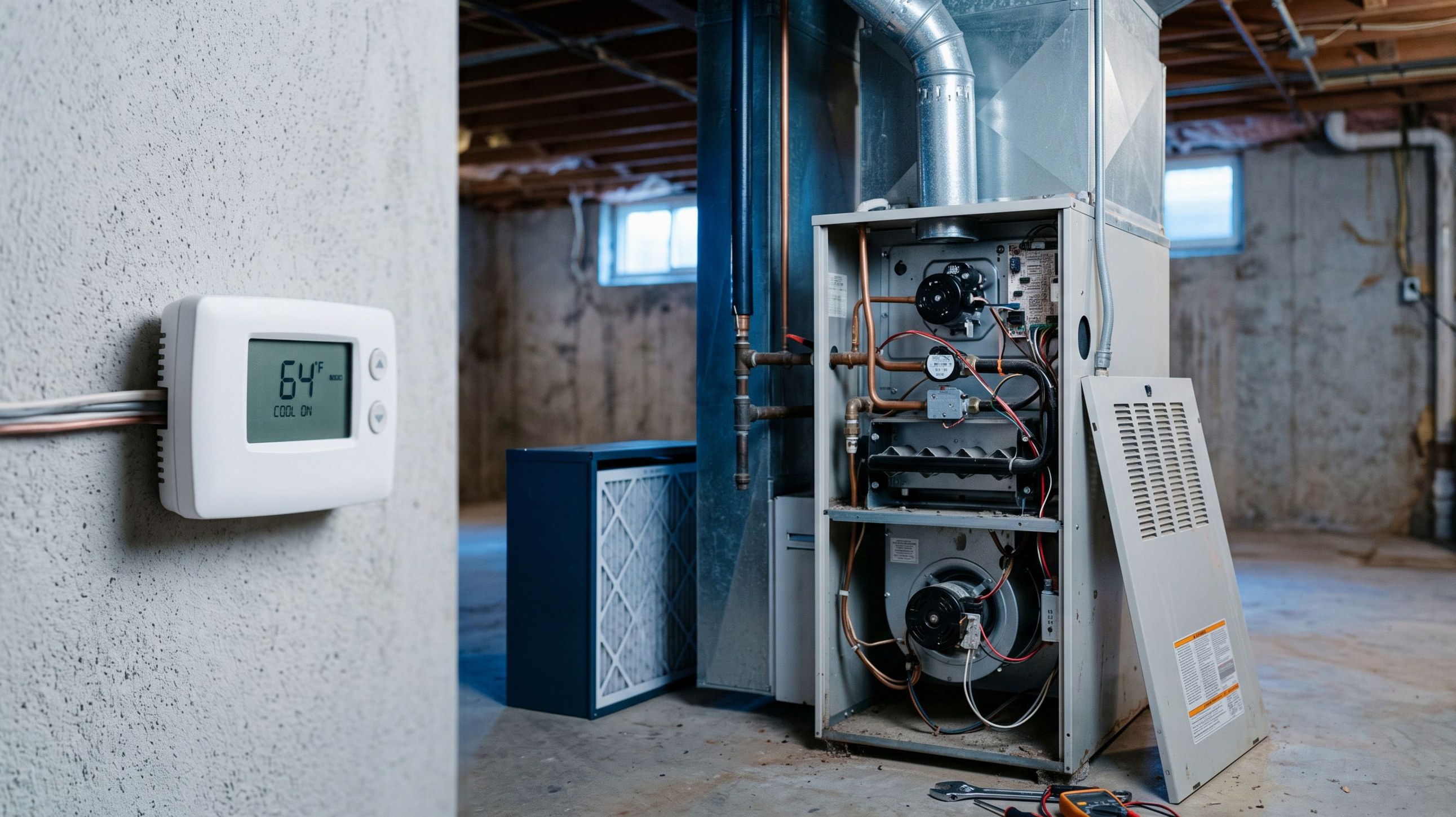
A furnace blowing cold air is one of the most common no-heat calls I get, and the good news is the top cause takes about two seconds to fix from the wall. Below are the seven reasons a furnace pushes cold air, roughly in the order you should check them, from the free thermostat fix to the safety lockouts that need a tech.
One safety note before anything else. If you smell gas, that rotten-egg odor, stop. Don't flip switches, don't hunt for the source. Get everyone out of the house and call your gas utility or 911 from outside. Everything else in this guide waits until that's ruled out.
Cause 1: Thermostat Set to ON Instead of AUTO
This is the one. Your thermostat has a fan setting with two positions, ON and AUTO. On AUTO, the blower only runs when the furnace is actively making heat. On ON, the blower runs 24/7, including the long gaps between heat cycles when the burners are off. During those gaps it's blowing unheated air, and to the person standing at the register it feels like the furnace quit.
Walk to the thermostat and set the fan to AUTO. If cold air only comes out sometimes and warm air the rest of the time, this was almost certainly your culprit. Free fix, no tools.
Cause 2: A Dirty Flame Sensor
The flame sensor is a slender metal rod that sits right in the burner flame. Its whole job is to confirm the burner lit. When it fouls with carbon and oxidation, it stops "seeing" the flame, and the control board does exactly what it's designed to do: it shuts the gas valve within a few seconds so raw gas can't pour into the house. The blower keeps spinning briefly and out comes cold air. Then it tries again, and again. That's the classic short cycle.
Cleaning the sensor with light abrasive (fine steel wool or an emery cloth) often brings it back. It's a common maintenance item, not usually a replacement.
Cause 3: Ignition or Pilot Failure
If the burners never light at all, the blower may still cycle and move cold air. How you approach this depends on the furnace. A standing-pilot furnace has a small flame that stays lit and can blow out; the thermocouple then closes the gas valve. Most furnaces built in the last couple of decades use electronic ignition instead, either a hot surface igniter or an intermittent spark, with no standing pilot to relight.
Relighting a standing pilot per the label instructions is a reasonable homeowner task. A cracked hot surface igniter or a failed spark ignitor is a parts replacement, and matching the correct igniter to your furnace matters, so confirm the part against your model number or tech sheet.


Cause 4: Overheating Tripping the High-Limit Switch
The high-limit switch is a safety that shuts the burners off if the heat exchanger gets too hot. When it trips, the blower keeps running to cool things down, and that's cold air at the register. The usual reason it overheats is restricted airflow, and the usual reason for restricted airflow is a filthy air filter. Blocked supply vents and closed returns do it too.
Replace the filter. Open your vents. If the furnace stops tripping, you found it. A high-limit that keeps tripping on a clean filter needs a tech, because a genuinely overheating furnace can be a sign of a bigger airflow or heat exchanger issue. Our guide on a furnace that won't turn on covers related lockout behavior.
Cause 5: A Clogged Condensate Line (High-Efficiency Furnaces)
High-efficiency condensing furnaces produce water as a byproduct and drain it through a condensate line. Many of them have a float switch or pressure safety that shuts the furnace down if that line clogs and water backs up. When it locks out, the burners won't fire, the blower may still run, and you get cold air.
Look for standing water near the furnace or a full condensate trap. Clearing the drain line and trap is often a manageable DIY job. If the furnace won't reset after the line is clear, call a tech.
Cause 6: Gas Supply Problems
No gas, no flame. It sounds obvious, but a closed manual gas valve after service, a tripped meter, or an interrupted supply will leave the furnace trying to light with nothing to burn. If other gas appliances (water heater, range) are also out, the problem is upstream of the furnace and belongs to the gas company.
Confirm the gas valve at the furnace is in the open position. Beyond that basic check, gas valve diagnostics are a licensed-tech job.
Cause 7: A Dirty Air Filter (Yes, Again)
The filter earns its own mention because it causes trouble in more than one place. Beyond tripping the high limit, a badly clogged filter chokes airflow enough that the air coming out feels weak and cool even when the burners are lit. It's the cheapest, easiest thing on this list, and it's the first thing I check on any heating call. Replace it on a schedule and you head off several of the problems above.
What These Repairs Cost
Most furnace-blowing-cold-air fixes are on the affordable end, and the very first one is free.
When to Stop and Call Someone
Start with the free and cheap items: AUTO on the thermostat, a fresh filter, gas valve open, condensate line clear. Those handle a large share of these calls. If the furnace still won't hold a flame, keeps locking out, or you suspect the igniter, gas valve, or heat exchanger, bring in a licensed tech. If you're deciding whether an aging gas furnace is even worth repairing in a mild climate, our heat pump vs. furnace comparison for Southern California lays out the tradeoffs. And once more, because it matters most: gas smell means leave and call the utility.
Need a repair professional?
Get free quotes from verified technicians in your area.
Find a Pro Near You