


How to Clean a Dryer Vent: A Step-by-Step Safety Guide
Maria Solano
Former appliance warranty claims adjuster turned investigative repair journalist. Maria's 'What Went Wrong' teardown series has made her the most feared woman in the white-goods industry.
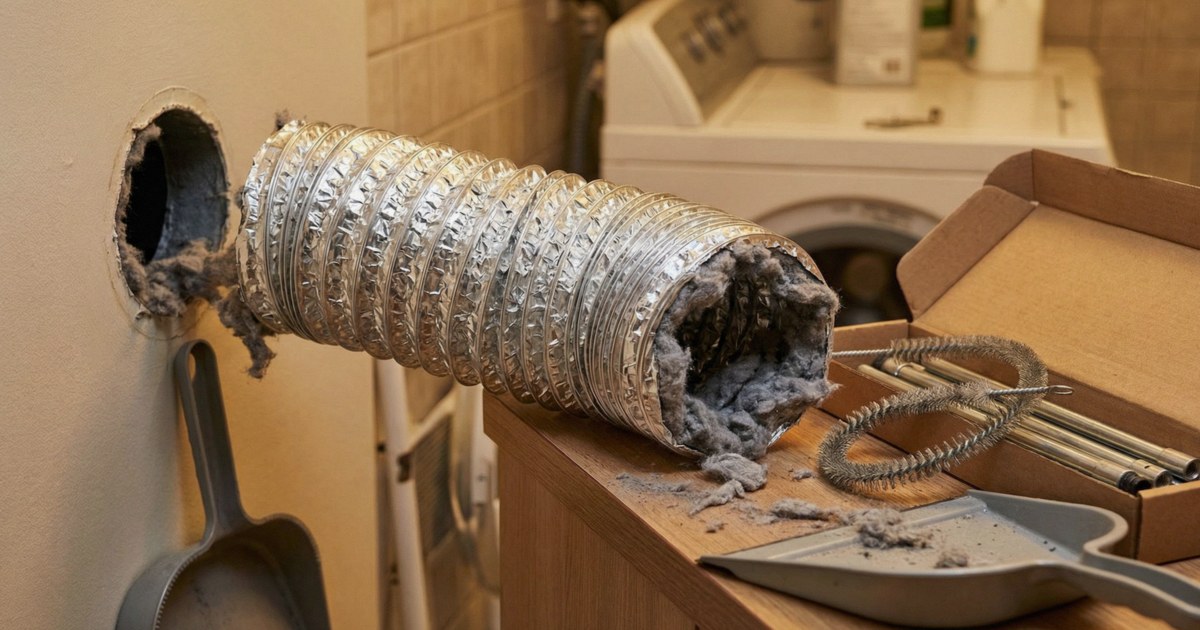
Every year in the United States, dryers are involved in roughly 14,000 home structure fires (NFPA), and the U.S. Fire Administration identifies the leading contributing factor as one thing: failure to clean the vent. It's not a dramatic or complicated hazard — it's a dirty lint trap in the ductwork that builds over months and years until a hot exhaust ignites it.
The good news is that cleaning a dryer vent is a weekend project, costs about $25 in tools, and takes most homeowners 30-45 minutes start to finish.
Signs Your Dryer Vent Needs Cleaning
Before you pull out the tools, check for these warning signs. If more than one applies, clean it today — don't wait for the scheduled annual cleanout.
- Clothes take more than one cycle to fully dry. This is the most common early warning. A clear vent at full airflow dries a standard load in 45-60 minutes. A restricted vent can push that to 90 minutes or two cycles.
- The dryer is hot to the touch on the top or sides. Blocked exhaust means heat backs up into the machine instead of venting out.
- The laundry room smells musty or like something burning. Lint in the duct is smoldering, not yet burning. This is serious.
- The exterior vent flap isn't moving or barely opens when the dryer runs. No airflow at the exit means the duct is blocked somewhere.
- It's been more than a year since you cleaned it, and you can't remember actually doing it. That's enough.
What You Need
The essential tool: A dryer vent brush kit. These are flexible-shaft brushes with extension rods that reach through the duct. The LintEater by Gardus (model RLE202) is the most widely sold kit and costs about $25-30. It comes with 12 feet of connectable rods, which is enough for most home installations. The brush attaches to a standard drill for powered rotation.
A vacuum with a hose attachment is the other tool you'll need — both for the interior lint trap channel and to catch what comes out of the vent connection point.
Optionally: a flashlight or phone camera for inspecting the duct connection, and a screwdriver for removing clamps.
Total tool cost: under $30 for a first-time setup.
Step 1: Disconnect the Dryer
Pull the dryer out from the wall far enough to access the vent hose at the back. Most dryers sit on smooth vinyl or hardwood — if yours is on carpet, put a towel under the front feet and slide. Don't yank — you'll bend the gas line or pull the power cord.
Disconnect the flexible transition hose from the back of the dryer. This is typically a 4-inch diameter duct held by a worm-gear clamp or, on newer installs, a spring clamp or zip tie. Loosen the clamp, slide the hose off the dryer exhaust collar.
Look inside the hose. What you see tells you a lot. White or silver flexible foil duct is the standard consumer product — it works but has ridges that trap lint faster than rigid metal. Rigid aluminum or galvanized duct is the preferred material and retains less debris. White vinyl plastic duct (the accordion-style flexible plastic) is a fire hazard and hasn't been to code for years — if your dryer has it, replace it.
If the transition hose from the dryer to the wall is longer than 8 feet, kinked, or crushed from being pushed against the wall, this alone can restrict airflow enough to overheat the dryer and eventually blow the thermal fuse. The connection between the dryer and the wall needs to be the shortest, straightest path possible. A 90-degree periscope duct (about $15 at any hardware store) can cut the transition length dramatically on tight installations.
Step 2: Clean the Wall Duct from Inside
With the transition hose disconnected, you can see the wall duct opening. Insert the brush kit into the duct opening and start feeding extension rods as you go, rotating the brush as you push it. If you're using a drill, run it at low speed — you want rotation, not high RPM.
Work the brush in and out in sections, not just one long push. Lint tends to pack at bends and at the connection points. Go in two feet, pull back, go in four feet, pull back. You'll feel resistance when you hit a packed section — work through it with patience, not force.
If the duct runs more than 12 feet and you only have the standard kit, you can buy additional extension rods for about $8 each. Most residential dryer vent runs in SoCal tract homes are between 8 and 20 feet — two full-length runs through interior walls before exiting.
Have the vacuum running at the wall connection while you work. A lot of the loose lint will blow back toward you as the brush breaks it up. Catch it before it coats the laundry room.


Step 3: Clean from the Exterior
Go outside and find the exterior vent termination. In most houses it's on an exterior wall or through the soffit, with a louvered cap that opens when the dryer runs. Some older homes have roof exits — that's where professional cleaning becomes worth the call.
Remove the vent cap or unscrew the cover if it's fixed (four screws, typically). Clean the cap itself — lint builds up behind the louvers and can hold them partially closed. A stiff brush and rinse with a garden hose handles it.
Insert the brush kit from the outside and work back toward the interior, same technique. You're now cleaning in the opposite direction and will dislodge anything the first pass missed.
After both passes, shine a flashlight into the duct from outside. You should be able to see light from the interior opening (have someone hold a flashlight inside). Clear line-of-sight means the duct is clean.
Step 4: Reconnect and Test
Reattach the exterior vent cap. Reconnect the transition hose at the dryer, tighten the clamp, and push the dryer back into position — don't crush the hose against the wall.
Run the dryer on a heat cycle (not air fluff) for 5 minutes. Go outside and hold your hand 12-18 inches from the exterior vent. You should feel a strong, warm airflow that moves your hand. Weak airflow means there's still a restriction somewhere in the run.
If the dryer has been taking two cycles to dry clothes and the vent was clearly blocked, give it one test load before declaring victory. Drying time should return to 45-60 minutes for a medium load.
When to Call a Professional
A few situations put the job beyond DIY scope:
Duct runs over 25 feet. Standard brush kits top out at 12-18 feet extended. Longer runs need either a longer professional brush set or a rotary cleaning system with a flexible cable.
Multiple 90-degree bends. Each hard 90-degree bend counts as the equivalent of 5 feet of duct length for airflow purposes. Three or four bends in the run means restricted airflow even when clean — and you'll have a hard time getting a brush through all of them.
Roof-exit vents. These are not a DIY project. The vent cap is on the roof, there's usually a longer duct run, and the access is hazardous.
The dryer smells like burning lint and you haven't run it in days. This is possible smoldering lint in the duct. Don't run the dryer until a professional inspects and cleans the duct.
Professional dryer vent cleaning typically runs $75-150 for a standard residential installation. Given that dryer fires cause roughly $238 million in property damage nationwide each year — averaging around $14,000 to $17,000 per fire (NFPA) — that's not a hard value proposition.
For more on what a clogged vent does to the dryer's internal components, and how to diagnose a dryer that runs but won't heat, see our complete dryer not heating diagnostic guide.
How often should I clean my dryer vent?▾
Once a year minimum. Every 6 months if you do 4+ loads per week, have multiple family members, or have pets that shed. If your dryer is taking more than one cycle to dry a standard load, clean the vent immediately — don't wait for the scheduled cleanout.
Can I clean my dryer vent myself?▾
Yes, for standard installations under 25 feet with fewer than two 90-degree bends. Get a dryer vent brush kit (LintEater or similar, about $25-30) and a vacuum. For longer runs, multiple tight bends, or roof exits, hire a professional vent cleaning service for $75-150.
Sources
- U.S. Fire Administration. "Fire Causes: Clothes Dryers." usfa.fema.gov
- National Fire Protection Association. "Home Fires Involving Clothes Dryers and Washing Machines." nfpa.org
Need a repair professional?
Get free quotes from verified technicians in your area.
Find a Pro Near You