


The Slow-Season Plan: How to Keep Every Tech Busy (and Paid) From October to March
ServiceMag Staff
Reporting and editorial coverage from the ServiceMag newsroom.
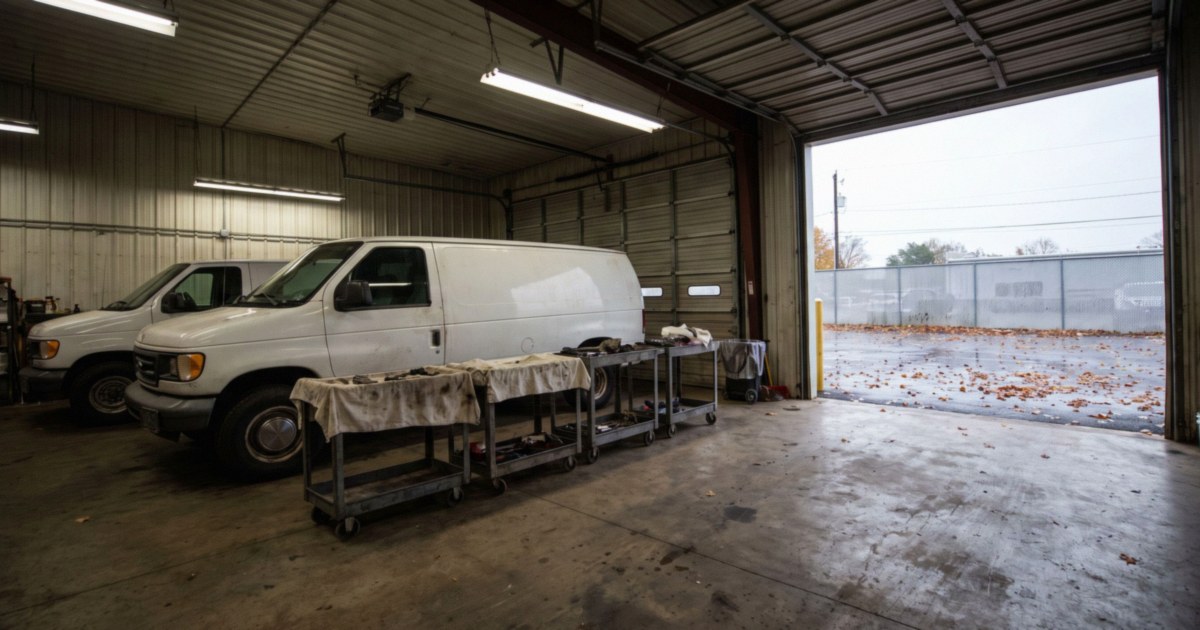
Most shops write their slow season plan in the second week of November, which is about six weeks too late to do anything about it. By then the agreements weren't sold, the deferred repairs weren't logged, and layoffs are the only option left. The work of surviving October through March happens in August and September, on calls you are already running.
Start with your own numbers rather than someone's rule of thumb. Pull 24 months of monthly revenue out of your accounting software and calculate what percentage of each year's total every month produced. For a lot of Sun Belt HVAC shops the spread is brutal: July might carry 12% of the year and January 5%. On $1.2 million in annual revenue that is $144,000 against $60,000. If a technician has to generate about $22,000 a month to cover his loaded cost and his share of overhead, July supports seven and January supports three.
Sell the slow season in September
Heather Langone made this case in HVACR Business in a column on preparing for the shoulder season, and her core instruction was unglamorous: collect an email address on every single call, train the technicians to offer the maintenance plan on every single call, and analyze past seasonal reporting instead of guessing. She also made the case for cross-training and for seasonal contracts over layoffs.
A heating tune-up runs about 75 minutes on site plus 30 minutes of drive time, call it 1.75 hours. A technician has roughly 150 available field hours in a month. That is about 85 tune-ups per technician per month if the day is packed, which it never is. So filling three technicians through January takes something in the neighborhood of 255 visits already scheduled.
You cannot sell 255 agreements in November. You sell them in July, when the customer is grateful and the technician is standing in the house.
Our guide to structuring maintenance agreements as recurring revenue covers the pricing and renewal mechanics. The calendar piece is what owners skip.
The tickler file is free revenue you already earned
Every declined repair is a lead you paid for. Somebody called, you dispatched a truck, the technician diagnosed a $640 job, and the customer said not right now. Most shops write that up and never look at it again.
Log it instead. Date, address, the exact repair, the quoted price, and why the customer declined. Review the file weekly with one named person responsible, which was Langone's point and remains the part shops get wrong, because a tickler file with no owner is a spreadsheet nobody opens. Then call those customers in the second week of November when your board is thin.
Housecall Pro's 2026 home spending report, based on a survey of more than 1,100 homeowners, found 77% saying they are delaying or reducing the scope of home projects. Instead of skipping the call, lead with the repair rather than the changeout. A homeowner trimming a $9,000 replacement will often approve a $640 fix that keeps the system running another two seasons, and our piece on what deferred repairs actually cost gives your technicians the argument in plain numbers.
Do not discount the work to fill the slot. Jobber's Q2 2026 economic report, drawn from more than 100,000 home service businesses, found contracting revenue up 6.4% year over year in June and said the growth came primarily from businesses pricing their work more effectively rather than from running more jobs. Winter discounting undoes exactly that.


Cross-training is the only real fix for a seasonal trade
Heating and cooling demand is weather-driven, and nothing in a maintenance plan changes the weather.
Appliance work doesn't follow that curve, which is the whole reason mixed-trade shops exist. Ovens, ranges and dishwashers take their heaviest use of the year in the six weeks around Thanksgiving and Christmas, right when the HVAC board empties out. Laundry complaints pile up in January. A technician who can pull a bake element and diagnose a drain pump is billable in the months when your heat pump work isn't.
The training is not trivial and shouldn't be sold as a weekend. Sealed-system work in particular is a different discipline, and the honest version of cross-training is one competent HVAC technician learning basic electromechanical appliance diagnostics over a season, backstopped by someone who does it full time. Start him on dryers and ranges. Keep him off compressors until he's earned it.
Demand is cooperating on that front. Tariff-driven equipment prices have been pushing homeowners toward repair over replacement across both trades, a shift we covered in our reporting on the repair-instead-of-replace swing.
Layoffs versus reduced hours, in dollars
Carrying a technician at 25 hours a week for 20 weeks at the national median HVAC wage of $29.33 an hour costs about $14,700 in wages, or roughly $19,800 loaded with taxes, workers' comp and benefits. Gallup's widely cited estimate puts the cost of replacing an employee at one-half to two times annual salary, which on that same $61,010 median starts at about $30,500 and runs past $120,000. Carrying the man through winter is cheaper than replacing him, and it isn't close.
That comparison only holds if the laid-off technician doesn't come back in March. With BLS projecting roughly 40,600 HVAC openings a year through 2035, assume he won't.
The counterweight is cash. Federal Reserve researchers found 51% of small employer firms reporting uneven cash flows in the small business credit survey, and a payroll you can't cover in February is not a retention strategy. If the forecast says January supports three technicians and you employ six, reduced hours plus a filled schedule plus a line of credit arranged in September is a plan. Reduced hours alone is a wish.
October is when you find out whether your September plan worked.
Sources
Langone, H. (2023). "Preparing for the Shoulder Season." HVACR Business. hvacrbusiness.com
Housecall Pro. (2026). "Home Service Spending Report 2026." Survey of 1,100+ U.S. homeowners, released May 13, 2026. housecallpro.com
Jobber. (2026). "Home Service Economic Report, Q2 2026." Released August 20, 2026. prnewswire.com
Federal Reserve Banks. (2025). "2025 Report on Employer Firms: Small Business Credit Survey." Based on 7,653 responses collected September to November 2024. fedsmallbusiness.org
Gallup. (2019). "This Fixable Problem Costs U.S. Businesses $1 Trillion." McFeely, S. and Wigert, B. gallup.com
U.S. Bureau of Labor Statistics. "Occupational Outlook Handbook: Heating, Air Conditioning, and Refrigeration Mechanics and Installers." Median pay $61,010, May 2025; about 40,600 projected annual openings. bls.gov