


Expensive Washing Machines Last Nearly Three Times Longer Than Cheap Ones, German Survey Finds
Terry Okafor
Master refrigeration tech and NATE-certified instructor who moonlights as the magazine's advice columnist. His 'Ask Big Terry' mailbag has been settling shop disputes and diagnosing mystery leaks since 2011.
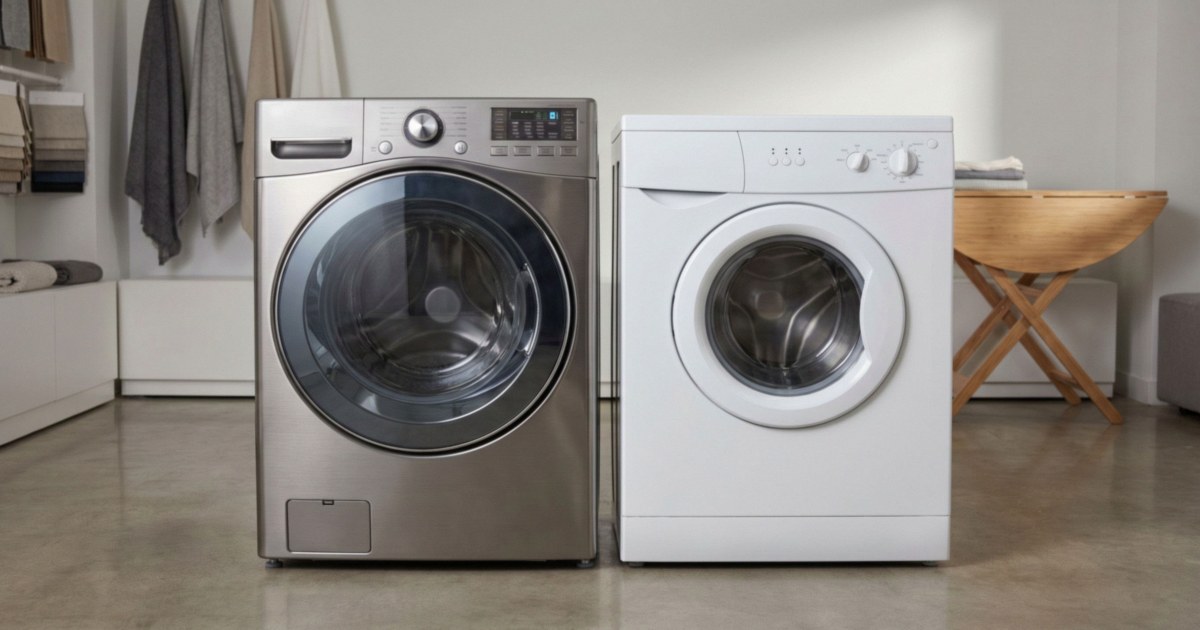
A University of Bonn survey of 1,075 German households found that expensive brand-name washing machines lasted almost three times longer than cheap ones, and that purchase price predicted washer lifespan more strongly than it did for any other product in the study. The paper, by L. Hennies and Rainer Stamminger, ran in Resources, Conservation and Recycling, and it remains one of the few datasets that puts hard numbers behind a thing every veteran tech says at the kitchen table: buy quality, then fix it.
The researchers weren't actually hunting for a buying guide. They set out to test the planned obsolescence story, the idea that manufacturers deliberately engineer appliances to die young and drive sales. Public conviction on that point is strong. Data, the authors pointed out, is thin. So they ran an internet questionnaire collecting the full maintenance and discarding history of five household product categories, washing machines, televisions, and hand mixers among them, across more than a thousand homes.
What they found doesn't flatter the conspiracy. Most products were replaced while still performing their main function, just with some loss of performance along the way. Televisions got swapped because owners wanted new features, not because the old set died. Washing machines were the exception, replaced for functional reasons. They broke, or wore down until they weren't worth running.
And among washers, two variables drove lifespan harder than anything else: what the owner paid, and how often they ran the machine.
Almost three times longer. That was the gap between expensive brand-name washers and cheap ones, a multiple the survey found for washing machines and, oddly enough, hand mixers.
What the Washing Machine Price-Lifespan Link Doesn't Say
Survey data has limits, and this one is worth being honest about. The study can't fully separate build quality from owner behavior. People who spend $1,200 on a washer may also level it properly, skip the chronic overloading, and clean the dispenser more than once a presidential term. The authors also found that owners who were highly satisfied with a product's lifetime tended to have products with longer actual lifetimes, which tangles expectation and reality together.
For a tech standing in a laundry room with a quote pad, that distinction barely matters. Whatever the mechanism, the premium machine in front of you is statistically the better bet for years of remaining service. The correlation is the point.
It's also a 2016 paper built on German households and self-reported histories. Brands change hands and product lines turn over, and price is a proxy for quality, not a guarantee of it. Anyone who has replaced a spider arm on a premium front-loader knows expensive machines have their own famous failures.


Turning the Data Into a Repair Quote
Here's the practical read. Purchase price is diagnostic information, and it's free. Two questions at the door tell you most of what the survey measured: what did you pay for it, and how many loads a week does it run?
A $1,400 machine with a failed door boot or drain pump at year seven has runway. Quote the repair with confidence, because the data says that machine class keeps going. A $399 builder-grade unit with a drum bearing howling at year five is a different conversation, and our repair vs. replace guide walks through that math in detail. Usage matters just as much. The German findings rhyme with the Norwegian lifetime data showing washer lifespans dropped 45% largely because households quadrupled their laundry volume, not because factories got sneaky.
Keep the three-times figure in your back pocket for the customer on their third cheap washer in 12 years. Three $450 machines plus delivery and haul-away is premium money spent for builder-grade service. That conversation sells both better machines and your repair work on them.
There's a sales angle for shops, too. Customers default to replacement even when repair pencils out, a pattern consumer psychology research has documented. A tech who can say "the data shows machines in this class last nearly three times longer, and yours has years left" is making an evidence-backed case, not a sales pitch. That credibility compounds.
The study's quiet conclusion is the one worth repeating. Nobody had to rig the cheap washer to fail early. It was simply built to a price.
Source
Hennies, L., & Stamminger, R. (2016). "An empirical survey on the obsolescence of appliances in German households." Resources, Conservation and Recycling, 112, 73-82. https://www.sciencedirect.com/science/article/abs/pii/S0921344916300970
Need a repair professional?
Get free quotes from verified technicians in your area.
Find a Pro Near You