


The Weatherization Study That Should Change How You Quote Energy Savings
ServiceMag Staff
ServiceMag editorial staff covering the appliance and HVAC trade.
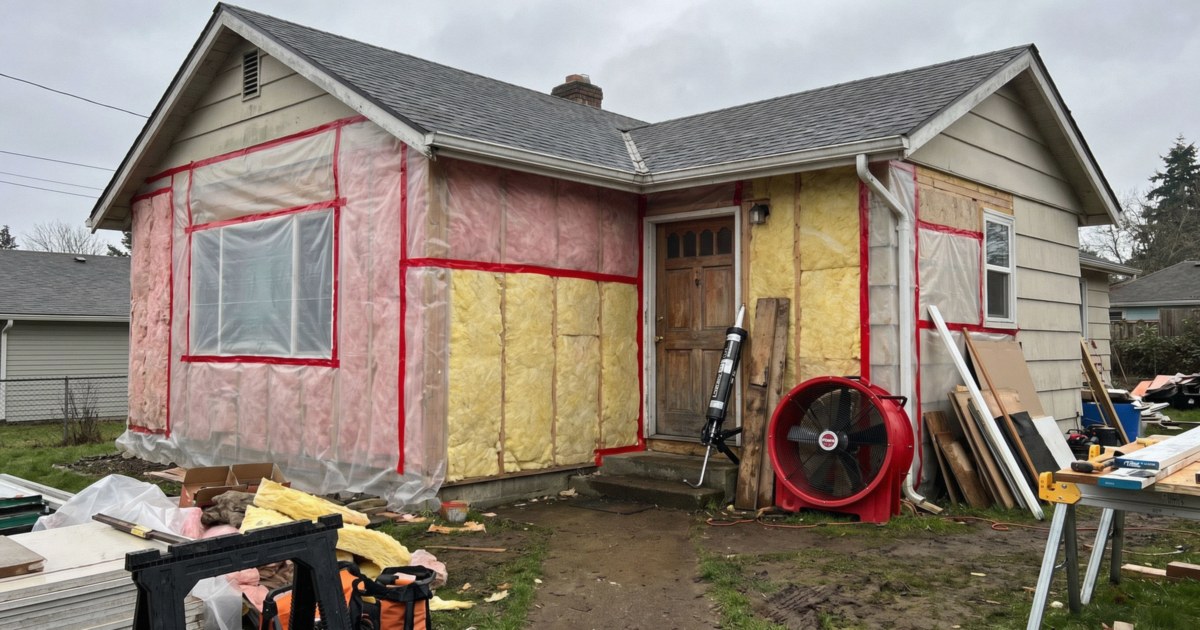
In 2018, economists Meredith Fowlie, Michael Greenstone, and Catherine Wolfram published the most rigorous field test ever run on residential weatherization. The setting was Michigan's slice of the federal Weatherization Assistance Program: attic insulation, air sealing, and furnace work across more than 30,000 households, studied with a randomized controlled trial instead of the usual before-and-after billing comparison. Measured energy savings came out to about half of what the work cost.
The projections missed by even more.
Engineering models used to qualify the upgrades predicted roughly 2.5 times the savings that actually showed up on utility bills. Put differently, the audit software said a package of measures would cut a heating bill by a certain amount, and the meters recorded about a third of it. The authors worked the numbers out to an average annual rate of return around negative 9.5%.
That figure deserves a second look before anyone quotes a payback period this summer. Weatherization is bread-and-butter work for the efficiency trade, and this was no fringe critique. The paper ran in The Quarterly Journal of Economics, one of the discipline's top venues, and it remains the benchmark evaluation a well-read customer will bring up at the kitchen table.
Why modeled energy savings miss in the field
The convenient explanation would be the rebound effect, the theory that people take their savings as comfort and run the house warmer once the insulation goes in. The data didn't support it. Fowlie and her coauthors found no evidence of higher indoor temperatures in weatherized homes compared with the control group. The gap lived somewhere else, in the distance between how a simulation assumes a house behaves and how an actual 60-year-old Michigan ranch with a tired furnace behaves.
Anyone who has crawled an attic knows that distance personally. (The model never accounts for the bay the installer couldn't reach.)
A few caveats matter before you swear off audit software entirely. The trial covered low-income single-family homes in one state, receiving free upgrades through a federal program. Owner-funded retrofits on newer housing stock, or straight equipment swaps, can land closer to projections; field monitoring of cold-climate heat pumps shows measured performance holding up when sizing and installation are done right. But after this study, the burden of proof sits with the model, not the skeptic.


Quote payback like the meters are watching
Here's the practical read for anyone selling insulation, duct sealing, or efficiency retrofits. Treat modeled savings as a ceiling, not a midpoint. If the software says $600 a year, quote a range and put the conservative number in writing. Better yet, lean on billing data from comparable jobs you've already done in the same housing stock, because your own measured results beat a national simulation every time.
The sales logic is simple. A customer promised a five-year payback who is still waiting in year nine becomes a one-time customer. A customer told "the model says five years, real homes often take longer, and here's what my last three jobs in your neighborhood actually saved" becomes a referral machine. Knowing this study cold is itself a differentiator. Most competitors have never heard of it, and citing it makes you the contractor who reads.
That candor also fits what we know about buyers. Research on why customers purchase efficient appliances shows stated intentions and signed invoices are two different things, and our guide to energy-efficient appliance upgrades covers which swaps tend to earn their keep.
Weatherization work isn't going away, and it shouldn't. Insulation still cuts load. Sealing still cuts drafts. Plenty of jobs pencil out fine. The lesson from 30,000 Michigan homes is narrower: the savings number on your proposal should be one you'd defend with 12 months of the customer's utility bills sitting on the table.
Source
Fowlie, M., Greenstone, M., & Wolfram, C. (2018). "Do Energy Efficiency Investments Deliver? Evidence from the Weatherization Assistance Program." The Quarterly Journal of Economics, 133(3), 1597-1644. https://academic.oup.com/qje/article-abstract/133/3/1597/4828342