


Why Is My AC Freezing Up? 6 Causes of a Frozen Evaporator Coil

Terry Okafor
Master refrigeration tech and NATE-certified instructor who moonlights as the magazine's advice columnist. His 'Ask Big Terry' mailbag has been settling shop disputes and diagnosing mystery leaks since 2011.
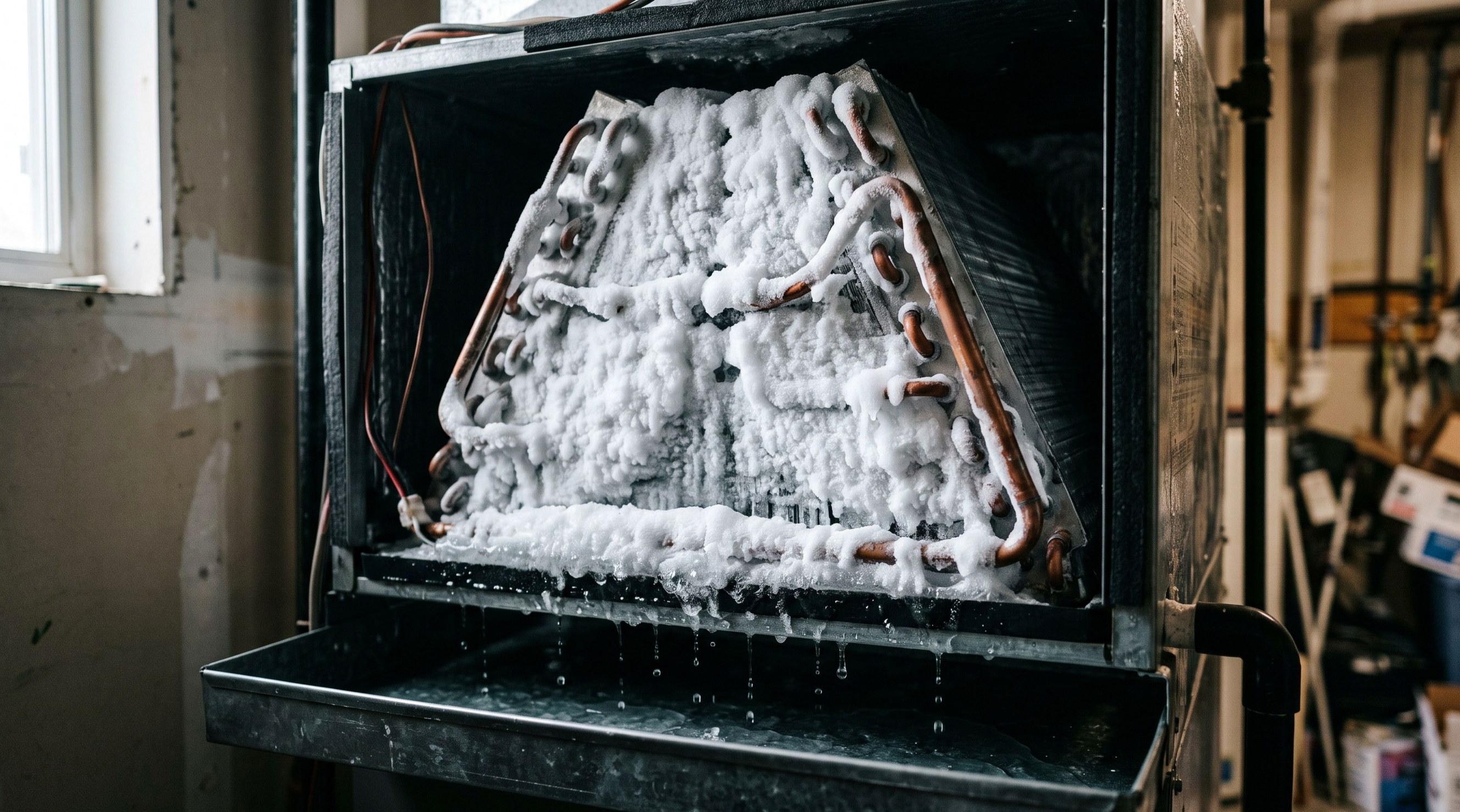
An AC freezing up in July feels like a cruel joke. The unit is running, the thermostat is calling for cooling, and yet the house keeps getting warmer while a sheet of ice builds up on the indoor coil. Almost every time, a frozen evaporator coil traces back to one of two things: not enough warm air moving across the coil, or not enough refrigerant in the system. Here are the six causes I see most, and how to tell which one you're dealing with.
First, the physics, because it explains everything below. Your evaporator coil (the indoor coil) is supposed to run cold but stay above freezing, usually somewhere in the 40s Fahrenheit. Warm indoor air blows across it, the refrigerant absorbs that heat, and moisture from the air condenses on the coil and drips into the drain pan. Now take away the warm air, or drop the refrigerant pressure, and the coil surface falls below 32 degrees. That condensation stops dripping and starts freezing. Ice is a good insulator, so once it forms it blocks even more airflow, the coil gets colder still, and the whole thing snowballs into a solid block. Cooling collapses.
First Step: Shut It Off and Thaw the Coil
Before you diagnose anything, kill the cooling. Set the system to OFF at the thermostat, then switch the fan to ON. Blowing room-temperature air over the coil melts the ice far faster than letting it sit, and it does it without the compressor running. Give it a few hours. Put towels down near the air handler, because a lot of water is about to come off that coil.
While it thaws, change the air filter. That single move fixes a big share of these calls.
Cause 1: Restricted Airflow From a Dirty Filter or Blocked Vents
This is the number one cause, full stop. A clogged filter chokes the amount of warm return air reaching the coil. Same story if supply vents are closed off in unused rooms, furniture is parked over a return grille, or the system was paired with a return duct that's simply too small for the equipment. Less warm air across the coil means a colder coil, and a colder coil means ice.
Check the filter first. Then walk the house and open every supply and return vent. Pull furniture and rugs off of grilles. A system needs its full designed airflow to keep the coil above freezing.
Cause 2: A Dirty Evaporator Coil
Even with a clean filter, the coil itself gets a film of dust, pet hair, and grime over the years, especially if filters were neglected in the past. That coating acts like a blanket. It insulates the coil from the air moving past it, so the refrigerant inside can't pick up enough heat and the surface drops below freezing.
Coil cleaning is a legitimate DIY job on some accessible coils with a no-rinse foaming cleaner, but many coils sit inside a sealed cased air handler that isn't easy to open. If you can't reach it, that's a pro job.


Cause 3: Low Refrigerant Charge or a Leak
Here's the one people get wrong. Low refrigerant doesn't warm the coil, it makes it colder. When the charge drops, so does the pressure on the low side of the system, and refrigerant boils at a lower temperature. That pushes the coil temperature below freezing even with perfect airflow. So a system that's low on charge tends to ice up right at the coil.
An AC doesn't burn refrigerant. If you're low, you have a leak somewhere. This is not a top-off-and-forget situation, and it isn't DIY. Handling refrigerant requires EPA 608 certification, and a good tech finds and repairs the leak before recharging. If your coil keeps freezing after you've nailed down airflow, refrigerant is the prime suspect. Our guide on why an AC won't cool walks through the other symptoms of an undercharged system.
Cause 4: A Failing Blower Motor or Fan
The blower is what pushes warm air across the coil. If the blower motor is weak, the capacitor is failing, or the fan wheel is packed with debris and out of balance, airflow drops even with a spotless filter and clean coil. Same result: not enough warm air, coil freezes.
A blower that runs slow, cuts out, or makes new noises points here. Motor and capacitor work is doable for a handy owner on some units, but it's commonly a service call.
Cause 5: Running the AC When It's Too Cold Outside
Central air isn't designed to run when outdoor temperatures fall into the low 60s or below. On an unusually cool night, or if someone leaves the AC running, the low-side pressure drops and the coil ices over. This trips people up in spring and fall.
The fix is simple. Don't run the compressor for cooling when it's cold out. Use the fan or open windows instead.
Cause 6: A Blocked Condensate Drain Making It Worse
A clogged condensate drain doesn't start a freeze on its own, but it makes an existing one messier and can mask what's happening. As ice melts, all that water has to go somewhere. If the drain line is plugged with algae or debris, the pan overflows onto the floor or through the ceiling. Some systems also have a float switch on the drain that shuts the unit down when the pan fills, which people misread as a cooling failure.
Clearing a condensate line with a wet/dry vac at the outdoor termination is a reasonable DIY task.
What a Frozen Coil Repair Costs
Costs swing widely depending on which cause you land on. A filter is pocket change; a sealed-system leak repair is not.
DIY or Call a Pro?
Draw the line at the sealed system. Filters, vents, returns, cleaning an accessible drain, and even some coil cleaning are homeowner territory. Anything involving refrigerant is off-limits without EPA 608 certification, and a coil that keeps freezing after the airflow items are handled is telling you the charge is low. Deciding whether an aging unit is even worth the leak repair is its own question, and if you're weighing a swap, our central AC vs. mini-split comparison covers what replacement really involves.
Need a repair professional?
Get free quotes from verified technicians in your area.
Find a Pro Near You