


How to Become a Factory-Authorized Servicer: Getting on Manufacturer Warranty Networks
ServiceMag Staff
ServiceMag editorial staff covering the appliance and HVAC trade.
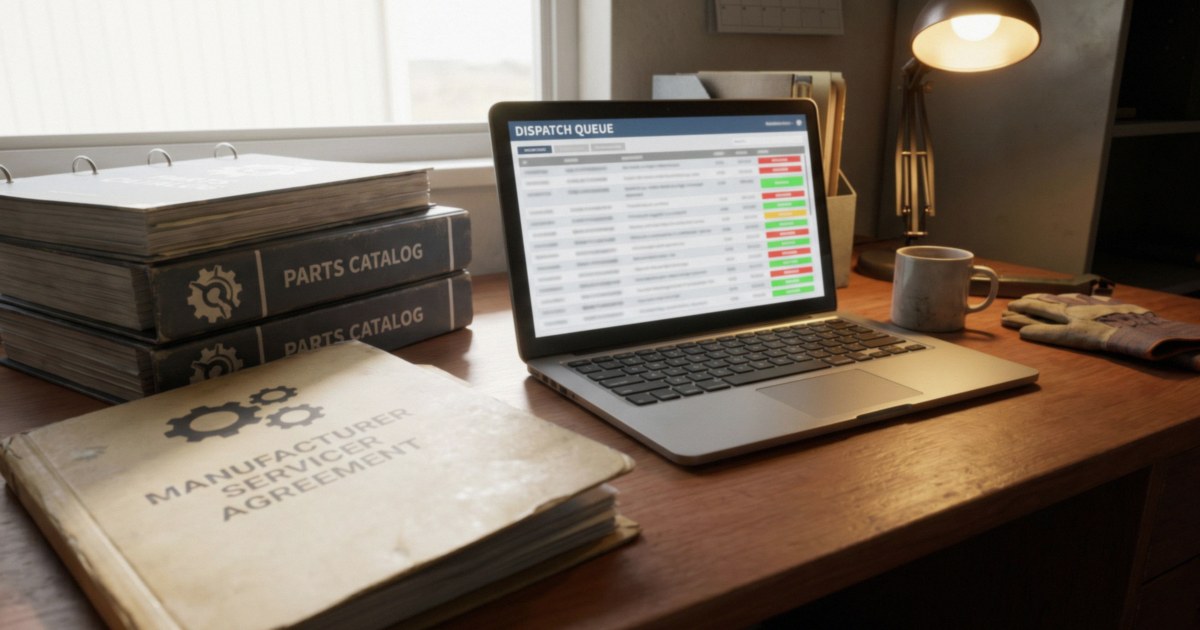
Becoming a factory-authorized servicer is the closest thing this trade has to a franchise without the franchise fee. The manufacturer sends you a steady stream of warranty dispatches, your name shows up in their official servicer locator, and you get parts accounts and tech-line access that independent shops can't touch. In exchange, you accept their labor rates, their paperwork, and their scorecard.
Whether that trade is worth it depends on your market, your capacity, and how you run the back office. This guide covers what authorization actually means, what the major brands require, and the economics nobody explains until you're already in the program.
What Authorization Actually Means
A factory-authorized servicer (some brands say "authorized service center" or "factory certified") is an independent company under contract with a manufacturer to perform in-warranty repairs on its behalf. You're not an employee and not a franchisee. You're a vendor.
The manufacturer dispatches warranty calls to you, pays you their published labor rate per completed repair, and reimburses parts. You file claims through their portal, hit their response-time targets, and maintain whatever training and insurance the contract specifies. Most brands also list authorized servicers in their consumer-facing locator, which generates COD calls at zero marketing cost.
That locator listing is worth real money. When a customer searches the Sub-Zero site for service in their zip code and your shop is the result, that lead cost you nothing and arrives pre-sold.
Factory-Authorized Servicer Requirements: What Brands Ask For
Every program differs, but apply to three or four and you'll see the same skeleton. Expect all of the following, then check each manufacturer's servicer portal for the current specifics, because requirements change and the portals are the source of truth.
A real business entity. Federal EIN, state and local business licenses, and usually a few years of operating history. GE's application asks directly for years in business, company structure, and number of technicians.
Insurance, with proof. LG publishes its minimums: $1 million general liability, $1 million automobile liability, workers' compensation, and employer liability, with the manufacturer named as additional insured and a waiver of subrogation on each policy. Other brands are in the same neighborhood even when they don't post numbers publicly. If you're carrying a bare-bones GL policy today, price the upgrade before you apply.
Background checks and drug screening. LG requires a criminal background check and a 10-panel drug test. Whirlpool's factory-authorized designation likewise involves criminal and background screening. GE asks applicants to confirm they run background checks on their own field techs. Manufacturers are putting their brand name on the person walking into the customer's kitchen, and they act like it.
EPA 608 and sealed-system capability. For refrigeration work, Section 608 certification is non-negotiable, and LG explicitly requires certification and training to service sealed-system products. Brands want servicers who can handle a compressor swap, not just board replacements. If your shop doesn't do sealed systems yet, close that gap before applying.
Training. Whirlpool runs virtual courses through ServiceMatters University. LG provides free product field training to its network. Samsung requires completion of its training programs and certification exams. Budget the tech-hours; the training is usually free but the time isn't.
Response-time and quality commitments. GE's application asks whether you offer same-day or next-day service and after-hours availability. Samsung tracks turnaround time as a core servicer metric. Once you're in, you'll live on a scorecard measuring first-call completion, recall rate (their term for callbacks), and claim accuracy.
The Application Path, Brand by Brand
Whirlpool (covers Whirlpool, Maytag, KitchenAid, Amana, JennAir) manages its servicer network through the ServiceMatters portal at servicematters.com. There's no big public "apply here" page; the standard path is contacting Whirlpool's service organization directly and getting routed to a regional service manager. Coverage gaps drive acceptance. If their map has a hole where you operate, your odds jump.
GE Appliances is the most transparent. The Authorized Servicer Application is a public form on geappliances.com covering company details, tech count, background-check practices, product categories, and service capabilities. Fill it out and a regional rep follows up.
LG recruits through its Authorized Service Center program, with applications handled via its servicer support portal (lgascops.zendesk.com) and a dedicated recruiting address. LG also publishes its benefits: competitive warranty labor rates, free overnight parts shipping on dispatched jobs, no parts restocking fees, free training, and dedicated tech support.
Samsung takes applications through its ISAQ portal at isaq.samsungsupport.com, which covers Samsung appliances and Dacor. Expect training, certification exams, and ongoing turnaround-time metrics.
Sub-Zero, Wolf, and Cove run the premium tier. Factory Certified Service companies are managed by regional field service managers, techs are screened and trained by the factory, and standout companies can be elevated to Premier Service Partner. Entry is by contacting Customer Care (800.222.7820), and the bar is high because the clientele is. The payoff: luxury-brand customers, almost no price resistance, and a locator listing in the wealthiest zip codes you serve.
For any brand not listed here (Bosch, Frigidaire/Electrolux, Speed Queen, Fisher & Paykel), the playbook is the same: find the servicer or trade portal on the manufacturer's site, or call the parts distributor that handles the brand in your region and ask who the service manager is. Distributors always know.


The Money: Warranty Rates vs. COD
Here's the part that surprises new authorized servicers. Warranty labor rates are set by the manufacturer, typically as a flat rate per repair type, and they generally come in below what the identical job bills COD. Your COD board swap might run $250 to $350 in labor; the warranty schedule for the same repair pays what the contract says it pays, and you don't get to negotiate per-job.
So why do it? Four reasons.
Volume and density. Warranty dispatches arrive without marketing spend, and in a tight service area they stack into dense routes. A tech running six warranty calls in one zip code can out-earn a tech running four COD calls across the county.
The after-warranty relationship. Every warranty customer becomes your COD customer when coverage ends, and you're the shop whose magnet is already on their fridge. This is customer acquisition the manufacturer pays you to do.
Parts accounts. Authorized servicers get direct parts accounts with better pricing, priority availability, and perks like LG's free overnight shipping and waived restocking fees. That advantage bleeds into your COD work too. Our guide on managing parts inventory for a repair shop covers how to turn that access into margin.
Recalls and service campaigns. When a manufacturer recalls a product, authorized servicers perform the remedy work, and the volume can be enormous. The Frigidaire recall of 180,000 gas ranges is the kind of event that books an authorized shop solid for months at guaranteed payment. Independents watch that revenue go by.
The Tradeoffs Nobody Mentions in the Brochure
Authorization is not free money, and shops quit programs every year. Go in with eyes open.
Rate caps squeeze you in inflation years. Manufacturer labor schedules don't reset every time your costs rise. When fuel, insurance, and tech wages jump 8% and the warranty rate moves later or not at all, warranty work becomes your lowest-margin line. You can't surcharge it.
The paperwork is a part-time job. Claims get rejected for wrong fault codes, missing serial photos, or filing past the deadline, and rejected claims are work you did for free until you win the appeal. Budget real office hours per brand, and if you're scaling up to handle the volume, read our guide on hiring your first appliance repair technician before you sign up for dispatches you can't cover.
Scorecards have teeth. Miss response-time targets or let your recall rate creep and dispatches get throttled before anyone calls to discuss it. The manufacturer is managing a network, not a relationship.
Capacity conflicts are real. Warranty dispatch volume isn't yours to control. A heat wave or a recall can flood you exactly when your COD demand peaks, and the contract says the warranty calls come first.
Start with one brand, ideally one with a coverage gap in your area, and run it for two full quarters before adding a second. Track warranty revenue per tech-hour against your COD number from day one. If warranty work settles below about 60-70% of your COD rate per hour after claims overhead, it only makes sense as a customer-acquisition channel, so measure it like one: count the after-warranty customers it hands you, not just the claim checks.
Who Should Apply, and Who Shouldn't
Authorization fits shops with at least two techs, solid claims discipline, and room in the schedule to absorb dispatch volume. It's especially strong for shops trying to break into a new territory or a premium segment, where the locator listing does the marketing.
It fits poorly for the solo operator already booked eight days out at full COD rates. You'd be trading your highest-margin hours for your lowest, and the scorecard stress comes free.
Pick the brand that matches the equipment already dominant in your service area, check the manufacturer's servicer portal for current requirements rather than trusting anything secondhand (including this article a year from now), and apply where the coverage map is thin. The shops that win at warranty work treat it as a pipeline, not a paycheck.
Need a repair professional?
Get free quotes from verified technicians in your area.
Find a Pro Near You