


Dishwasher Not Drying: Why Your Dishes Come Out Wet

Terry Okafor
Master refrigeration tech and NATE-certified instructor who moonlights as the magazine's advice columnist. His 'Ask Big Terry' mailbag has been settling shop disputes and diagnosing mystery leaks since 2011.
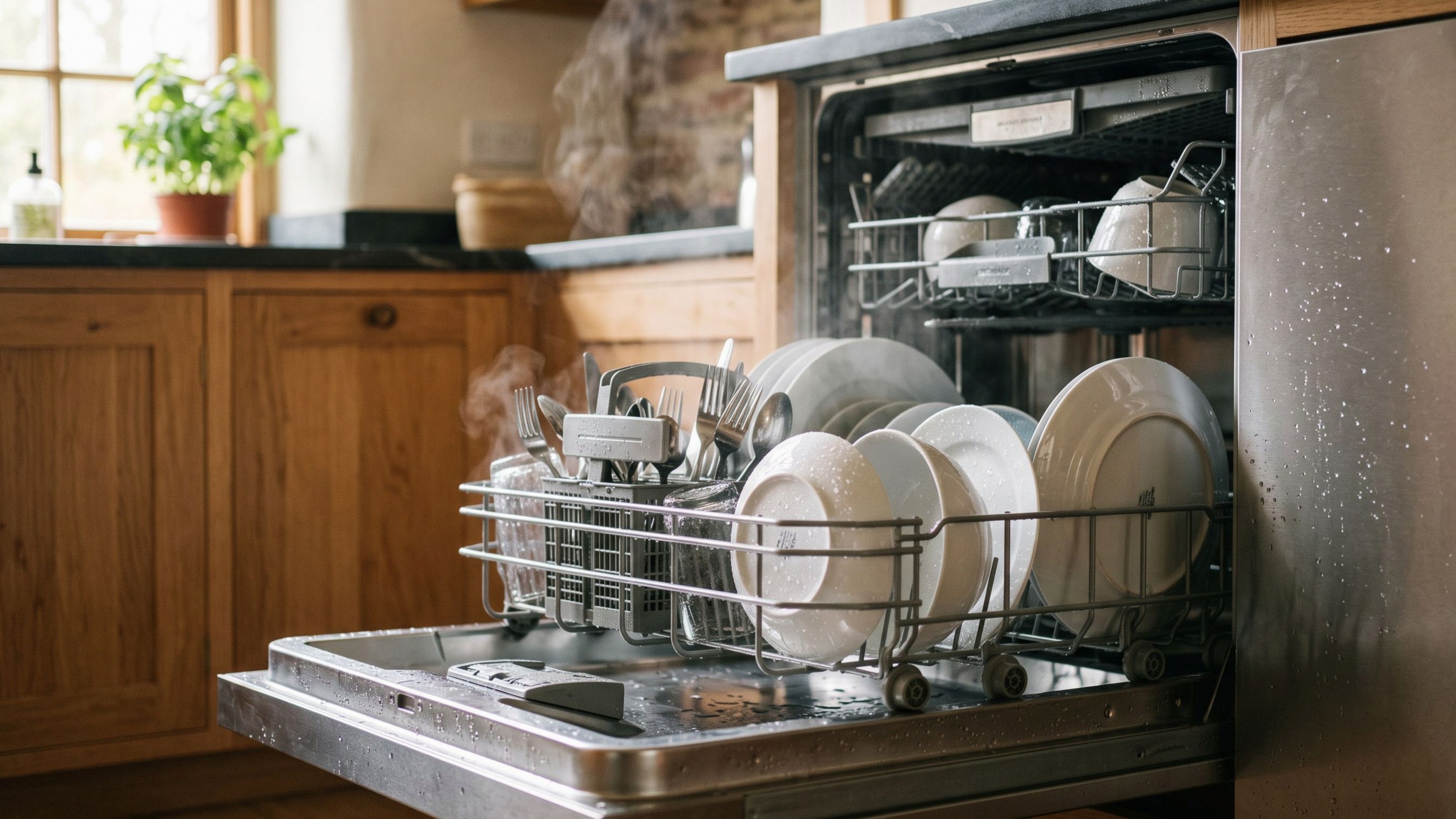
A dishwasher not drying sends people straight to thinking a part failed, and most of the time nothing has failed at all. Modern dishwashers dry very differently from the old ones, and the fix for wet dishes is usually rinse aid, loading, or understanding what your machine was actually built to do. Let's go through the real reasons your dishes come out wet, starting with the one that solves most cases.
Cause 1: No Rinse Aid (the Number One Reason)
Rinse aid isn't a luxury. On a condensation-dry dishwasher it's part of how the machine works. Rinse aid lowers the surface tension of water so it sheets off the dishes in a thin film instead of beading up into droplets that cling and then dry into spots. Less water sitting on the dish means less water to evaporate, which means drier dishes.
Check the dispenser. If it's empty, fill it, and turn the dosage setting up if your machine has one. This alone fixes a large share of "my dishwasher stopped drying" complaints. Give it a cycle or two to show the difference.
Cause 2: A Failed Heating Element (Only on Machines That Have One)
Some dishwashers, generally older or budget models with an exposed coil in the bottom of the tub, use that element to heat the air and bake the dishes dry. If your machine has one and it's failed, drying gets noticeably worse, and you can often spot a burned or broken section on the element itself.
But here's the part that saves you money. Many newer dishwashers have no drying element at all. Plastic-tub models and the popular Bosch-style stainless-tub machines dry by condensation instead (more on that next). On those, there is no element to test or replace, so if a repair site or forum tells you to swap the "heating element" and your machine dries by condensation, they're describing a part your unit doesn't have. Confirm which system you have before buying anything, and match any element to your exact model number on PartSelect or AppliancePartsPros.
Cause 3: Understanding Condensation Drying
This one isn't a fault, it's a design, and knowing it prevents a lot of pointless repairs. A condensation-dry dishwasher heats the final rinse water hot. Dishes come out of that rinse holding heat. The stainless steel tub wall, being exposed to the cooler room, stays relatively cold, so the humid air inside condenses on the tub wall and runs down to the drain. No fan, no element, no bake cycle.
The tradeoff is that condensation drying leans entirely on residual heat and rinse aid. Skip the rinse aid or run a cool cycle and it underperforms. Nothing is broken. The machine is just doing exactly what it was designed to do, which needs help from you.


Cause 4: A Vent or Fan Door That Won't Open
Many dishwashers have a vent, sometimes with a small fan and a spring-loaded door, that opens near the end of the cycle to release steam and let moist air escape. If that vent door sticks shut or its wax motor fails, humid air stays trapped inside and re-condenses on your dishes instead of venting out. Dishes stay damp and the interior feels muggy when you open it.
Inspecting the vent for obstruction or a stuck door is doable; replacing a failed vent assembly or fan is a modest repair. Match the part to your model.
Cause 5: Overloading and Bad Rack Loading
How you load matters more than people think. Cups and bowls that nest or sit flat collect a puddle of water that has nowhere to go. Dishes crammed together block airflow and shield each other from the drying heat. Items angled so water pools in a rim come out wet every time.
Load with dishes tilted so water runs off, leave space between pieces, and put cups and bowls at an angle rather than flat. Don't pack the racks to the last inch. Better loading alone can turn a "wet" machine back into a dry one.
Cause 6: Water Temperature Too Low
Drying depends on heat, and heat comes from the incoming hot water plus whatever the machine adds. If your water heater is set low, or the dishwasher is far from it and the line runs cold at the start, the rinse never gets hot enough for good condensation drying. Running the kitchen hot tap until it's hot before starting the cycle helps, since it primes the line with genuinely hot water. Many machines also have a high-temperature or "sanitize" option that boosts the final rinse.
Cause 7: Heat-Dry Setting Turned Off
Simple but easy to miss. If your dishwasher has a heated-dry or extended-dry option and someone turned it off (often to save energy or shorten a cycle), drying suffers. Check the cycle options and turn heat dry or extra dry back on. On machines with an auto-open door feature, make sure that's enabled too.
What Drying Repairs Cost
The most effective fixes here are the cheapest, and the priciest common part is still modest.
Where to Start
Fill the rinse aid, load smarter, and crack the door at the end of the cycle. That trio fixes the overwhelming majority of wet-dish complaints without a tool or a part. If you've done all that and dishes are still soaked, then look at whether your machine has an element that failed or a vent that's stuck. While you're troubleshooting, our guides on a Whirlpool dishwasher that won't drain and the Bosch E15 error cover the other two complaints that get mistaken for a drying problem.
Need a repair professional?
Get free quotes from verified technicians in your area.
Find a Pro Near You