


Heat Pump Diagnostics: Reversing Valves, Defrost Boards, and Auxiliary Heat

Dale Resnick
A 30-year veteran of residential HVAC who's crawled through more attics than he can count. Dale writes the 'Duct Tape & Beyond' column and believes every compressor tells a story if you listen close enough.
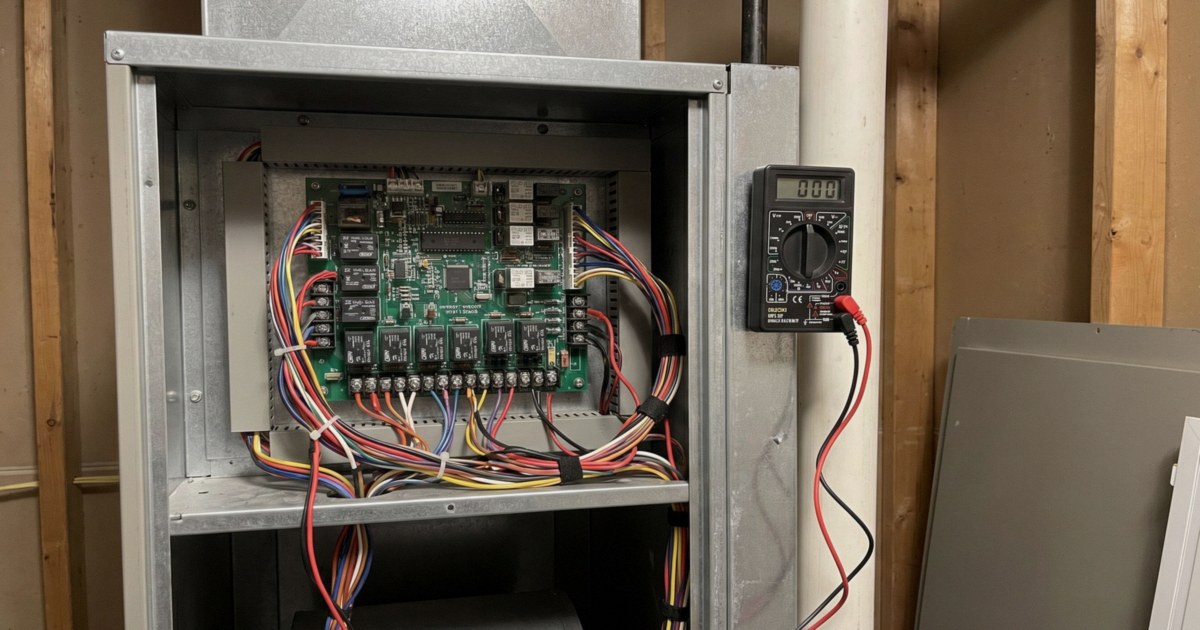
Heat pump diagnostics trip up good AC techs for a simple reason: the refrigeration circuit runs in both directions, and half the failures live in components a straight-cool system doesn't have. Heat pumps have been outselling gas furnaces for several years running now, and the units installed during that surge are aging into real service calls. If your background is condensers and furnaces, this guide covers the three subsystems that will actually page you in January: the reversing valve, the defrost control, and auxiliary heat.
One framing thought before the wrenches come out. Most "dead heat pump" calls in heating season are not refrigeration failures. They're controls. Work the sequence before you work the gauges.
How a Reversing Valve Fails (and How to Prove It)
The reversing valve has exactly two failure modes, and they get confused constantly.
The first is electrical: the pilot solenoid. The 24V coil shifts a small pilot valve, and system pressure differential does the heavy lifting of sliding the main valve body. Test the coil the easy way first: with the coil energized, a screwdriver shank held against it should pull noticeably toward the coil. No magnetism means no coil output, and now you're checking the coil winding (typically 10-30 ohms) and the signal from the board or thermostat.
Know your terminals before you condemn anything. Most brands energize the valve in cooling on O. Rheem and Ruud energize in heating on B. A thermostat swapped by the homeowner with the O/B setting wrong produces a unit that heats on a cooling call, with absolutely nothing broken. I've seen techs quote valve replacements for a dropdown menu setting.
The second failure mode is mechanical: the slider sticks, or the valve leaks internally. Here's where the touch test earns its keep. Four lines meet the valve. Discharge in is always hot, around 150-200°F. The line to the compressor suction should run cool, and critically, it should be within about 3°F of the line arriving from whichever coil is working as the evaporator. A bigger rise across the valve body means hot gas is bypassing into the suction stream.
An internally bypassing valve mimics a worn-out compressor on the gauges: low head, high suction, low amp draw. The gauges can't separate the two. The four-line touch test can, because bypassing discharge gas heats the valve's suction side while bad compressor valves leave the reversing valve temperatures normal.
A stuck slider has its own tell. The valve needs pressure differential to shift, so a badly undercharged system may refuse to swap modes even though the valve is fine. Confirm charge before condemning hardware. If charge is good, cycle the solenoid while tapping the valve body with a rubber mallet. Sometimes it frees and you've bought the customer a season. Tell them it's living on borrowed time and quote the replacement, which runs $600-1,500 installed since it's a recover-braze-evacuate job.
Carry four pipe-clamp thermocouples and strap the valve every time you suspect it. The 3°F rule across the suction side settles the compressor-versus-valve argument in five minutes, and it saves you from the most expensive misdiagnosis in heat pump work: condemning a healthy compressor for a $300 valve's sins.
Heat Pump Defrost Diagnostics: Timed Boards, Demand Boards, and Sensors
Outdoor coils ice below roughly 40°F ambient because the coil runs colder than the dew point. Defrost handles it by flipping the valve to cooling, stopping the outdoor fan, and heating the coil from inside for up to 10 minutes.
Older timed defrost initiates every 30, 60, or 90 minutes of compressor runtime (a pin setting on the board) whenever the defrost thermostat is closed. Crude but serviceable. Demand defrost adds outdoor ambient and coil thermistors and an algorithm, and only defrosts when ice is genuinely accumulating.
Failures present in two opposite directions. An ice-encased cabinet means defrost never initiates: a defrost thermostat that fell off its tube or failed open, a board that won't switch, or a sensor reading garbage. The reverse, a unit that defrosts constantly with steam clouds every half hour, points at a sensor stuck closed or shorted. Constant defrost wrecks heating capacity and runs the strips hard, so it often arrives disguised as a high-bill complaint.
Separating sensor from board is quick. Most boards have force-defrost pins; short them and watch. If the board executes a clean defrost on command, the board switches fine and your problem is the sensor. A typical clamp-on defrost thermostat closes around 30°F pipe temperature and opens around 60-80°F, so it should read closed on an iced coil. Thermistor-style sensors get ohmed against the chart, commonly 10k ohms at 77°F.
And don't skip the charge check. A low-charge system ices at ambients where a healthy one wouldn't, and no defrost board can keep up with a coil that's permanently below freezing. Inverter-driven and ductless equipment handles defrost through its own logic, which is its own animal; our ductless mini-split troubleshooting guide covers that side.


Auxiliary Heat, Emergency Heat, and the "Blowing Cold" Call
The winter complaint you'll hear most is some version of "it's blowing cold in heat mode." Usually nothing is broken.
Heat pump supply air runs 90-105°F. That's warmer than the room, but it's cooler than skin temperature, and it's nothing like the 130°F blast a gas furnace trained the customer to expect. Part of the diagnosis here is a thermometer in the supply register and a calm explanation.
When the air really is cold, think sequence. First-stage heat is the compressor alone. Auxiliary strips stage in on W2 when the thermostat falls behind, and they're supposed to energize during every defrost cycle to temper the air, since defrost is literally air conditioning in January. A failed strip sequencer turns every defrost into a genuinely cold-blow event, and that's the classic source of this complaint.
Verify strips with an amp clamp. A 5 kW element pulls about 20.8 amps at 240V; a 10 kW kit pulls about 41. Strip circuits usually ride their own 60-amp breaker, and a tripped strip breaker leaves the heat pump limping along alone below the balance point. Check sequencer coils and contacts the same way you'd work any resistance heat package. The control-side failures overlap heavily with what we covered in common HVAC electrical failures.
Emergency heat is the manual override: strips only, compressor locked out. Find it switched on in June and you've found why the bill doubled. Find it on in January and ask the customer what happened, because somebody put it there for a reason and the original complaint is still in the system.
Balance Point Setup
The balance point is the outdoor temperature where heat pump capacity equals the building load, typically landing between 25°F and 40°F for residential equipment. Above it the compressor carries the house alone. Below it the strips legitimately help.
Setting the aux lockout at the balance point is cheap efficiency. A thermostat that staggers strips in at 45°F because nobody configured it burns roughly three times the energy per delivered BTU whenever those strips run. Most modern stats and demand-defrost boards accept an outdoor lockout setting; use the load calc or the manufacturer's capacity tables to put a real number in it.
One caution on newer equipment. Cold-climate inverter units hold capacity far deeper into the cold than the single-stage units those 2005-era rules of thumb were written for, so a vintage 35°F lockout habit can be wrong by 15 degrees on current hardware. Check the extended performance data.
The Misdiagnosis List
The patterns repeat, so learn them once. Compressors get condemned for internally bypassing reversing valves that a touch test would have caught. Boards get replaced for defrost sensors that slipped off their tube. Valves get quoted for an O/B setting after a thermostat swap. Low charge gets read as a stuck slider.
A lot of condemned heat pump compressors were really a $300 valve.
Work the controls first, strap your thermocouples on the valve, force a defrost before blaming the board, and let the amp clamp tell you about the strips. The heat pump fleet is only getting bigger, and the techs who can diagnose these three subsystems cleanly will own the winter schedule.
How do you tell if a reversing valve is leaking internally?▾
Clamp temperature probes on all four refrigerant lines at the valve. The suction line to the compressor should run within about 3°F of the line arriving from the coil acting as evaporator. A bigger rise across the valve body means hot discharge gas is bypassing internally. On the gauges this mimics a failed compressor: low head, high suction, low amps.
Why is my heat pump blowing cold air in heat mode?▾
Usually it isn't. Normal heat pump supply air runs 90-105°F, which feels cool compared to the 120-140°F a gas furnace delivers. Genuinely cold air points to a defrost cycle in progress, aux strips failing to energize during defrost, low charge, or a reversing valve fault. The compressor is rarely the culprit.
What is the difference between timed and demand defrost?▾
Timed defrost initiates every 30, 60, or 90 minutes of compressor runtime whenever the coil sensor is closed, iced or not. Demand defrost compares coil temperature against outdoor ambient and runtime and only defrosts when ice is actually building. Both fail through sensors or a board that won't switch; force-defrost pins separate the two.
At what outdoor temperature should auxiliary heat run?▾
Only below the balance point, where heat pump capacity falls under the building load, typically between 25°F and 40°F. Set the aux lockout near the calculated balance point. A 10 kW strip kit pulls about 41 amps at 240V, roughly three times the energy per delivered BTU of the compressor.
Sources
- Rewiring America. (2025). "Heat Pumps Outsell Gas Furnaces for the Third Year Running" (analysis of AHRI shipment data). rewiringamerica.org
- Electrek. (2023). "US Heat Pump Purchases Exceeded Gas Furnaces in 2022" (per International Energy Agency data). electrek.co
Need a repair professional?
Get free quotes from verified technicians in your area.
Find a Pro Near You