

DOE Proposes Rule to 'Permanently End' Future Appliance Efficiency Mandates

Dale Resnick
A 30-year veteran of residential HVAC who's crawled through more attics than he can count. Dale writes the 'Duct Tape & Beyond' column and believes every compressor tells a story if you listen close enough.
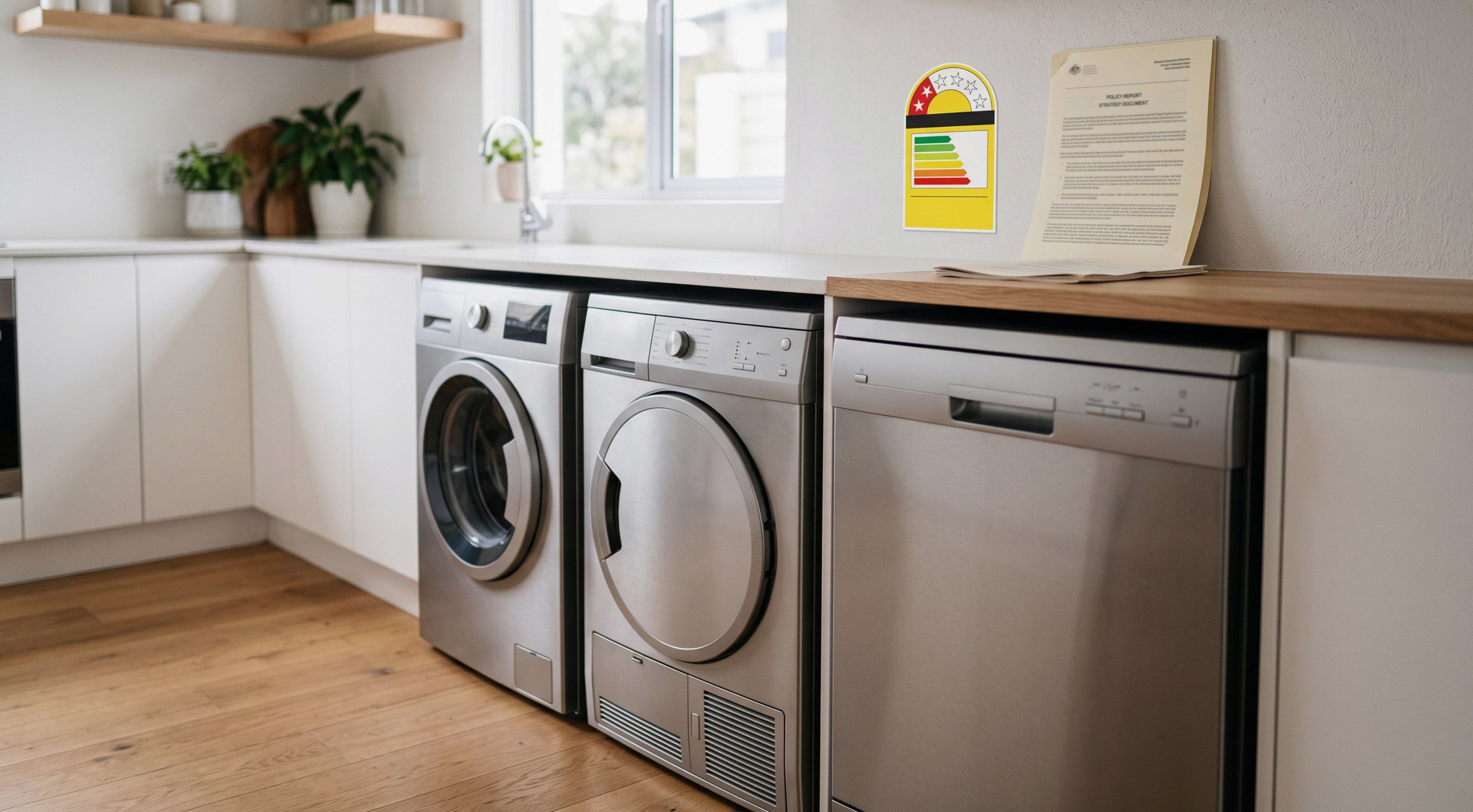
The U.S. Department of Energy has issued a notice of proposed rulemaking that would rewrite how it sets efficiency standards for appliances and equipment, making future tightening of those standards substantially harder. DOE announced the proposal on July 2, 2026, framing it as a way to permanently end future mandates.
Read the fine print, though. This does not repeal a single existing standard. Your current SEER2 minimums, water-heater rules, and refrigerator caps all stay in place. What changes is the machinery DOE uses to write the next round.
That distinction matters for anyone quoting equipment. Nothing on the shelf changes tomorrow.
What the Proposal Actually Does
The rule reworks the process. It adds a "significant energy savings" threshold that a proposed standard would have to clear, plus new economic tests before DOE could tighten requirements. Applied to HVAC systems, water heaters, refrigerators, washers, and dryers, those hurdles would make each future round of standard-setting a heavier lift.
This rule is about process, not a single appliance spec. It does not itself raise or lower any water or energy limit. Separate DOE actions have moved to loosen specific rules, including dishwasher water use, but those are distinct from this rulemaking, which changes how future standards get set in the first place.
Assistant Secretary of Energy Audrey Robertson defended the approach in coverage of the announcement, describing it as a move to rein in mandates the department views as costly. (We're paraphrasing here; the exact wording is in the linked reporting.)


The Mechanics: NOPR Plus RFI
This arrives as a two-track effort. The process rule is a notice of proposed rulemaking with a 30-day comment period. Alongside it, DOE published a request for information with a 60-day comment period, gathering input on the broader framework.
Short comment windows on a rule this consequential drew attention. Thirty days is not a lot of runway for the manufacturers, efficiency advocates, and utilities that usually weigh in on standards.
If a customer asks whether their next furnace or water heater will be "grandfathered" out of efficiency rules, the honest answer is no. Existing minimums are unchanged. This proposal is about future rulemaking, not the equipment you install this season.
Why the Trade Should Watch This
Efficiency standards shape the product catalog. They set the floor for what manufacturers can build and what distributors can stock, and they've driven a decade of change in HVAC and water heating. Slow the standard-setting process and you slow the pace at which minimums move.
For contractors, the near-term effect is mostly stability, which some in the trade will welcome after years of transitions. The longer-term question is whether a higher bar for new standards reshapes what's available a few product cycles out.
This lands amid a broader push to reset appliance and repair rules. For related policy shifts, see our coverage of right-to-repair laws in 2026, and homeowners weighing an upgrade can start with our guide to energy-efficient appliance upgrades.
The comment periods are the next milestone. What DOE hears, and how the final rule reads, will tell the industry how much the standard-setting process has really changed.
Sources
- Utility Dive. "DOE proposes rule to 'permanently end' appliance mandates." utilitydive.com
- Facilities Dive. "DOE proposes rule to 'permanently end' appliance mandates." facilitiesdive.com